Tire rotation keeps your tires wearing evenly, improving traction, braking, and tire lifespan. The correct rotation pattern depends on your vehicle’s drivetrain and whether your tires are directional or staggered. Here’s how to rotate tires for every setup — and when it’s worth leaving it to a shop.
Why tire rotation matters
Front and rear tires don’t wear the same way. Steering, braking, and drive forces cause uneven tread wear, especially on the driven wheels. Rotating tires every 5,000–8,000 miles (8,000–13,000 km) helps equalize wear, extend tire life, and maintain balanced handling.
Understanding tire rotation basics
- Non-directional tires: Can be rotated in multiple patterns because tread direction doesn’t matter.
- Directional tires: Have a specific rolling direction (arrow on sidewall). They can only be rotated front to back on the same side.
- Staggered fitments: Use different tire sizes front and rear — rotation options are limited or may require remounting.
Image
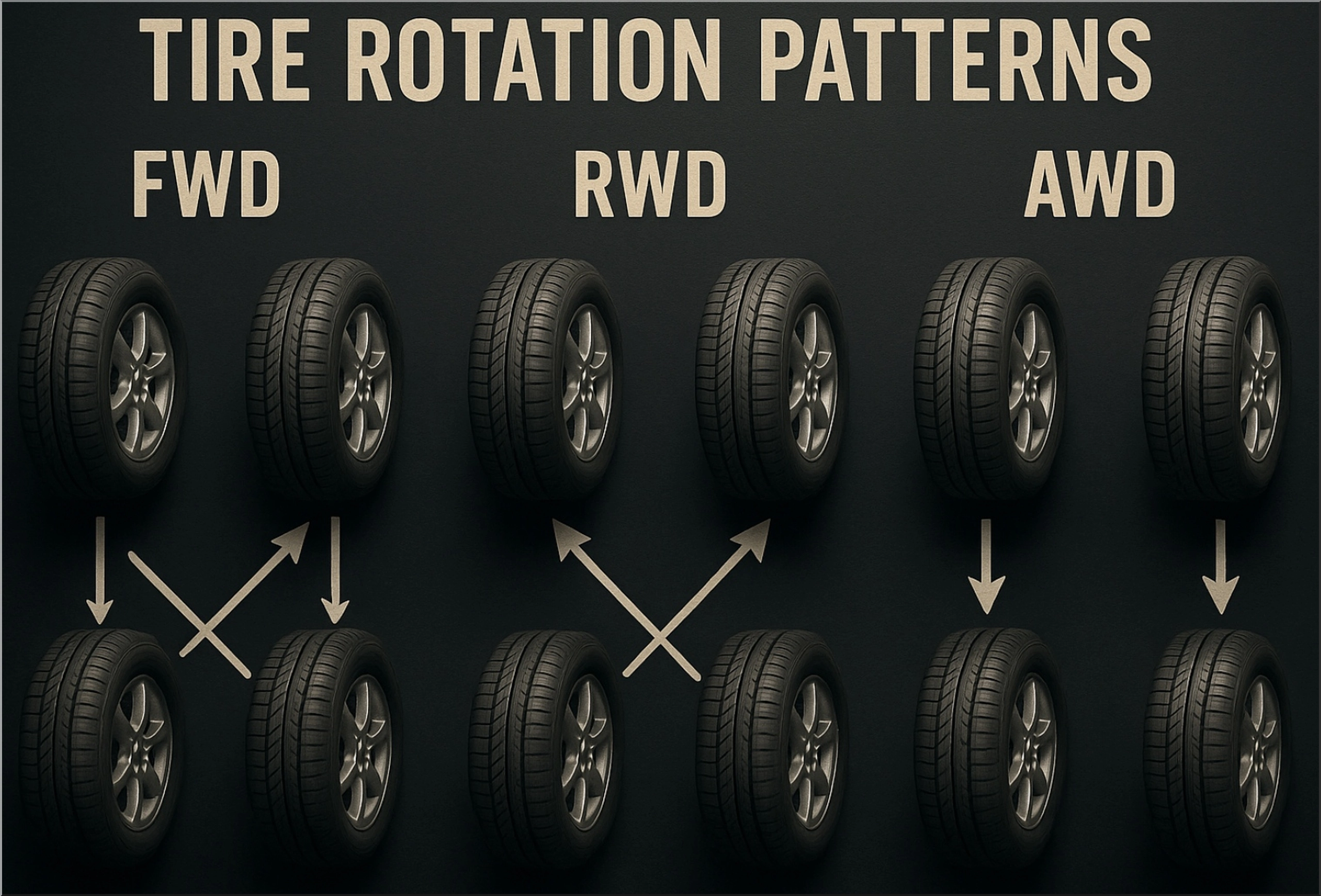
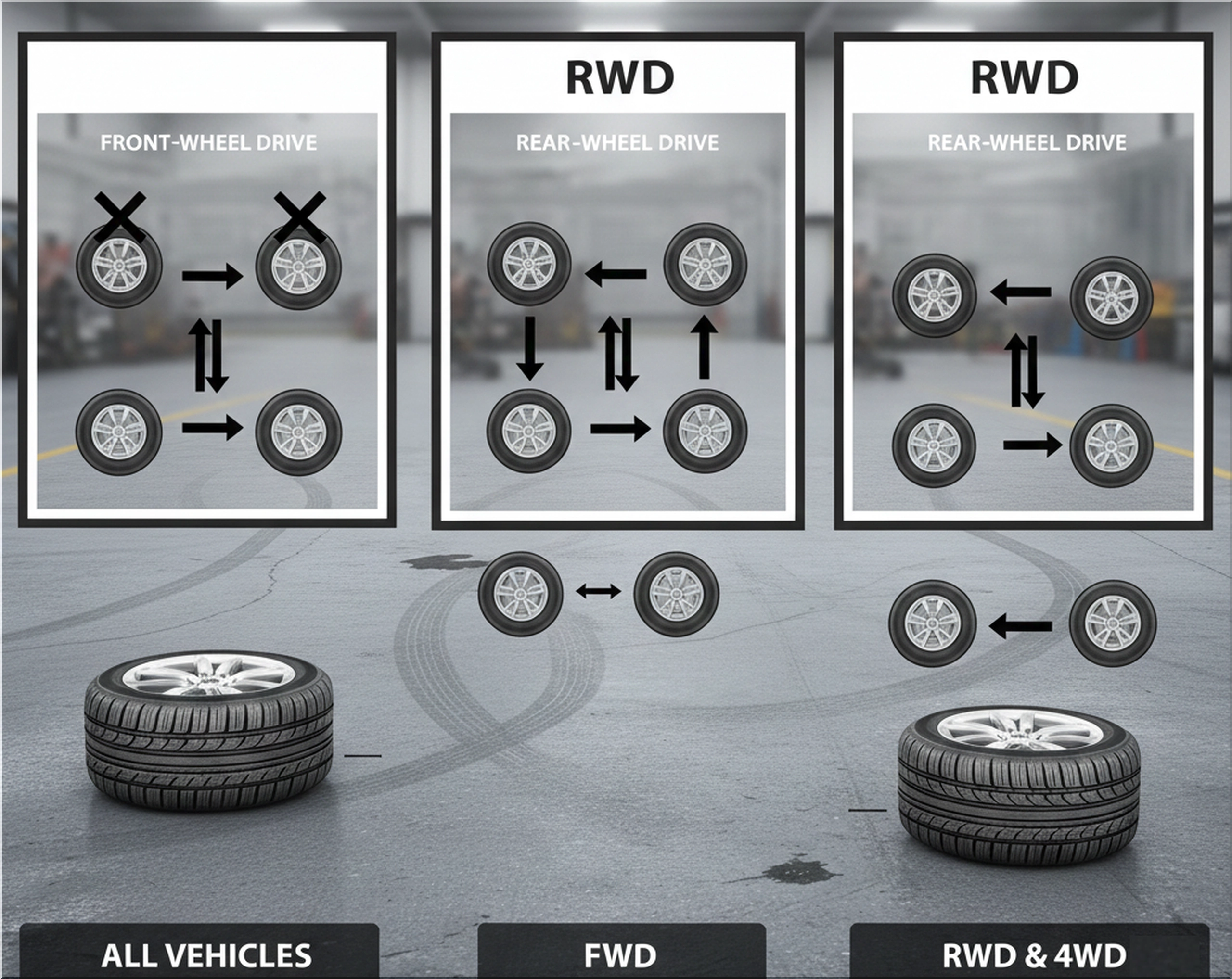
Front-wheel drive (FWD) rotation pattern
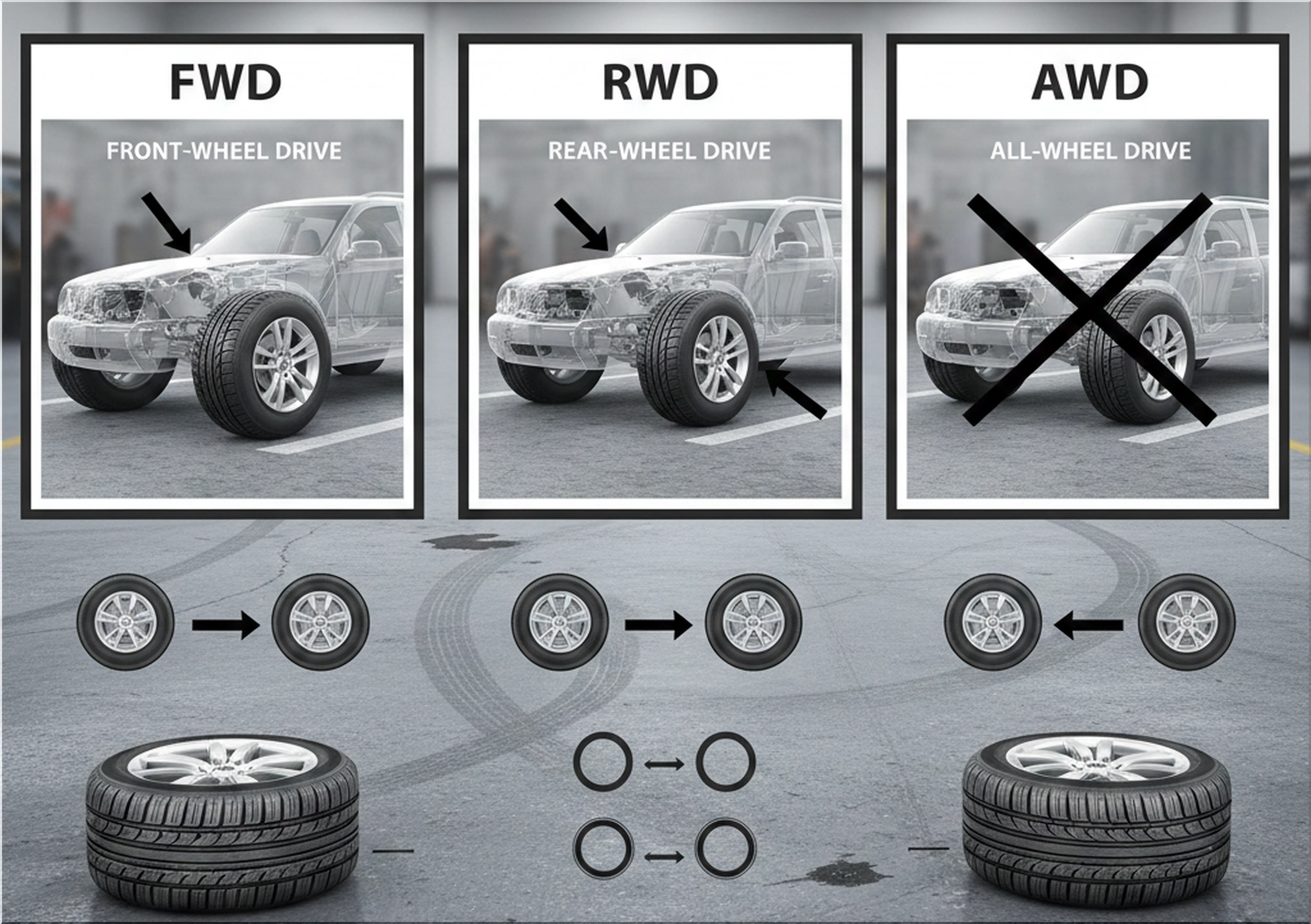
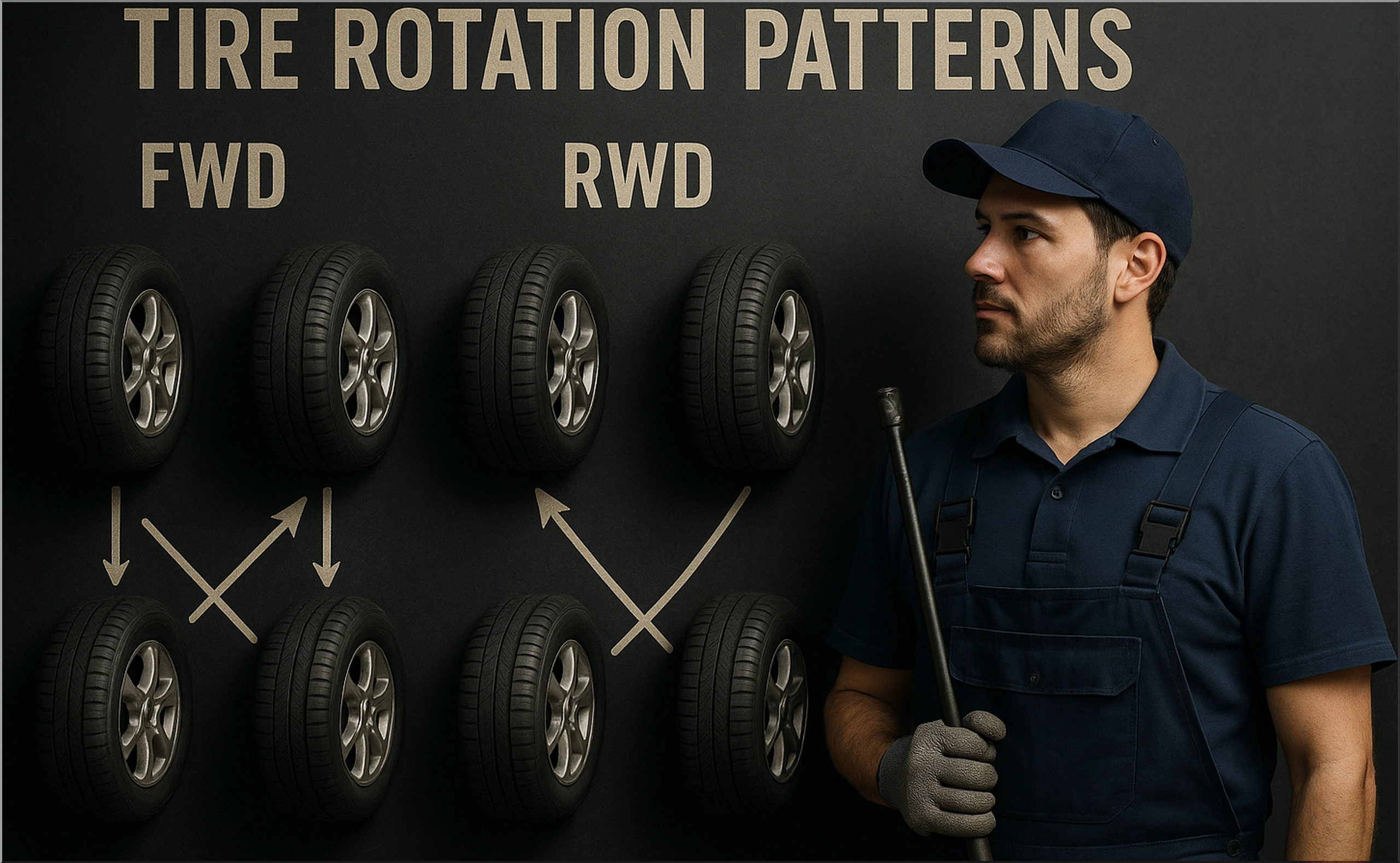
Since front tires handle most of the driving, steering, and braking, they wear faster. Use the Forward Cross pattern for non-directional tires:
- Move front tires straight back to the same side (front left → rear left, front right → rear right).
- Move rear tires to the opposite front corner (rear left → front right, rear right → front left).
This pattern helps even out front tire wear and balances tread life across all four corners.
Rear-wheel drive (RWD) rotation pattern
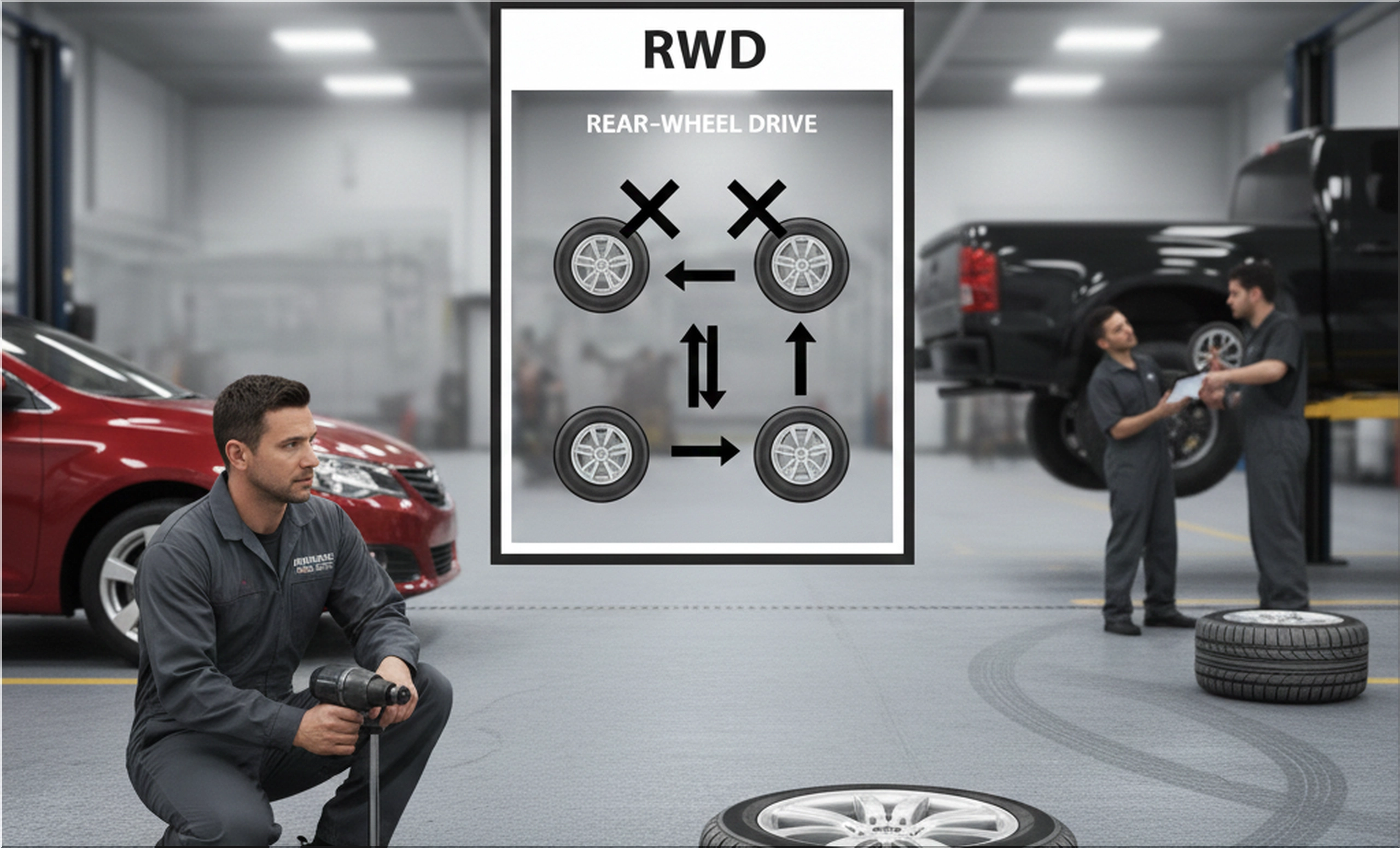
Rear tires wear faster on RWD cars due to acceleration forces. Use the Rearward Cross pattern:
- Move rear tires straight to the front on the same side.
- Move front tires to the opposite rear corner (front left → rear right, front right → rear left).
This balances the wear load between drive and steering axles.
All-wheel drive (AWD) and 4WD rotation pattern
AWD and 4WD vehicles need evenly worn tires to avoid drivetrain stress. Use the X-Pattern (cross all four tires):
- Front left → rear right
- Front right → rear left
- Rear left → front right
- Rear right → front left
For directional tires, rotate front to back only. Always keep tire sizes and rolling circumferences matched within 2/32" to protect the AWD system.
Staggered tire fitments
Many performance cars use wider rear tires than fronts. Since you can’t swap front and rear positions, your options are:
- Side-to-side rotation — only if tires are non-directional.
- Re-mount and balance — for directional tires, remove and remount on opposite sides to reverse direction (done by a shop).
Staggered setups wear faster at the rear; inspect more often and rotate side-to-side every 5,000 miles if possible.
Rotation intervals and tips
- Rotate every 5,000–8,000 miles (8,000–13,000 km) or at each oil change.
- Always check tire pressure and tread depth during rotation.
- Rebalance wheels if you feel vibration after rotation.
- Inspect for uneven wear — may indicate misalignment or suspension issues.
Image
When not to rotate tires
- Mixed tire brands or tread depths exceeding 2/32" difference.
- Directional tires with staggered sizes that can’t be safely swapped.
- Run-flat or specialty tires — follow manufacturer guidelines.
Summary: keep tire wear even
Regular tire rotation maximizes tread life, safety, and ride comfort. Whether FWD, RWD, or AWD, following the right pattern ensures your tires wear evenly and your vehicle handles predictably. Mark your tires after each rotation to track patterns and maintain consistency.
Tip: Always consult your owner’s manual or tire professional for the recommended pattern and interval for your specific vehicle.}
Image Gallery
- 943 views