Sleek, sophisticated and unmistakably Saab, the all-new 9-5 saloon signals the dawn of a new era for the Saab brand. With progressive, confident styling and advanced technology, Saab's distinctive new flagship will bring a fresh, alternative choice to the premium saloon segment when it goes on sale in 2010.
The clean, sculpted shape embraces the purity of Scandinavian design, and its dramatic wraparound window graphic echoes Saab's aviation heritage. With styling inspired by the award-winning Aero X concept car and a muscular, low-slung stance, the new 9-5 heralds the introduction of a bold and expressive design language.

The array of high-tech features on offer includes: an aircraft-inspired head-up information display (HUD); adaptive headlights (Bi-Xenon Smart Beam); adaptive cruise control; Saab DriveSense adaptive chassis with real-time damping control; keyless entry and starting; dual-zone climate control; dynamic parking assistance, and Saab XWD with eLSD: the industry-leading all-wheel-drive system.
The all-turbo powertrain line-up is the broadest ever offered by Saab, carrying forward Saab's rightsizing engine strategy focusing on responsible performance through the development of highly efficient four cylinder turbo engines. There is a choice of three fuels - petrol, diesel and E85 bioethanol – and with diesel power, the new 9-5 offers CO 2 emissions as low as 139 g/km.

“This car is the start of a new era for our brand,” says Jan- Åke Jonsson, Saab Automobile's Managing Director. “We have created an advanced and very distinctive product by leveraging the power of our roots in key areas, such as progressive Scandinavian design, sporty driving and responsible performance. The new 9-5 delivers in all these respects, as will every future product from Saab.”

Scandinavian Design
‘Forward-looking design that doesn't ignore where it's coming from,' sums up the visual appeal of the all-new Saab 9-5 saloon. “We are giving a fresh, very modern expression to some of our classic brand design cues,” says Simon Padian, Saab Brand Design Chief. “We have visual themes found in our recent concept cars, such as the Aero X, which are inspired by Scandinavian design and our brand's aircraft heritage.”
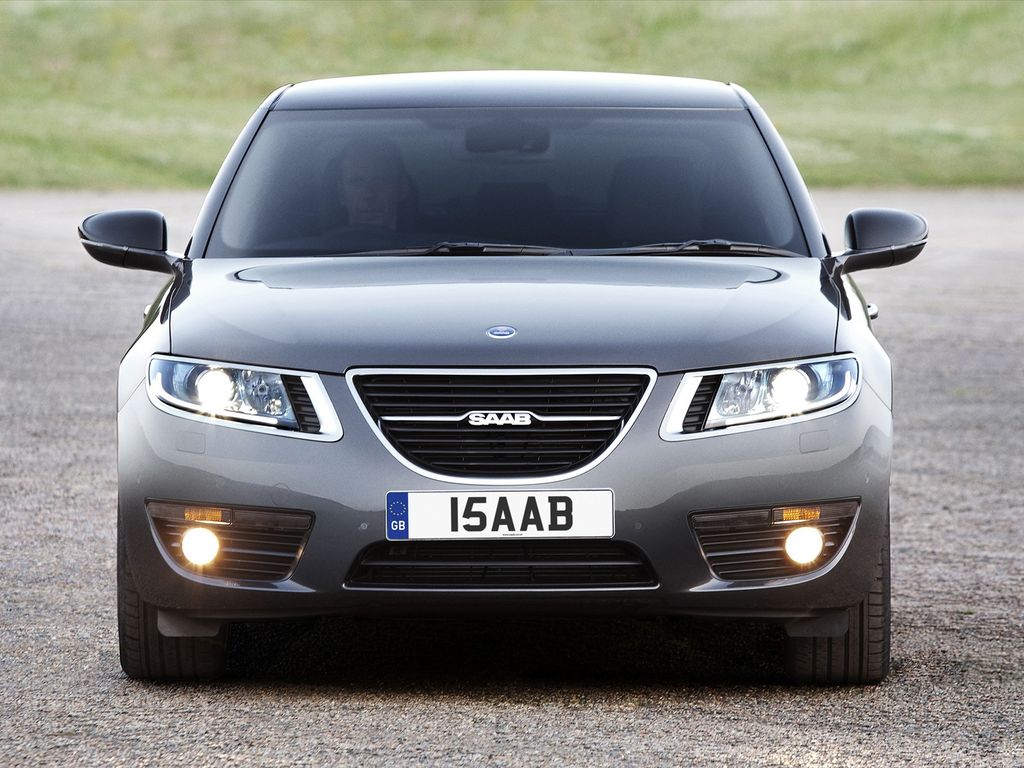
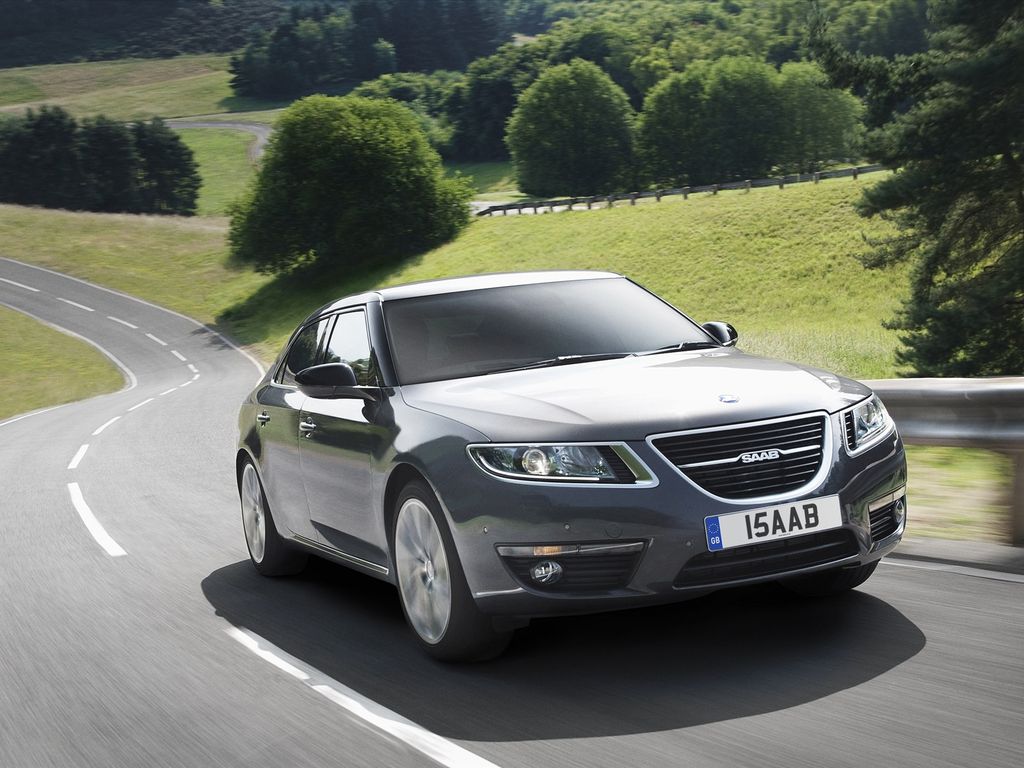
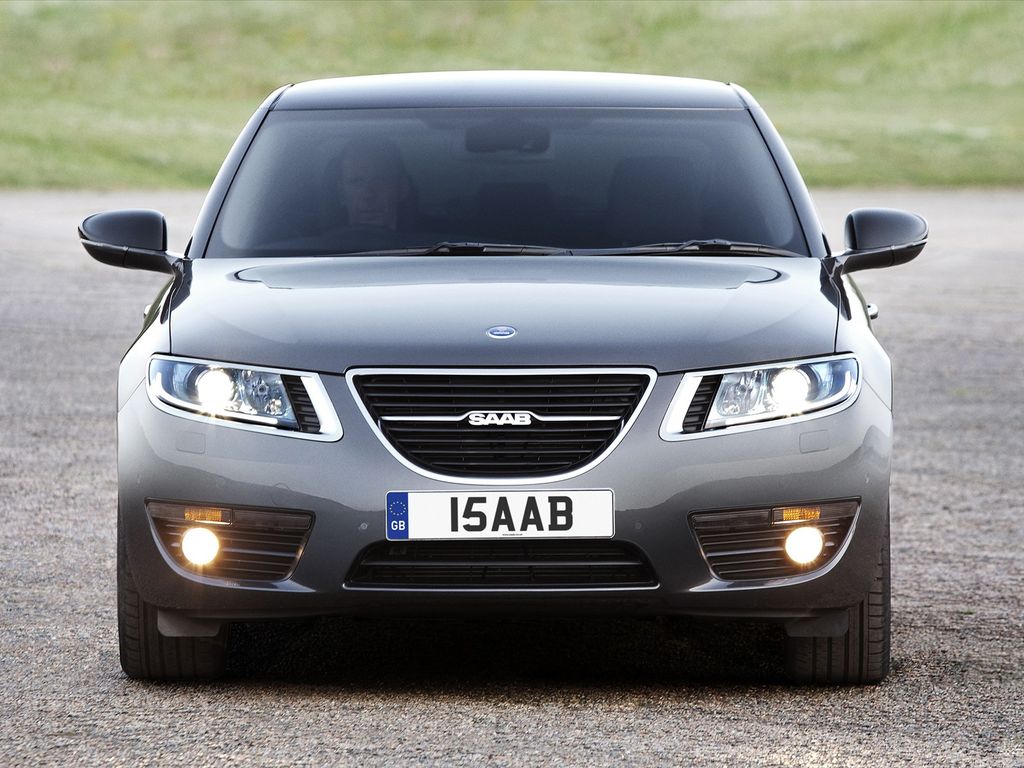
The face of the new 9-5 is defined by a deep grille flanked with curving, ice-block headlamp units. The entire glasshouse is presented as a ‘wraparound' mono graphic: the disguised windshield and side pillars giving the cabin Saab's signature cockpit look. In this interplay of proportions, the windshield and roof are reminiscent of the classic 900 model.
Viewed from any angle, the all-new 9-5 cuts a strong and powerful stance. The ‘organic sculpture' of the low-slung body blends clean, uncluttered lines with natural, curvaceous shapes. Brand design cues are evident in the ‘hockey stick' belt-line, the strong rear C-pillars and the fuselage-smooth surfacing of the bodywork. The large Saab logo embossed in the centre of the grille characterises the assertive, self-confident design language.
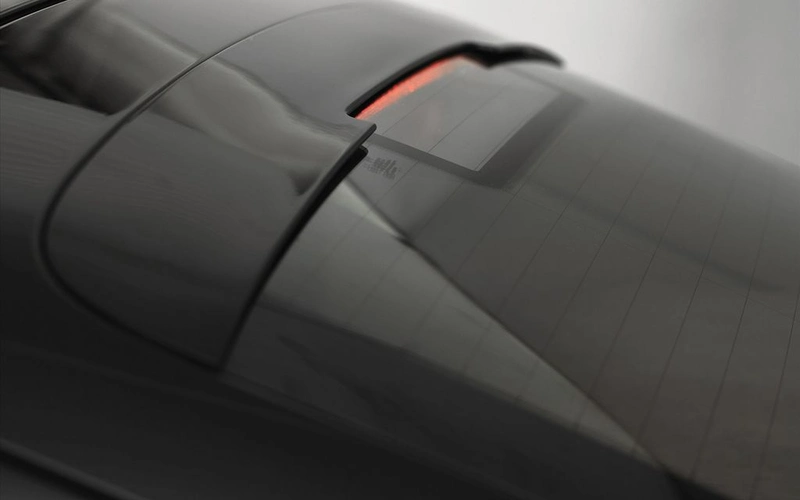
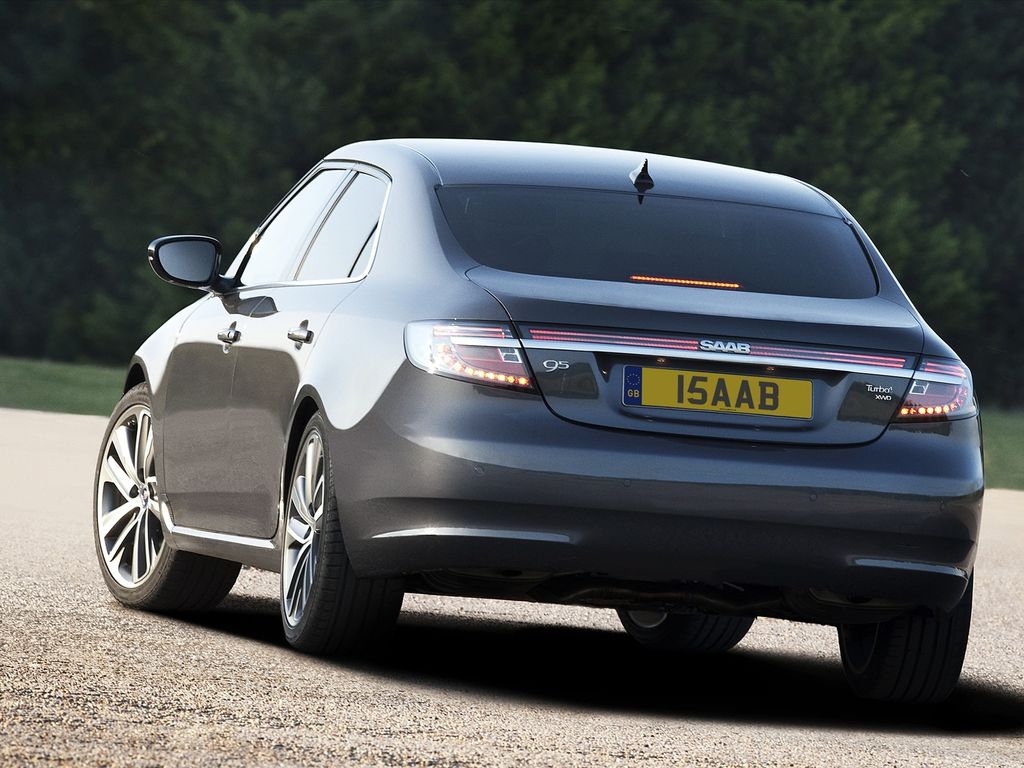
The car's dynamic character is emphasised by a falling roof-line that culminates in sweeping rear pillars that buttress a slightly recessed rear screen. Front wings that are subtly flared to blend into the wheels convey latent energy. Below that smooth, flat rear deck, a full-width, ice-block rear light bar wraps into signature lighting.
The new 9-5's overall proportions stretch the traditional three-box saloon silhouette, while avoiding the fastback cliché of a four-door coupé look.
Driver-focused cabin
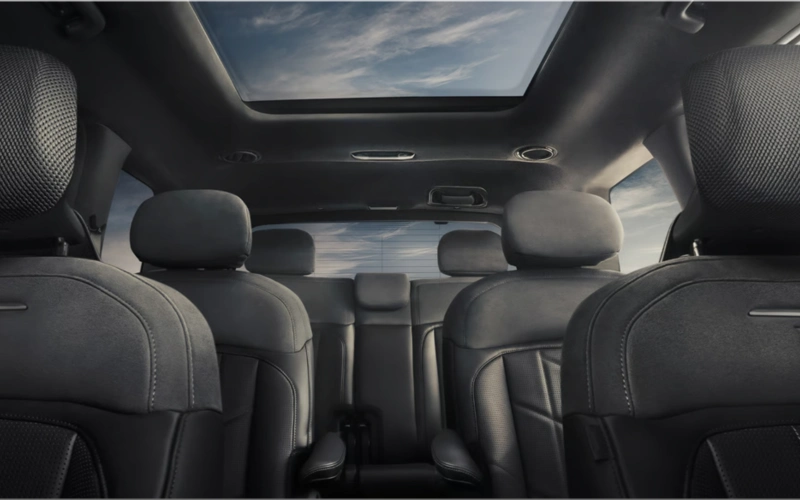
Inside the spacious cabin, simple forms define the architecture and echo the design purity of the exterior. Compared to its predecessor, legroom and shoulder width are increased both front and rear, with class-leading rear legroom. The choice of materials, the fit and finish and the tactile quality of the controls all reflect the new 9-5's premium character.
The driver-focused cockpit is traditional Saab, but its execution is pioneering. The deep centre console sweeps up at a shallow angle around the driver into the main instrument display, which is topped by a neat ventilation zone. Deeply recessed main dials include a rolling ‘altimeter' speed read-out, a reference to Saab's aviation heritage from the Aero X concept. Driver displays, including the optional head-up display (HUD) in the windscreen, are illuminated in signature Saab green and have a crisp, floating appearance. The car's ignition, now a start/stop button, remains between the front seats, next to the gear shift.
Infotainment choices include a top-of-the-line Harman Kardon 5.1 channel surround sound audio system and an 8-inch colour touch screen navigation system with hard disk storage for map data and 10GB for MP3 music files. A large centre console provides storage and connections for several portable devices through USB and 3.5mm AUX ports alongside a 12V power outlet.
Rear passengers can even access their own audio or watch a DVD. The rear seat entertainment unit in the back of the centre console accommodates audio controls and folding viewing screens are installed in the backs of the front seats. Wireless headphones are provided for listening and viewing.
On the road
An array of chassis technology is focused on delivering a sporty, rewarding driving experience that belies the 9-5's size. Saab XWD, the industry-leading all-wheel-drive system already available on the Saab 9-3, is offered at launch with the 2.0-litre turbo and 2.8V6 turbo engines with further applications due in the future. Available throughout the range are: adaptive chassis control, with driver settings selected through Saab DriveSense; Bi-Xenon Smart Beam adaptive headlights and adaptive cruise control. Three different suspension layouts are fitted according to engine power and all are available with a sport chassis setting.
Saab has some 30 years experience in turbocharging engines and the all-turbo powertrain line-up in the new 9-5 further develops its rightsizing engine strategy. At launch, the four-cylinder diesel comprises a 160 hp, 2.0-litre turbo engine with CO 2 emissions of just 139g/km and the 2.0-litre petrol turbo engine develops 220bhp. A top-of-the-line 2.8 V6 turbo, generating 300hp and 400Nm of torque, is offered exclusively with Saab XWD.
Shortly after launch, a 1.6-litre petrol turbo with 180hp will be introduced, together with a 2.0-litre BioPower E85 engine. All transmissions will be six-speed.
A new era
Defined and equipped by Saab as its top-of-the-line contender in the premium saloon segment, the all-new 9-5 is the most technically advanced car ever produced by the company. It will be built at Saab's home plant in Trollhättan, where it has been engineered.
The all-new 9-5 makes its public debut at the 2009 Frankfurt International Motor Show. Combining head-turning good looks with cutting-edge driving technology, it's the start of a new era for Saab.
2. Powertrain
* Responsible performance with efficient four-cylinder turbo engines* CO 2 values from just 139g/km* Three fuel types: Petrol, E85 and diesel in all-turbo line-up
The new 9-5's all-turbo powertrain line-up brings together Saab expertise in turbocharging with state-of-the-art engine technologies. With Petrol and BioPower (E85 compatible) engines developing more than 100 hp per litre, the new 9-5 Saloon advances Saab's rightsizing powertrain strategy. Efficient turbocharged engines as small as 1.6 litres make a fitting start for the engine line-up for Saab's new premium saloon. CO 2 emissions as low as 139g/km are also on offer from Saab's 2.0 turbo diesel engine.
Petrol (1.6T, 2.0T and 2.8V6)
All petrol engines feature electronic management, electronic throttle control, direct ignition and four valves per cylinder operated by overhead, maintenance-free chain-driven camshafts. For longevity and reliability, turbochargers are water-cooled and use air-to-air intercooling to increase intake charge density.
To give minimal piston friction and wear characteristics, while also benefiting fuel and oil consumption, the cylinder walls of the engines are laser-etched for an extremely smooth finish. Under-skirt piston oil cooling and sodium-filled exhaust valves are further efficiency measures.
1.6 Turbo
The engine line-up starts with this powerful four-cylinder motor giving 180 hp/132 kW and excellent torque of 230 Nm all the way from 2,200 rpm to 5,500 rpm. It includes an ‘over boost' function, which raises torque to 266 Nm for up to five seconds on a wide open throttle.
Rated among the most powerful series production engines in its displacement class, this ‘right sized' powertrain gives the new 9-5 strong performance: zero to 62mph in 9.5 seconds, and impressive fuel consumption and CO 2 emissions projected to be 37.1mpg and 179 g/km.
For strength and reduced noise, the cylinder block is in cast iron. A die cast, structural aluminium oil pan adds further stiffness and noise suppression. Additional refinements include the use of hollow camshafts, for reduced weight and lower reciprocating mass, and a dual-mass flywheel for improved running refinement. A map-based thermostat control raises the coolant temperature at low engine speeds, or under light loads, to help reduce internal lubricant friction and also improve fuel consumption.
2.0 Turbo – Petrol and BioPower
The performance stakes are raised with this all-aluminium engine, which is also available as a BioPower variant enabling it to run on Petrol and/or E85 fuel (85% bioethanol, 15% Petrol) in any blends. In both configurations, it delivers peak power of 220 hp/ 162 kW and plentiful torque of 350 Nm from just 2,500 rpm.
This engine is offered with front wheel drive or XWD, the industry-leading all-wheel-drive system. It features variable valve timing and direct injection to further improve fuel consumption, emissions and performance. The camshafts have hydraulically operated vane-type cam phasers which allow both the inlet and exhaust valve timing to be adjusted independently, according to varying engine speed and load. The many benefits include; a broader spread of torque, higher maximum power and improved fuel consumption.
Direct injection delivers fuel under high pressure directly into the combustion chamber during the compression stroke. This enables the separation of air and fuel delivery, allowing improved scavenging of the combustion chamber to give substantially more low-end torque and reduced engine knocking.
A twin-scroll turbocharger is also used, which virtually eliminates turbo lag at low engine speeds and delivers a throttle response comparable to that of a naturally-aspirated engine. Each of the two scrolls on the turbine is fed by a separate exhaust passage – one from cylinders one and four, the other from cylinders two and three. Other features include: twin counter-rotating balance shafts for smooth running; a forged steel crankshaft for added strength and aluminium pistons to reduce reciprocating mass.
With front-wheel drive, this engine propels the new 9-5 from zero to 62mph in 7.9 seconds, giving projected combined fuel economy of 33.6mpg and CO 2 emissions of 199 g/km.
Available exclusively in Aero specification with XWD and 6-speed automatic transmission, this engine has a classic 60° angle between the cylinder banks to give optimum balance for vibration-free running to match its silky power delivery. It delivers 300 hp/ 221 kW and an impressive 400 Nm of torque between 2,000 and 5,000 rpm, giving zero to 62mph acceleration in just 6.9 seconds.
Variable valve timing on both intake and exhaust sides ensures a near linear delivery of torque, irrespective of engine speed and load. The single, twin-scroll turbocharger is mounted centrally above the transmission and fed by both banks of cylinders. The use of two inlet tracts, one for each cylinder bank, separates the exhaust gas pulses, improving gas flow, reducing energy losses and raising turbocharger efficiency.
The exhaust manifolds are double-skinned with hydroformed stainless steel liners to improve cold start emissions by minimising heat absorption to the manifold. Air injection into each exhaust manifold for up to 30 seconds after a cold start also helps the central pre-catalyst, positioned upstream of the main catalytic converter, achieve its effective working temperature as early as possible.
The strong, forged-steel crankshaft runs in four main bearings and the steel connecting rods are sinter forged for extra strength and durability. The polymer-coated, aluminium pistons and the floating wrist-pins are cooled and further lubricated by triple under-skirt oil jets.
2.0 Turbo Diesel
The 16-valve, 2.0 litre turbo diesel engine develops 160 hp (118 kW) and 350 Nm of torque and offers projected CO 2 emissions of just 139 g/km, together with impressive fuel economy of 53.3mpg over the combined cycle.
It has a cast-iron cylinder block with laser-etched cylinder walls and an aluminium alloy cylinder head. The twin overhead camshafts are chain driven and maintenance-free.
Electronic management controls the common rail, direct and multiple fuel injection system and a variable geometry turbocharger is fitted to give an excellent low-end throttle response.
Other refinements include a weight-saving plastic intake manifold and a dual-mass flywheel for greater running refinement. A maintenance-free exhaust particulate filter is fitted as standard.
3. Exterior and Interior Design
* Saab unveils new era in expressive Scandinavian design* Delivers on design themes from Aero X concept car* Organic sculpture presents Saab signature design themes* More spacious, driver-focused cabin
Born and bred in Scandinavia , the all new Saab 9-5 Saloon is a sleek expression of the power of simplicity and heralds the arrival of a new, more assertive design language for the brand.
“We are adopting a new vocabulary to tell the story of our brand,” explains Saab Brand Design Chief Simon Padian.* “It gives a fresh, very modern expression to some of our classic design cues.”
The ‘words' in the new vocabulary come from Saab's award-winning Aero X concept car, revealed in 2006 as a signpost to the future of Saab design. Its bold front-end styling, ‘wraparound' window graphic, clean body surfacing and ice-block lighting themes are key visual elements now translated into the powerful form of the new 9-5 Saloon.They reflect a brand inspired by Scandinavian design and a unique aircraft heritage.
“We pushed out the boundaries of Saab design with the Aero X concept,” says Simon, “and the new 9-5 shows how we are bringing this more assertive look to our products. It is the first step in a new era for Saab design.”
Organic sculpture
The face of the new 9-5 is defined by a deep grille flanked by curving, ‘ice-block' headlamp units with signature LED light guides. The windshield and side windows are presented as a single wraparound graphic, the disguised front and side pillars giving the glasshouse of the cabin Saab's signature cockpit look. The proportions of the windshield and roof are also reminiscent of the ‘peaked cap' look of the classic 900 model. The large Saab logo, embossed in the centre of the grille, characterises the more assertive, self-confident design language.
The ‘organic sculpture' of the low-slung body blends clean convex and concave surfaces with natural, curvaceous forms. With an appearance of being shaped by the wind, the bodywork has a smooth, fuselage-like quality inspired by Saab's aircraft heritage. Wings stretched to the outer edges of the wheels, 17 to 19-inches in size, energise the looks of the car and add to its dynamic, purposeful stance.
In Scandinavian tradition, the visual impact of the design is heightened by an absence of exterior trim or stylised detailing. All individual elements contribute to the appearance of the design as whole, without providing visual distraction or ‘clutter'. “With Scandinavian design we are seeking to simplify forms,” says Simon. “Things don't have to be complicated to be interesting. In visual terms, less is more.”
Such ‘passive' design detail can be seen in the door mirrors. “The mirror casings are black, rather than body coloured, because the mirror unit occupies the same visual space as the windows,” explains Simon. “We didn't want any interruption to the wraparound window graphic which makes such a bold statement.”
Saab brand design cues can be seen in the ‘hockey stick' belt-line, underlined by a simple matt aluminium trim, leading into the strong rear C-pillars.
The car's dynamic character is underlined by a falling roof-line and those strong, sweeping rear pillars which buttress a slightly recessed rear screen. The flow of the roof and pillars culminate in a smooth, flat rear deck. A full-width ice-block rear light bar, echoing the front light theme, adds to the new 9-5's Scandinavian character.
Saab's design heritage is evident from that rear screen, a counterpoint to the wrap around windshield at the front. “We have inverted the shape of the rear screen of the classic 900 Saloon,” explains Simon. “In fact, we've probably been even bolder with the design at the back than the front. We haven't had a consistent Saab identity in this area before. You can expect to see the light bar, and the way the rear lights wrap into it, as a signature feature in future products.”
Viewed from any angle, the all new 9-5 has a distinctive character. “We deliberately wanted to avoid the cliché of the coupé look for Saloons. We've stretched the traditional three-box Saloon proportions but kept a defined trunk line – this is a sports saloon which makes a powerful visual statement. It doesn't need to look like a coupé or a hatchback.”
The sleek shape also contributes to excellent aerodynamic properties. An impressive 0.28 Cd (coefficient of drag) contributes to reduced fuel consumption and low wind noise. Good high speed stability is also ensured by near zero lift forces at the front axle and the achievement of down force at the rear, assisted by airflow from the slightly concave surface of the trunk lid.
Top-of-the-line Aero variants are visually distinguished by unique front and rear bumper mouldings, 19-inch ‘turbine' alloy wheels, front fog lamps, a lowered sport chassis, bi-xenon headlamps and twin exhaust tailpipes integrated into the rear bumper fascia.
Driver Focused
The new 9-5's spacious cabin is characterised by simple forms that echo the clean lines of the exterior. The choice of materials, the fit and finish and the tactile quality of the controls all reflect the new 9-5's premium appeal.
A wheelbase 134 mm longer than that of its predecessor has enabled a substantial 58 mm increase in rear legroom, which exceeds that offered by all main competitors. Front legroom is also increased by 11 mm.
The driver-focused cockpit is traditional Saab, while its execution is all new. A deep centre console sweeps up around the driver into the main instrument display. It is a new expression of Saab's signature cockpit layout, first introduced on the Saab 9000 model and continued with the current 9-5. The console is now inclined at a much shallower angle, improving driver ergonomics in the operation of its functions and view of the display screen.
Simplicity of form is evident from a ventilation zone, with signature Saab ‘joystick' controls, which extends across the top of the main instrument display. “This helps clean up the look of the front fascia area,” explains Simon. “We wanted to eliminate separate vents in the centre and on the driver's side, which would break up the fluid, integrated forms we wanted.”
The deeply recessed main dials include a driver-selectable, rolling ‘altimeter' speed read-out, a reference to Saab's aviation heritage from the Aero X concept. The needles of the dials, the main display screen and the optional HUD in the windshield, are all illuminated in signature Saab green. The 'Night Panel' button, another unique Saab feature, allows the driver to minimise distraction during night driving by switching off all the main instrument illumination, except speedometer.
In Saab tradition, the car's ignition – now a start/stop button – remains between the front seats, next to the gear shift and the electric park brake, fitted as standard for all variants. The matt aluminium trim surrounding the gear shift and start/stop button has an ‘organic' shape with a varying width and thickness to match the curvature of the surface. “This is in harmony with ‘free form' that we've applied to the exterior,” says Simon. “It's a detail that looks very natural, adding to the crafted, quality appeal of the cabin.”
Other subtle details include; the small channels in the centre stack fascia that link the main infotainment and climate controls. They resemble the shape of Leonardo da Vinci's Vitruvian Man, a hint at the combination of human design and scientific precision deployed in the layout of the cabin. It's part of the logical, zonal groupings used for the location of the car's interior, chassis and lighting controls.
The centre console features two storage compartments with twin cup-holders and the potential to connect several portable devices through USB and AUX connections alongside a 12V power outlet. A useful pull-out storage drawer next to the driver's door is big enough to take a number of personal items, such as a wallet, PDA, and glasses.
The rear of the cabin provides comfortable accommodation for three adults. In addition to more leg and shoulder room, it now offers the option of rear seat entertainment via fold-out screens in the front seat-backs and separate rear climate control. The 60/40 split, folding seatback includes an arm-rest with twin cup holders, a storage compartment and a load-through ‘ski hatch'.
Interior and Equipment
Each model variant is distinguished by a unique cabin ambience, including decor trim applied to the main instrument panel, centre console and behind the door grab handles.
The upper and lower instrument panel, door cappings and decor trim are available with colour combinations including Jet black, Dark Pewter, Cocoa and Parchment with brushed metal look décor trim. The seats are upholstered with leather bolsters and fabric inserts available in Jet Black, Parchment or Shark Grey.
Top-of-the-line Aero adds a sporty, all-leather interior with a unique Clear Zone finish inserted in the wraparound instrument panel. The rest of the front fascia and door trims are in Jet Black with dark, bushed metal decor trim.
Standard equipment includes: a keyless start/stop button, electric park brake, six-way adjustable driver and passenger seats, dual zone climate control, leather steering wheel, information display, front seat squab storage pouches, steering wheel audio controls, adjustable front arm-rest, cruise control, ambient interior lighting and a nine-speaker audio system with a USB and 3.5mm AUX connection and a graphic information display.
Aero adds an electric driver's seat, heated front seats, extendable under-thigh support. The interior is further distinguished by a full colour information display and an ‘Aero' embossed, flat bottomed sports steering wheel with a perforated leather grip.
* Simon Padian was born in the UK and qualified with a BA Honours in Industrial design Transportation from Coventry University in 1987. He began his career with Saab in 1989 and since 1995 has been Saab's Brand Design Chief.
4. Technical Highlights
* The most technically advanced Saab ever* Conceived, built and chiefly developed in Sweden* Equipped to compete head-to-head with leading premium class competitors
The all-new 9-5 is the most advanced Saab ever, introducing an array of high-tech features and benefits that bring the car and driver closer together, while also enhancing the travel experience for all occupants.
Defined by Saab as the company's top-of-the-line contender in the premium segment, the new 9-5 has been chiefly engineered in Sweden , where its development has been guided and where it will be built at Saab's home plant in Trollhättan.
In terms of functionality and the quality of the driving experience alone, the new 9-5 Saloon is configured to challenge premium class standards. It will offer a fresh and distinctive alternative choice to established market leaders.
State-of-the-art technologies are harnessed to offer the features customers most want. Smart functions range from an aircraft inspired, head-up information display (HUD); dynamic parking assistance; hard disk music storage and flexible boot storage.
“This is the most sophisticated and technically advanced car we have ever produced,” says Mats Fägerhag, Head of Technical Development at Saab. “It is enabled to meet the needs of modern day motoring and brings together all the functions and features customers would expect in a car of this class.”
On The Road
Chassis systems and technologies are focused on delivering a sporty driving experience. The mechanical suspension layouts, for example, are tailored to match the differing performance characteristics of its engines and drivelines. These can be overlaid by the optional Saab DriveSense adaptive chassis system which includes real time damping control.
HiPer Strut and Linked H-arm suspension.
Three different suspension combinations are fitted to the 9-5. Variants with the 1.6-litre petrol and 2.0-litre diesel engines have a MacPherson strut front and 4-link rear arrangement, while a Linked H-arm rear suspension is fitted with the 2.0-litre petrol turbo, and XWD variants. Aero variants with the 2.8V6 Turbo have a HiPer Strut (High Performance Strut) front suspension and the Linked H-arm rear layout.
The advanced HiPer Strut offers driving benefits similar to those of a double wishbone layout, but without any weight penalty. The inclination and length of the kingpin is reduced and the caster angle of the steering increased. The result: improved steering quality with a more secure driving feel, as well as enhanced handling and braking characteristics.
At the rear, the sophisticated H-arm layout, with isolated sub-frame mountings, gives still greater ride comfort, reduces vibration entering the cabin and improves roadholding. For both H-arm and 4-link rear suspensions, shear bushings are used in the damper mountings to the body structure. These effectively dissipate vibrations from the road, improving ride comfort and noise isolation.
Saab DriveSense
The new 9-5 is the first Saab to offer real-time damping control through Saab DriveSense, which includes a range of adjustments that helps the car adapt to the way it is being driven. In addition to the default ‘Intelligent' mode, two further settings, ‘Sport' and ‘Comfort', can be selected via a rotary knob next to the gear shift.
In real-time, ‘Intelligent' mode adjusts the car's handling characteristics in response to driving style. It continually varies the stiffness rates of the electronically-controlled dampers, the action of the electronic throttle and the degree of power steering assistance. For example, when the car is being driven in a sporty style, the action of the dampers is automatically stiffened to improve body control and roadholding; the throttle pedal movement is shortened for a faster response and steering assistance is reduced for a more direct feel. At reduced speeds, the dampers are softened for greater ride comfort, the action of the throttle pedal becomes less aggressive and the steering feels lighter.
The ‘Sport' setting introduces a firmer range of adjustment for the dampers, offering even greater body control. In addition to sharpening the throttle pedal response and reducing the level of power steering assistance, ‘Sport' mode also raises the gear shifting points with automatic transmission, raises the ESP intervention threshold and sends more drive torque to the rear wheels when XWD is fitted.
By contrast, ‘Comfort' mode, optimises ride refinement by enabling a softer range of adjustment for the dampers and a smoother throttle pedal action. It provides enhanced compliance over rough road surfaces and is the most appropriate setting for optimum fuel economy.
Saab DriveSense is offered as an option with all engines and equipment specifications, except the 2.0 turbo diesel and 1.6 turbo petrol engines.
Saab XWD with eLSD
Saab's industry-leading all-wheel-drive system is optional for 2.0-litre Turbo variants and standard with the 2.8 V6 Turbo engine. It offers a more rewarding driving experience and greater control in all road conditions. This on-demand, active system – integrated and optimised by Saab chassis engineers – uses a multi-plate Haldex clutch unit to infinitely vary drive torque between the front and rear axles. Careful programming enables the application of rear drive to balance oversteer and understeer characteristics.
An electronically-controlled rear limited-slip differential (eLSD) transfers up to 50% of rear torque between the rear wheels, to whichever has more grip. Under hard cornering, or when completing a high speed manoeuvre, such as a lane change, the brief application of more or less torque to either wheel helps control the rear of the car and more closely follow the direction of the front wheels.
Sport Chassis
Standard with XWD and optional with front-wheel drive, the Sport chassis set-up offers improved handling and body control. It includes a 10 mm lower ride height, a stiffer front anti-roll bar, stiffer springs and dampers, and greater steering feel from top strut mounts with reduced lateral compliance.
Adaptive Cruise Control
A smart function that not only enables the driver to select a constant cruising speed, but also automatically alters the chosen speed to maintain a constant, safe distance to the vehicle on the road ahead. The new 9-5's intelligent system also allows the driver to choose one of three distance options to the vehicle ahead.
A radar sensor in the grille emits a beam to measure the distance to the vehicle in front and if this reduces below the required setting, the throttle opening is adjusted or, if necessary, the brakes are applied. Should heavy braking be required, a warning sounds to alert the driver to take action. Once the appropriate distance is restored, the car will accelerate back up to the pre-set speed. A conventional, ‘passive' cruise control function is also available.
Variable Effort Steering (VES)
When manoeuvering, parking or driving at low speeds, VES increases the level of power assistance in order to reduce steering effort. At higher speeds, hydraulic assistance is automatically reduced to ensure a high degree of steering ‘feel' for the driver.
VES uses an electro-magnetic motor on the steering rack, controlled by a coil, to boost or reduce the level of hydraulic assistance. VES also adapts to the speed at which the steering wheel is turned, providing progressively increased assistance the faster the wheel is rotated. The system is fitted as standard with XWD and Saab DriveSense.
Behind the wheel
The view from the cosseting driver's seat of the new 9-5 Saloon can be configured through optional features including an aircraft-style information display and adaptive headlamp lighting. These reflect Saab's commitment to responsible performance by increasing driving safety.
Head-Up Display (HUD)
Projecting essential data in the windshield through the HUD, such as vehicle speed, warning messages, turn indicators and navigation instructions, offers real-life safety benefits as the driver does not need to look away from the road. Inspired by similar technology in fighter jets, the 9-5's HUD is shown as a virtual image, which appears approximately two metres ahead, within the driver's natural eye focus. The display is controlled and adjusted via two switches in the main fascia adjacent to the driver's door. It is illuminated in signature Saab green, as used in aircraft cockpits.
Bi-Xenon Smart Beam
This is one of the most sophisticated, adaptive lighting systems on the market. It uses bi-xenon headlamps that swivel to improve illumination around bends and automatically optimises light beam patterns to suit the prevailing speed, road and driving conditions. Bi-Xenon Smart Beam also engages and disengages high beam automatically, relieving the driver of a repetitive chore and reducing the chance of dazzling oncoming drivers.
At speeds up to 30mph, Town Light provides a wide, flat beam so that pedestrians or potential hazards at the roadside can be better seen. At speeds up to 62mph, Country Light projects a longer beam, while still giving good roadside illumination. Motorway Light increases the beam length by 140 metres, and is activated only above 62mph on straight, level roads.
When rain or snow is detected by the rain sensor, Adverse Weather Light provides a wide, asymmetric light pattern which allows the driver to see lane markings better. In all light modes, Dynamic Bend Light provides illumination into oncoming bends by swivelling the headlamps up to 15° to the left or right, according to the vehicle speed and steering angle.
Lane Departure Warning (LDW)
This driving safety function uses a camera in the back of the interior mirror which ‘looks' through the windshield.
At speeds above 37mph, the system initiates a warning alarm if the vehicle begins to veer out of lane when the indicators are not engaged, for example with the onset of drowsiness or during moments of inattention.
Advanced Park Assist (APA)
A smart feature enabling the driver to parallel-park the 9-5 in tight spaces only one metre longer than its own length. APA uses ultrasonic sensors in the front, rear and side of the vehicle. The system detects a suitable parking spot and then plots a perfect reverse parking trajectory. The driver is instructed how to turn the steering wheel via icons in the main instrument display and audible chimes.
Comfort and Convenience
These features are focused on ease of use and making the cabin of the new 9-5 Saloon an enjoyable place to be. State-of-the-art infotainment systems include an 8-inch touchscreen navigation system, a Bluetooth phone system and rear seat entertainment and audio.
Start/Stop Button and Keyless Entry/Exit
Standard throughout the range, a start/stop button replaces the conventional ignition switch. In Saab tradition, it is located between the seats next to the gearshift. The engine control unit detects and authenticates a coded signal from driver's fob and the engine can be started or stopped by simply pressing the start/stop button.
For even greater convenience, a keyless entry/exit system is offered, which allows the car to be automatically unlocked when the door handle is pulled while the fob is still in the driver's pocket or handbag. The car is also automatically locked when the driver leaves it with the engine switched off. This ease-of-use feature removes the need to press the unlock/lock buttons on the standard fob.
Dual-zone Climate Control
Dual zone climate control offers independent temperature control for front seat passengers.
Advanced Infotainment Systems
The extensive infotainment choice breaks new ground for Saab, offering a wide range of state-of-the-art features, including a top-of-the-line harman/kardon system with true 5.1 surround sound reproduction through 11 speakers. The 8-inch touchscreen navigation system includes a bird's eye map view and hard disk drive storage for map data.
Audio source selection has never been more versatile. In addition to the AM/FM and optional DAB radio, the driver can play music directly from a CD, insert an MP3 player or memory stick into the standard USB connector, or even store 10 GB of favourite tracks on a built-in hard drive – all with full control via the faceplate and steering wheel. The standard USB connector is located conveniently alongside an AUX 3.5mm connector and 12V power outlet in the centre console. The USB ‘wires' the device to the car and offers instant control through the audio system, the in-car display showing the song title, artist and album information.
In the rear, passengers can enjoy their own onboard entertainment through a dedicated unit in the back of the centre console and two 8-inch screens which fold out, laptop style, from the front seatbacks. Passengers can select an alternative audio source to that being played up front, watch a DVD or enjoy entertainment from a stand-alone player, such as a games console or digital camera, connected to the AUX input. Sound is provided by wireless headphones.
Communication while on the move is supported by an integrated Bluetooth hands-free phone system, which functions via voice command and steering wheel controls. The remote SIM access profile allows all contacts and data from a mobile phone to be transferred to the car's own phone system via Bluetooth. Making calls through this embedded in-car system saves phone battery power, as well as delivering improved reception and sound quality.
Innovative boot storage
A U-shaped track in the floor carries an adaptable, telescopic cargo divider. The concept is an evolution of the cargo tracks offered on the current 9-5 Estate. This fast and flexible storage solution can keep a wide range of different sized items in place. The trunk is also fitted as standard with four bag carrying hooks and an umbrella holder.
Safety
Occupant protection in the new 9-5 builds on Saab's successful real-life safety philosophy. Crash testing and computer simulations are based on what happens in real collisions on real roads, using the findings of a database covering more than 6,100 real-life accidents involving Saab cars on Swedish roads. In this way, the development of the new 9-5 has drawn on all Saab's experience with real-life safety accumulated over more than 50 years Saab safety engineers are always aware they are ultimately protecting real people, not only dummies in laboratory crash tests.
Real-life safety means the structural design of the car, and the operation of its occupant protection systems, are evaluated through a large number of in-house crash tests which are additional to those legally required or carried out by consumer test organisations.
The success of this work is reflected In surveys of real-life collisions by the US Highway Loss Data Institute (HLDI) and the Swedish insurance company, Folksam, where Saab cars have consistently scored well, several times being ranked best in their segment. In Euro NCAP crash tests, the current Saab 9-5, 9-3 and 9-3 Convertible have all achieved a maximum five-star rating.
In addition to the full complement of occupant safety systems already installed in Saab cars, the new 9-5 adds third generation Saab Active Head Restraint (SAHR 3) as standard for the front seats and rear side airbags, together with pre-tensioning of the outer rear seatbelts, as an optional package.
Driving, or active safety – the ability to avoid becoming involved in an accident – is also improved by functions such as Bi-Xenon Smart Beam, LDW, HUD and adaptive cruise control as described earlier.
Image Gallery
- Add new comment
- 359 views