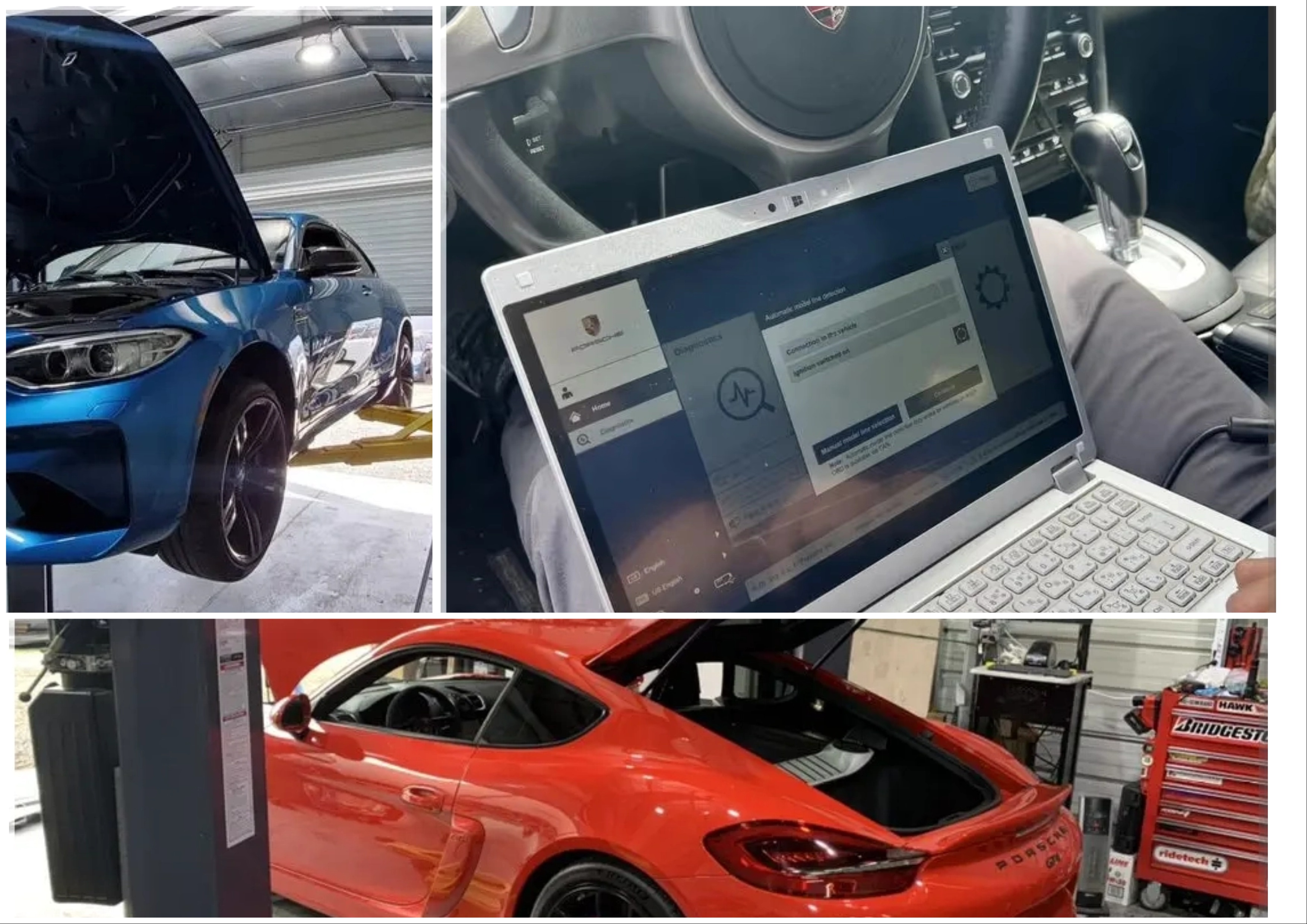
The electromechanical architecture of modern passenger vehicles has made traditional "trial-and-error" repair methods obsolete. Contemporary vehicles operate as network-connected systems governed by dozens of Electronic Control Units (ECUs) exchanging real-time sensor telemetry via Controller Area Network (CAN bus) protocols. When a drivability issue, unexplained noise, fluid leak, or warning illumination occurs, a single symptom can originate from multiple overlapping component failures.
Professional automotive problem diagnostics requires moving beyond simple OBD-II fault code reading. A diagnostic trouble code (DTC) indicates the system or circuit where a parameter threshold was exceeded—it rarely identifies the precise mechanical or electrical root cause. Isolating the true point of failure demands systematic sensor-level analysis, physical load testing, and precise signal verification.
Below is an inside look at how technical diagnostic protocols isolate complex automotive failures and why engineering transparency is critical during problem isolation.
1. Drivability and Powertrain Failure Isolation
Engine misfires, hesitation under acceleration, or intermittent rough idling are among the most challenging symptoms to diagnose accurately. A misfire fault code (such as P0300 through P0308) can stem from ignition coil breakdown, fuel injector clogging, low fuel pressure, vacuum leaks, or mechanical loss of cylinder compression.
Technical diagnostics follows a strict elimination sequence:
- Live Data and Freeze-Frame Telemetry: Technicians analyze short-term and long-term fuel trim percentages alongside Mass Air Flow (MAF) and Manifold Absolute Pressure (MAP) values under dynamic load conditions rather than static idle.
- Ignition Waveform and Fuel Pressure Testing: Oscilloscopes capture primary and secondary ignition coil voltage waveforms to identify internal winding shorts, while mechanical fuel pressure transducers test high-pressure direct injection pumps under acceleration stress.
- Evaporative and Intake Smoke Testing: To locate micro-vacuum leaks or cracked intake boots without unnecessary component teardown, low-pressure smoke machines pressurize sealed intake circuits to visually pinpoint air leaks.
2. Electrical, CAN Bus, and Parasitic Drain Diagnostics
Modern vehicle electrical issues often manifest as ghost symptoms—intermittent instrument cluster failures, unintended battery drain, or false sensor fault triggers. Modern diagnostic procedures rely on advanced circuit isolation to resolve complex electrical faults:
- Voltage Drop Testing Across Grounds: Resistance increases over time due to corroded ground straps and wiring terminal oxidation. Technicians execute dynamic voltage drop testing across live circuits under load to isolate high-resistance connections that static multimeter ohm tests miss.
- Parasitic Battery Drain Analysis: When a vehicle's battery drains overnight, technicians measure millivolt drops across micro-fuses using precision digital multimeters to trace sleeping ECU modules that fail to enter low-power standby modes.
- CAN Bus Signal Inspection: Intermittent communication codes between modules require digital storage oscilloscopes to inspect CAN-High and CAN-Low square-wave signals for termination resistor failure, voltage spikes, or ground interference.
3. Digital Inspection Proof and Diagnostic Transparency
A major point of friction for vehicle owners during diagnostic troubleshooting is understanding why specific tests or repairs are recommended. Vague verbal explanations often create distrust and uncertainty regarding repair necessity.
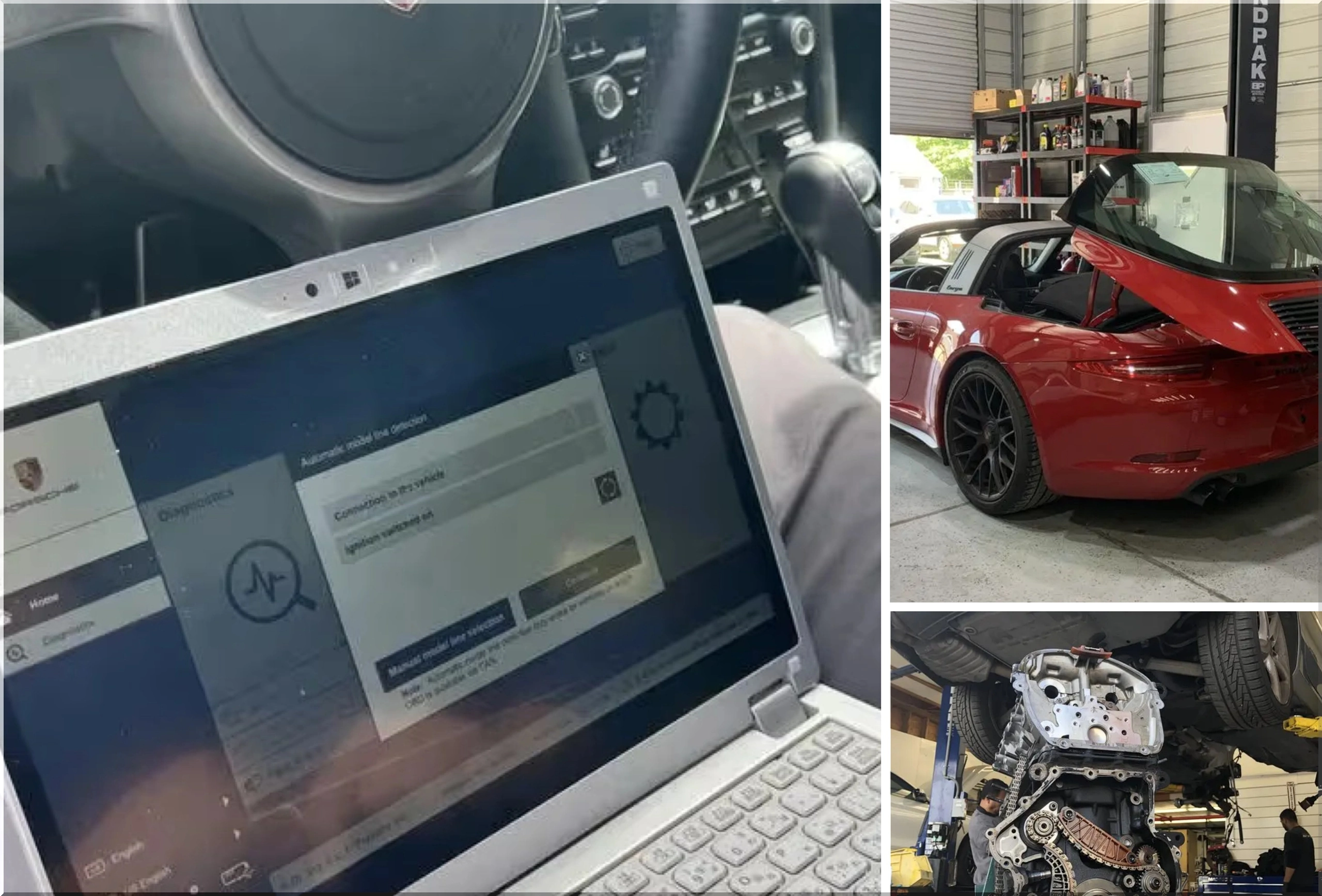
To eliminate ambiguity, specialized repair facilities—such as the diagnostic team handling car problem diagnostics in Chicago—integrate comprehensive digital documentation directly into their troubleshooting workflow:
- High-Resolution Photo and Video Evidence: Vehicle owners receive detailed diagnostic reports featuring macro-level photos of cracked vacuum lines, corroded electrical connectors, worn spark plug electrodes, or contaminated fluid samples.
- Component Test Verification: Diagnostic reports outline exact physical measurements—such as fuel pressure readings in PSI, cylinder compression figures, or sensor voltage curves—comparing live data against factory OEM tolerances.
- Prioritized Action Plans: Identified issues are categorized into critical safety concerns, impending mechanical failures, and advisory items, allowing vehicle owners to make informed service decisions.
Resolving modern vehicle problems requires a blend of advanced electronic diagnostic equipment, deep mechanical knowledge, and complete operational transparency. By replacing guess-based parts swapping with sensor-level validation and digital photo proof, modern automotive facilities ensure that vehicle issues are diagnosed accurately the first time, saving owners time, money, and unnecessary component replacements.
- Add new comment
- 60 views