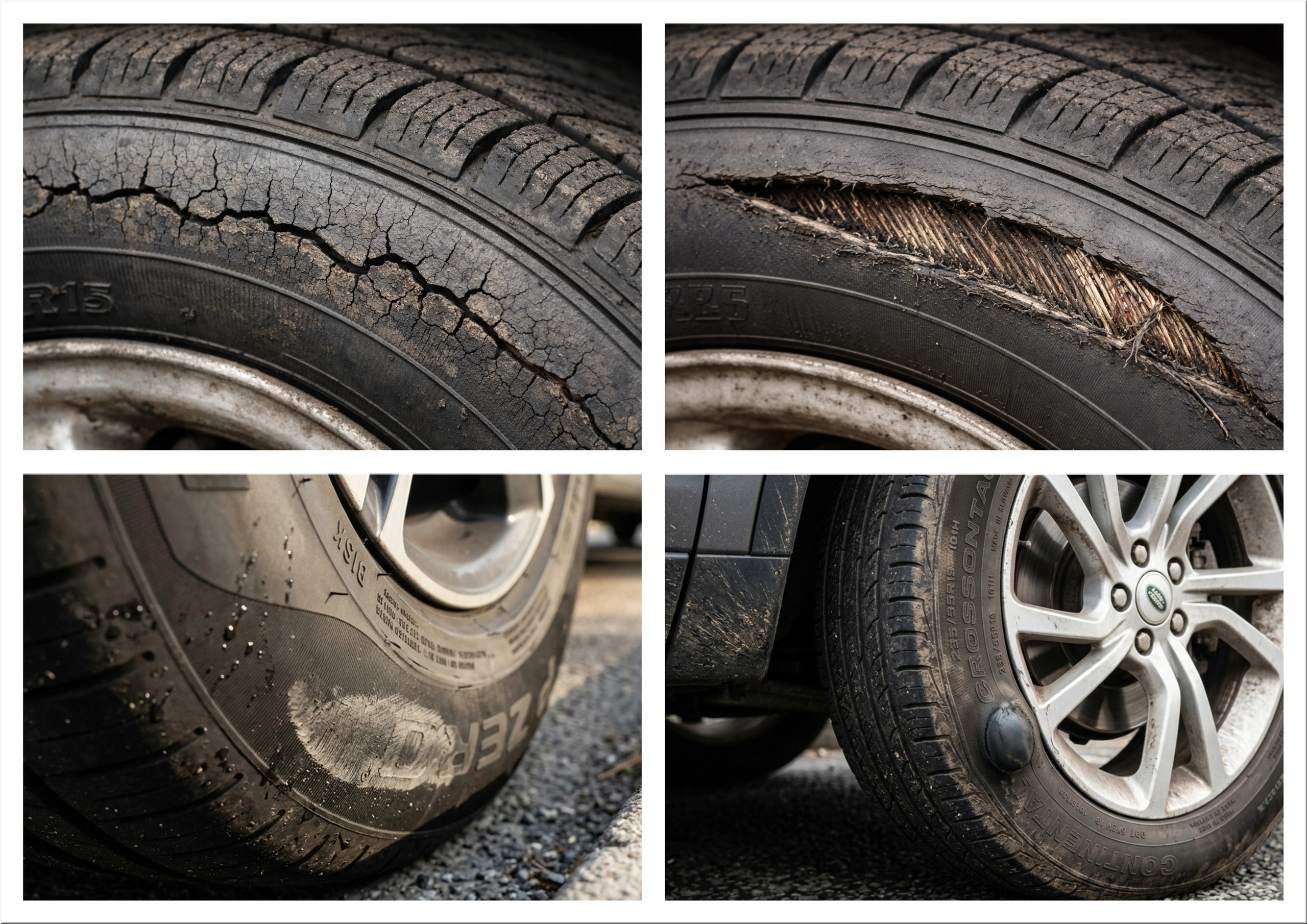
The sidewall is your tire's most vulnerable zone. It flexes constantly, it is thinner than the tread, and it contains structural cords that keep the tire intact at speed. That is why many types of sidewall damage are not repairable and should trigger an immediate replace-or-tow decision.
Fast rule: If you see a bubble, a bulge, exposed cords, or a puncture in the sidewall, treat the tire as unsafe. Stop driving and replace it or tow the vehicle.
Definitions
- Sidewall: The rubber area between the wheel rim and the tread. It flexes and carries the tire's structural cords.
- Cords or plies: Internal layers (fabric and other reinforcement) that give the tire strength. When damaged, the tire can fail suddenly.
- Shoulder: The outer edge where the tread meets the sidewall. This area also has strict repair limits.
- Bead: The inner edge that seals against the wheel. Bead damage can cause air loss and mounting failure.
Visual guide: safe vs unsafe sidewall damage
This section is designed to match what you will actually see in a driveway or parking lot. Use it as a quick triage tool, then get a tire professional to confirm when anything looks borderline.
| What you see | How it looks in real life | Status | What to do now |
|---|---|---|---|
| Bulge or bubble | Egg-shaped bump pushing outward on the sidewall (often after a pothole or curb hit). | UNSAFE | Stop driving. Replace the tire or tow. Do not plug, patch, or use a sealant as a fix. |
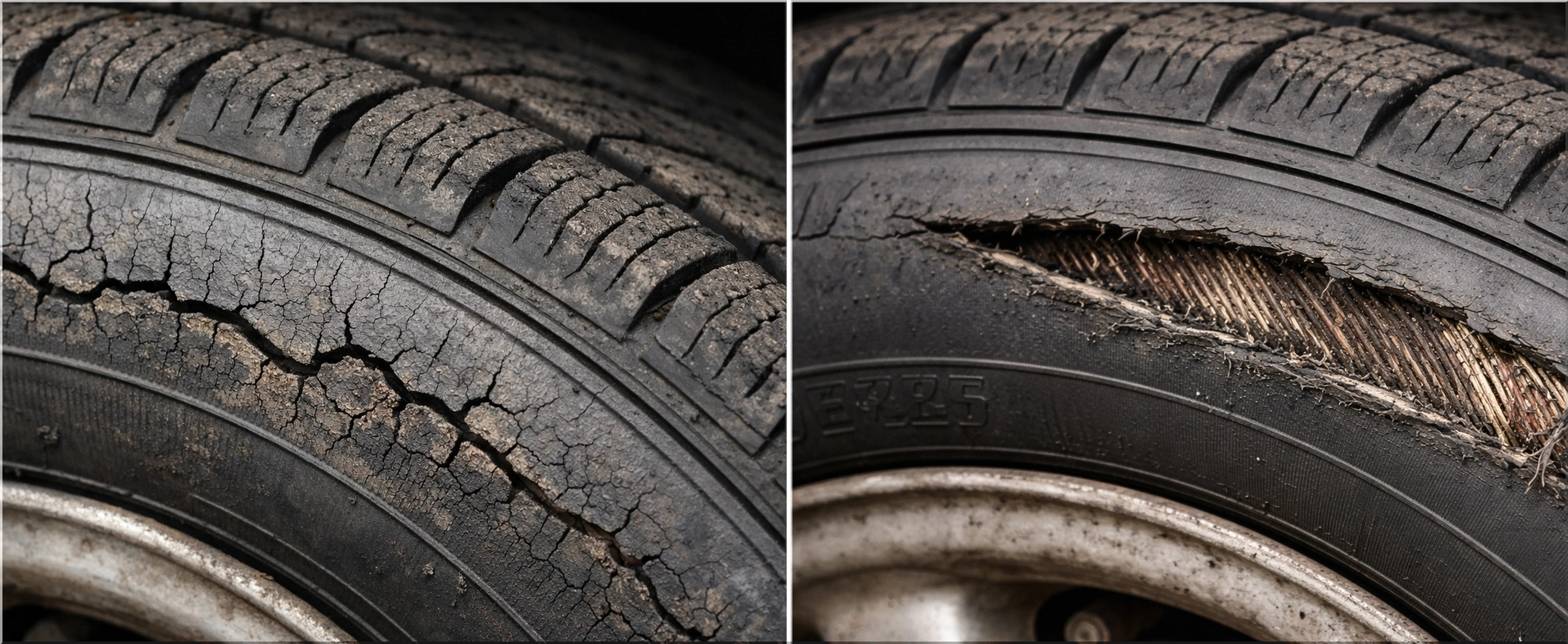
| Cords or fabric showing | You can see threads, fabric, or steel-like strands where rubber is missing. | UNSAFE | Replace immediately. The tire's structure is exposed and weakened. |
| Puncture in the sidewall or shoulder | Nail, screw, or hole on the sidewall or near the tread edge where the tire bends. | UNSAFE | Replace. Standard repair guidelines limit repairs to the tread area only. |
| Deep cut or gouge | A cut you can spread open, a flap of rubber, or anything that looks deep enough to reach internal layers. | UNSAFE | Replace or tow. Sidewall cuts can propagate quickly under flex. |
| Severe cracking or dry rot | Widespread cracks, cracks that look deep, or cracking that appears around the entire sidewall. | CAUTION to UNSAFE | Get inspected now. Replace if cracks are deep, widespread, or the tire is older and brittle. |
| Sidewall scuff or curb rash | Scraped rubber from brushing a curb. No cords showing and no bulge. | CAUTION | Clean and inspect closely. If rubber is missing deeply, if cords appear, or if a bulge develops later, replace. |
| Inward dents or wavy indentations | Small dips, ripples, or undulations that look molded into the sidewall. | USUALLY NORMAL | Monitor for change. If it becomes an outward bulge, treat it as unsafe. |
Photo checklist you should publish with this guide
For a true visual guide, add your own original photos. Use the captions below as your template and keep the shots consistent: same tire angle, same distance, same lighting.
Image
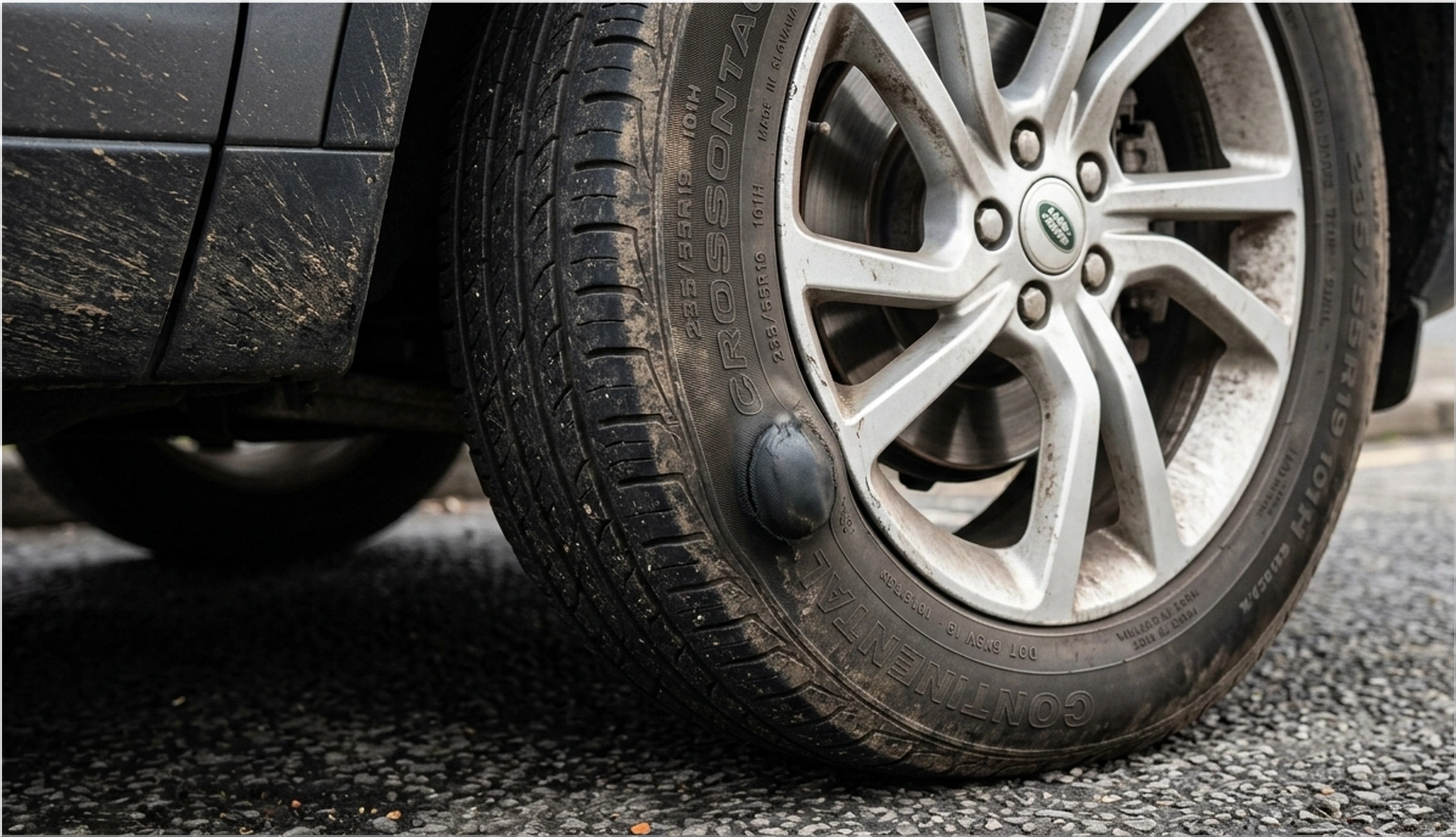
Bulge or bubble (UNSAFE): Outward bump means internal cords likely failed. Replace immediately.
Image
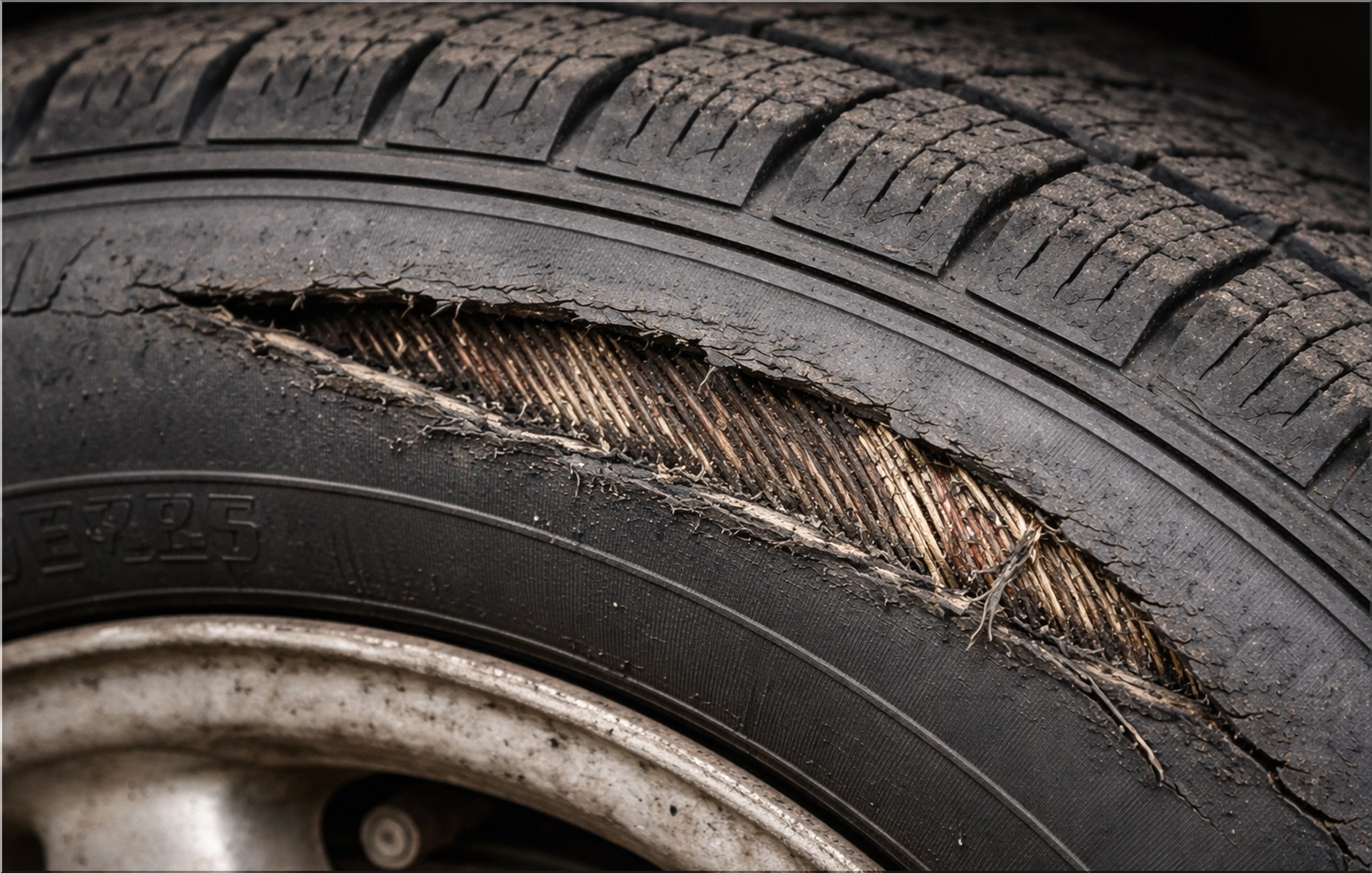
Cords exposed (UNSAFE): Once cords show, the tire's structure is compromised. Replace.
Image
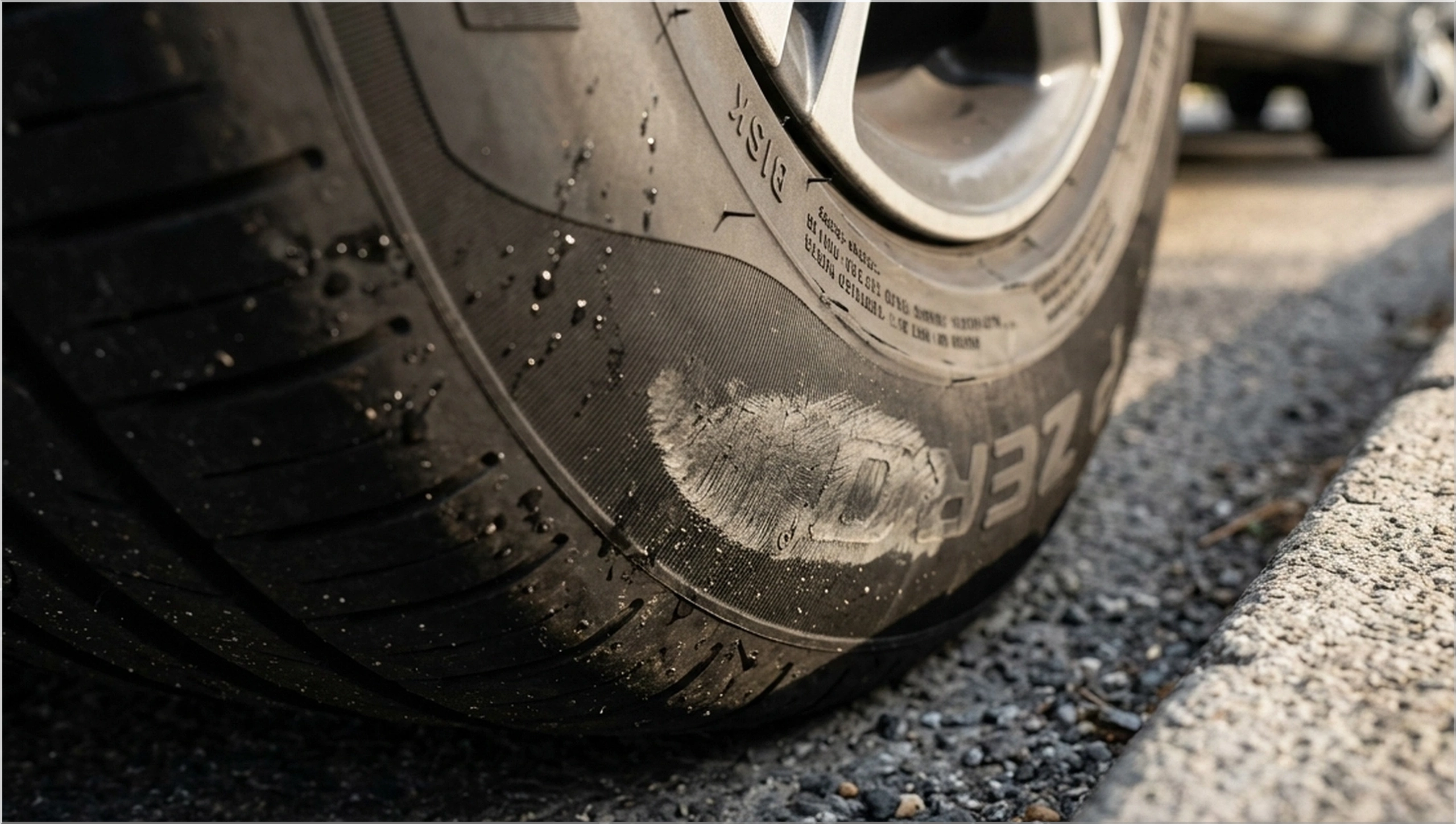
Scuff with no cords (CAUTION): Often cosmetic, but inspect for depth and watch for delayed bulges.
Image

Cracking or dry rot (CAUTION): Depth and spread decide. Replace if cracking looks deep or widespread.
Why sidewall damage is such a big deal
- The sidewall flexes. Each rotation bends the damaged area, which can enlarge a cut or worsen internal cord damage.
- Many repairs are not allowed outside the tread. Standard repair guidance limits repairs to the tread area, not the sidewall or shoulder.
- Bulges signal internal failure. A bubble often means cords broke and air migrated into layers. That can turn into a sudden blowout.
How to inspect sidewalls in 60 seconds
- Use a flashlight. Turn the steering wheel outward to expose the front tire sidewall.
- Scan for outward bumps. Bulges or bubbles go to unsafe immediately.
- Look for missing rubber. If you can see threads or fabric, the tire is unsafe.
- Check for cuts that open up. If the cut looks deep or spreads when flexed, treat it as unsafe.
- Confirm tire pressure. After any curb or pothole hit, check PSI and monitor for slow leaks.
Emergency readiness
Sidewall problems rarely give you a graceful warning. Build a simple plan so you are not improvising on the shoulder.
- Know your spare situation. Full-size spare, compact spare, run-flat, or inflator kit all change your next step.
- Keep the spare tire inflated. Many compact spares require high PSI and sit underinflated for years.
- Do not rely on a plug kit for the sidewall. Plug kits are for emergency tread-only situations and are not a safe fix for sidewalls.
- If you must use a donut spare, keep it slow and short. Follow the tire's label and your manual, then replace the damaged tire quickly.
Pro-tips
- Recheck 24 hours after a curb hit. Some bulges appear later, not immediately.
- Front tire damage deserves extra caution. Front tires handle a lot of braking load, so treat borderline damage as a replace decision.
- Photograph the damage. Photos help a tire shop diagnose and help with warranty discussions if a defect is suspected.
What now?
- If you see a bulge, bubble, cords, or a sidewall puncture, stop driving and replace or tow.
- If you see a scuff with no cords, inspect closely, monitor daily for a few days, and replace if it worsens.
- If you see cracking, schedule an inspection and plan replacement if it is deep, widespread, or paired with age.
- If you are unsure, choose safety. Tires fail fast and they fail loud.
Image Gallery

- 1833 views