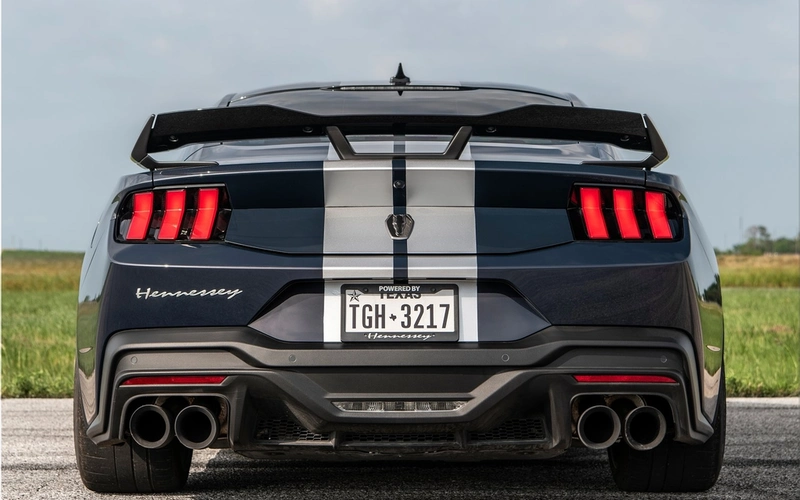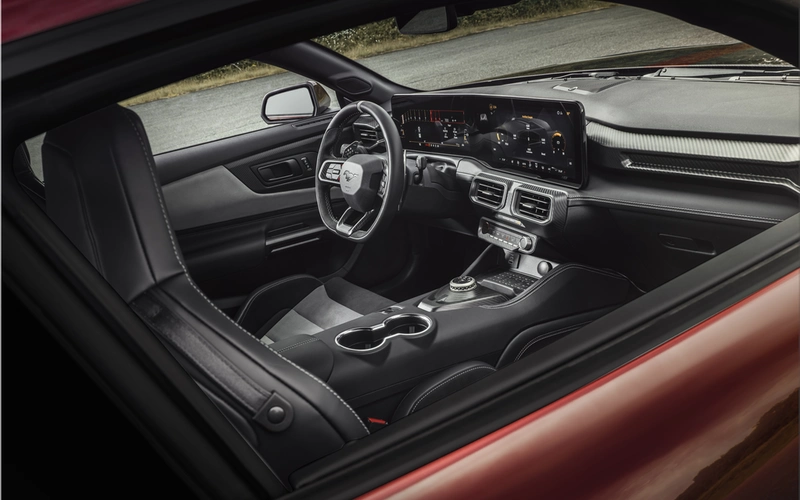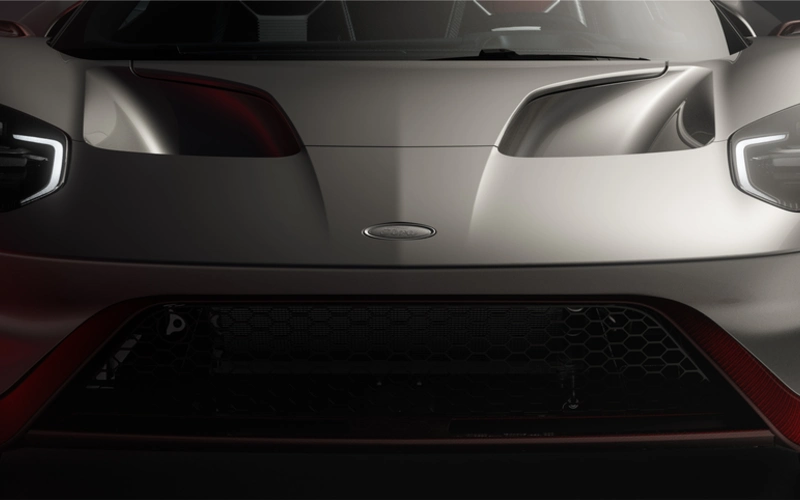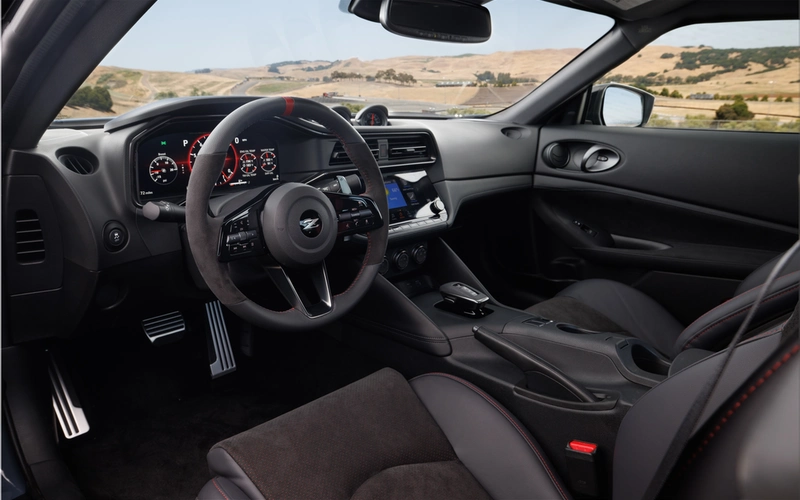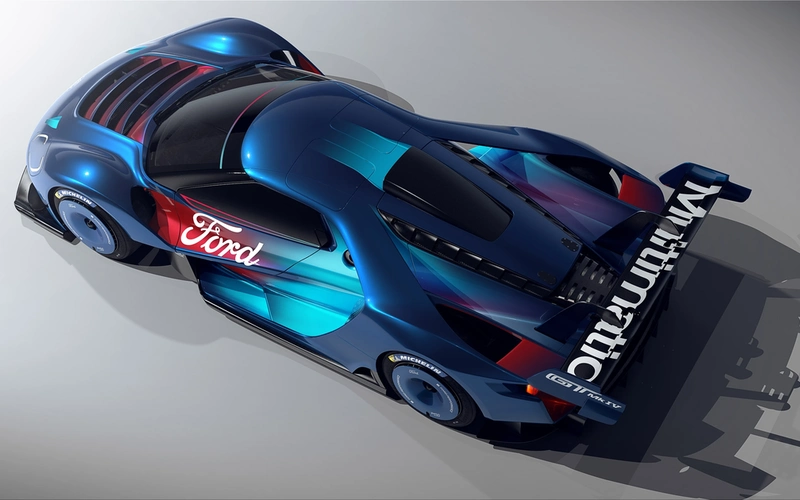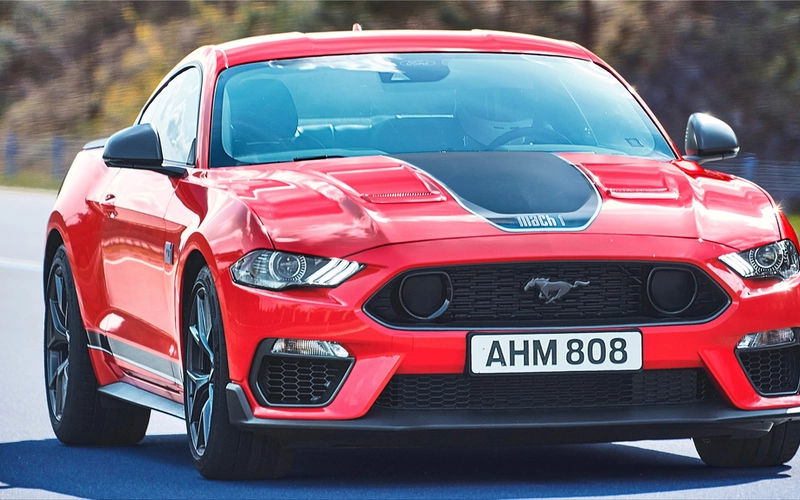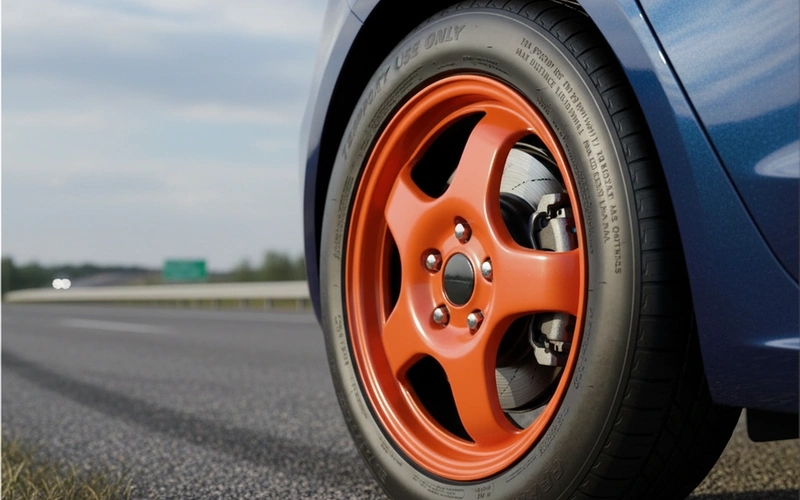
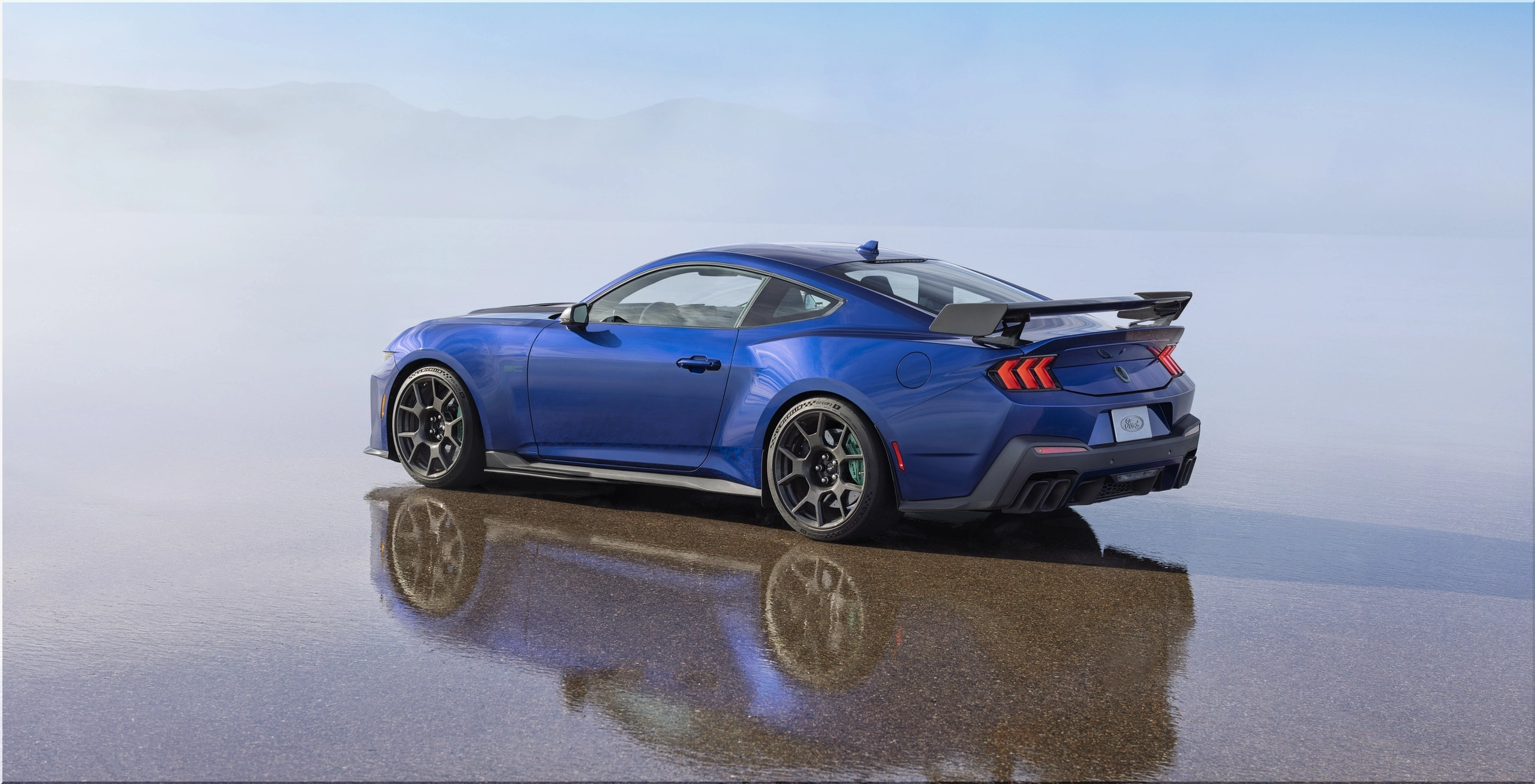
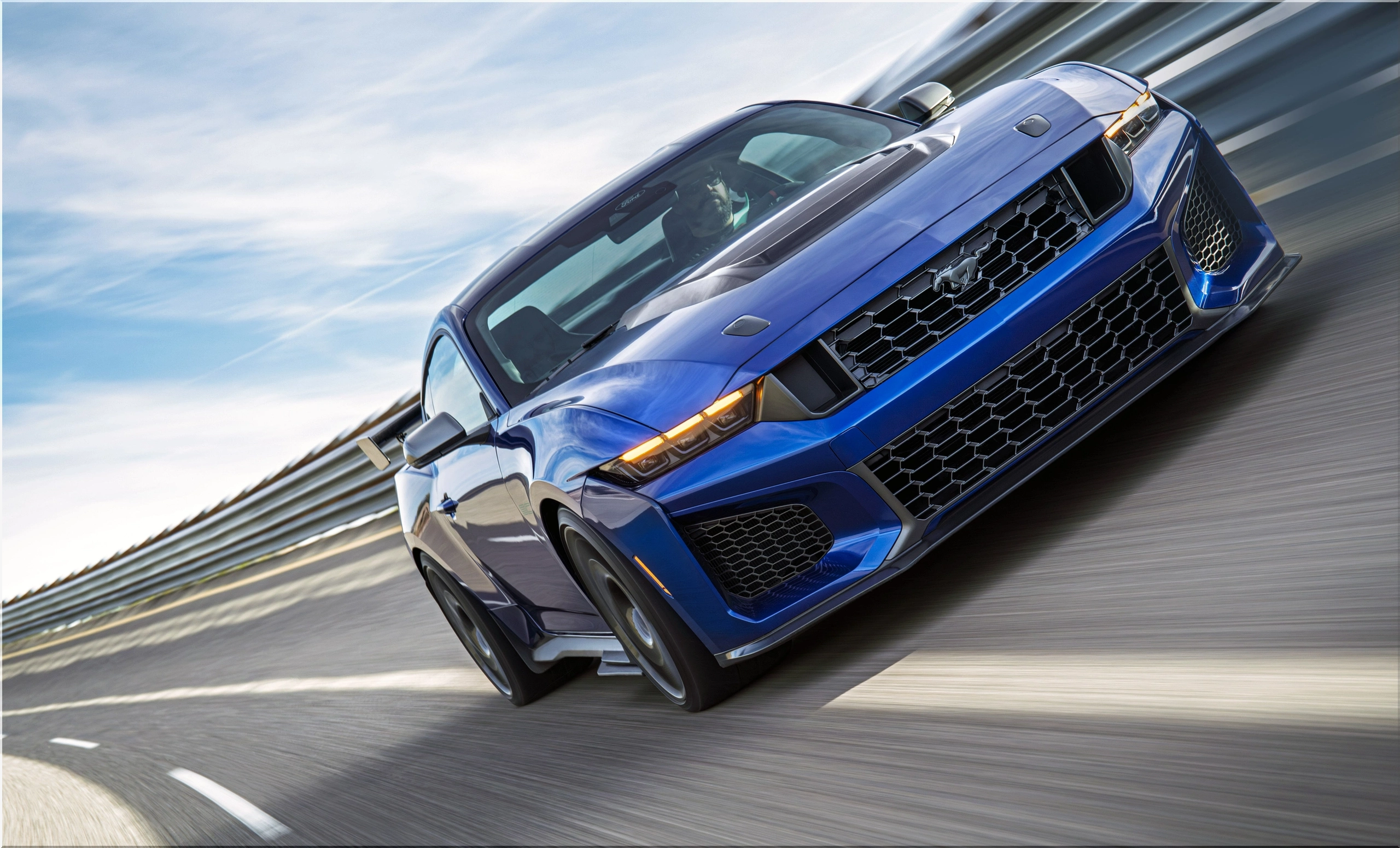
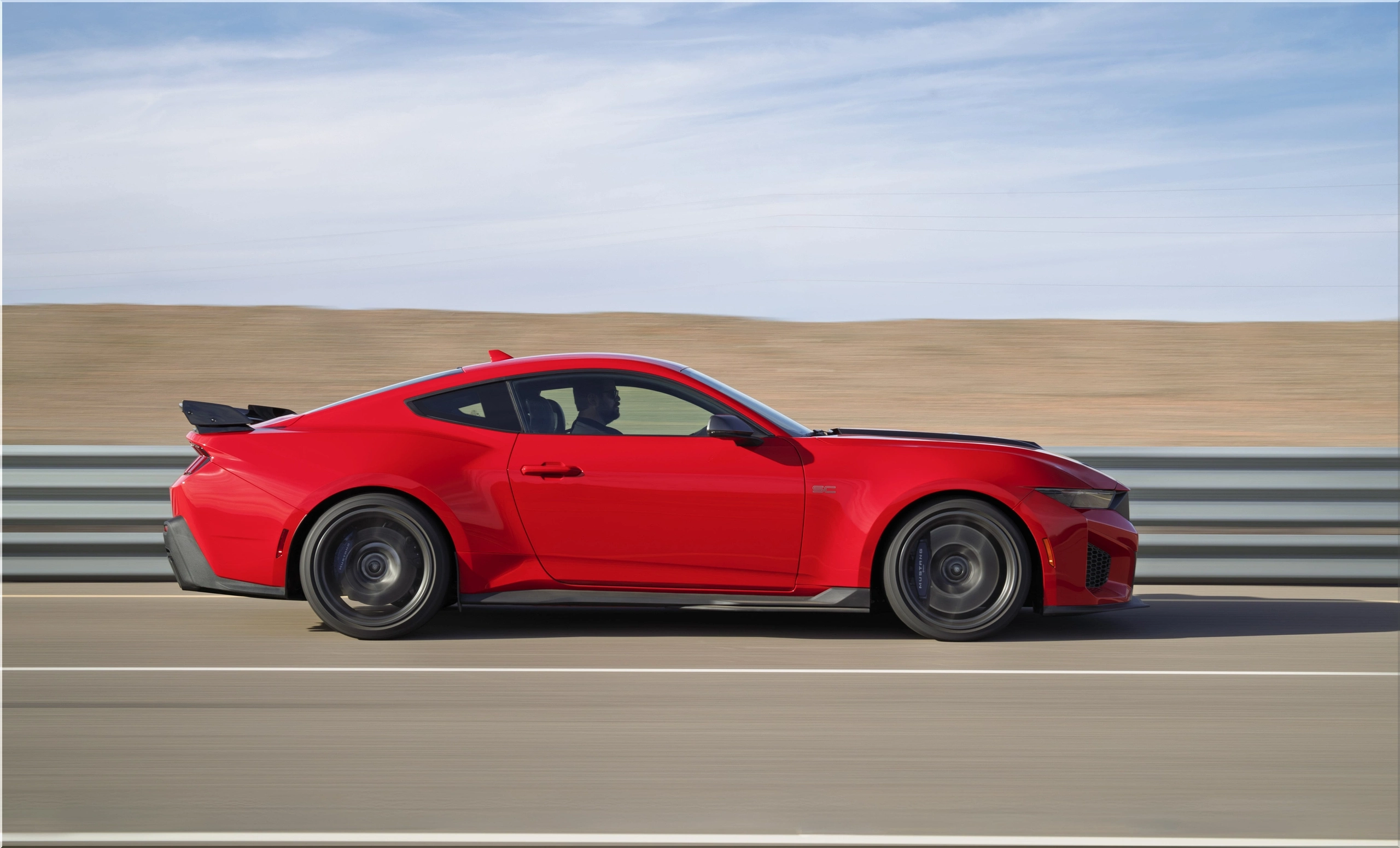
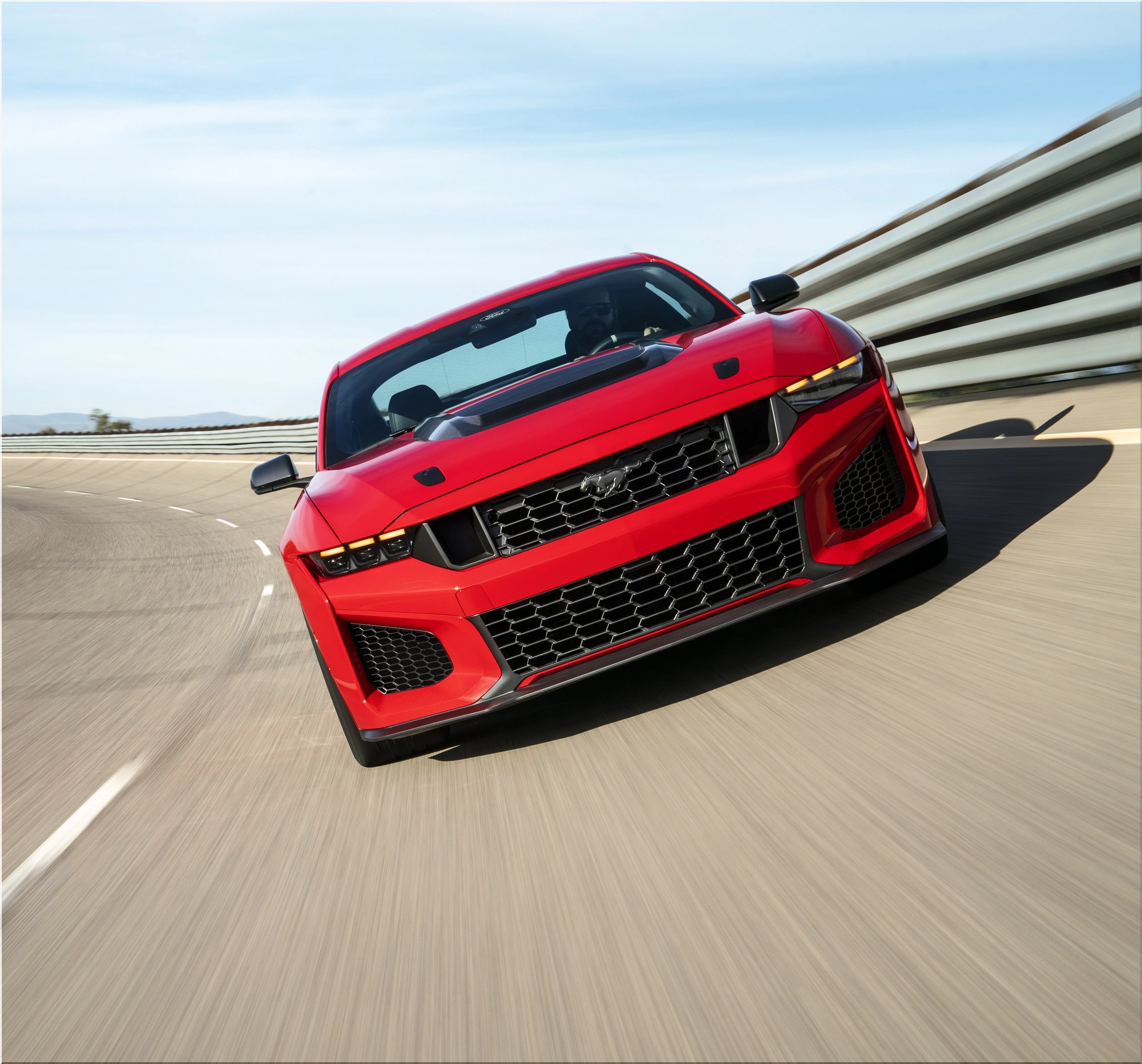
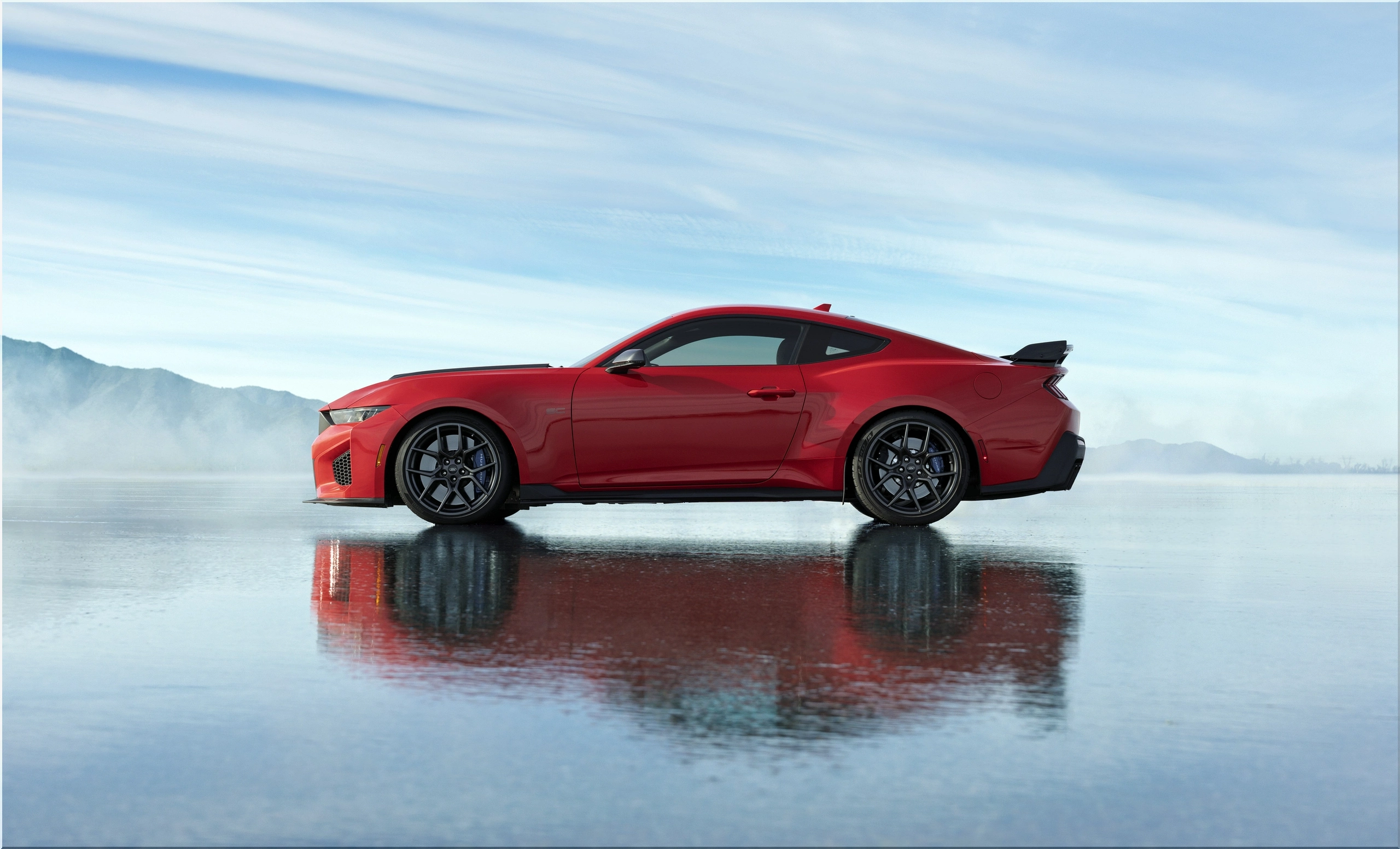
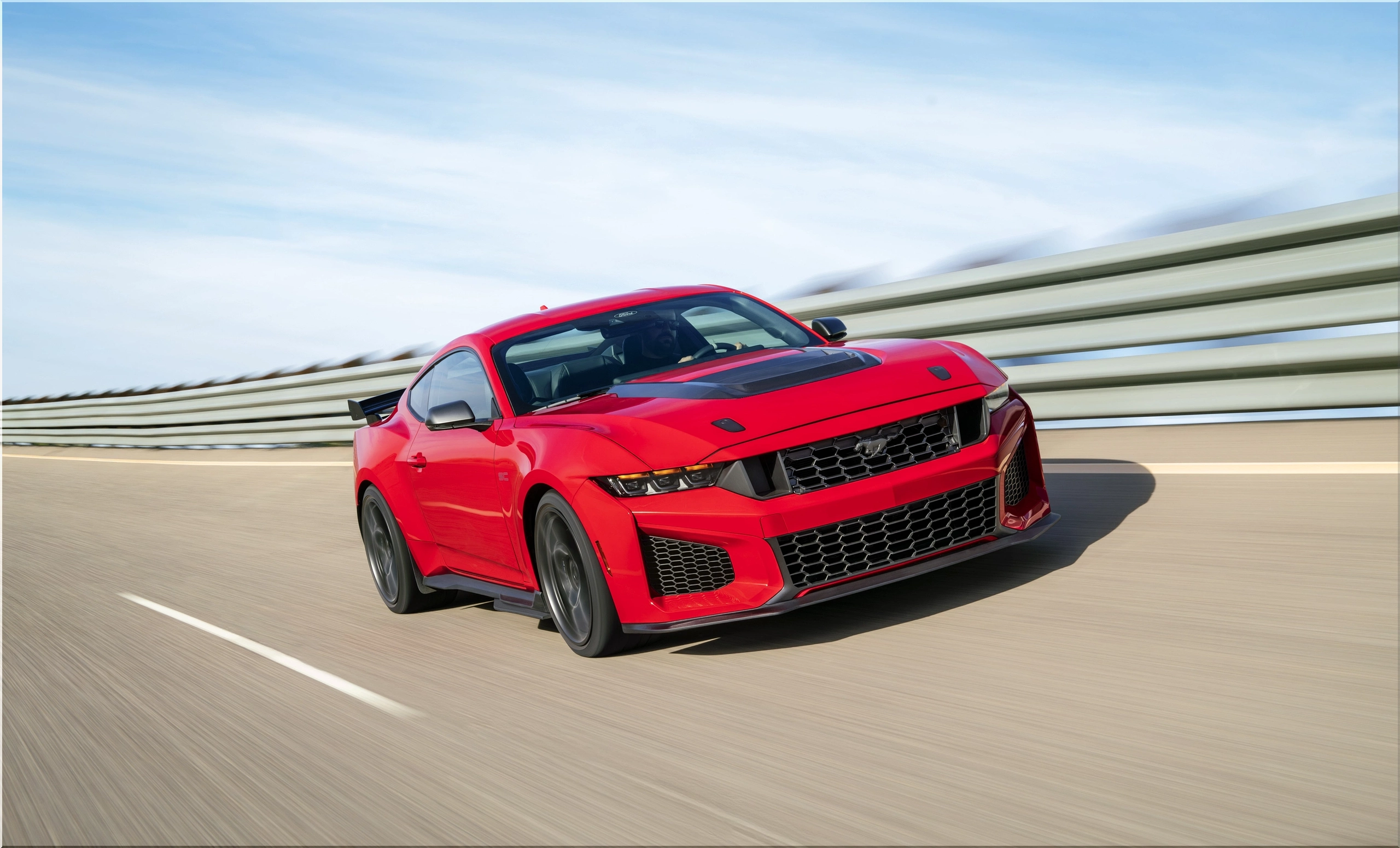
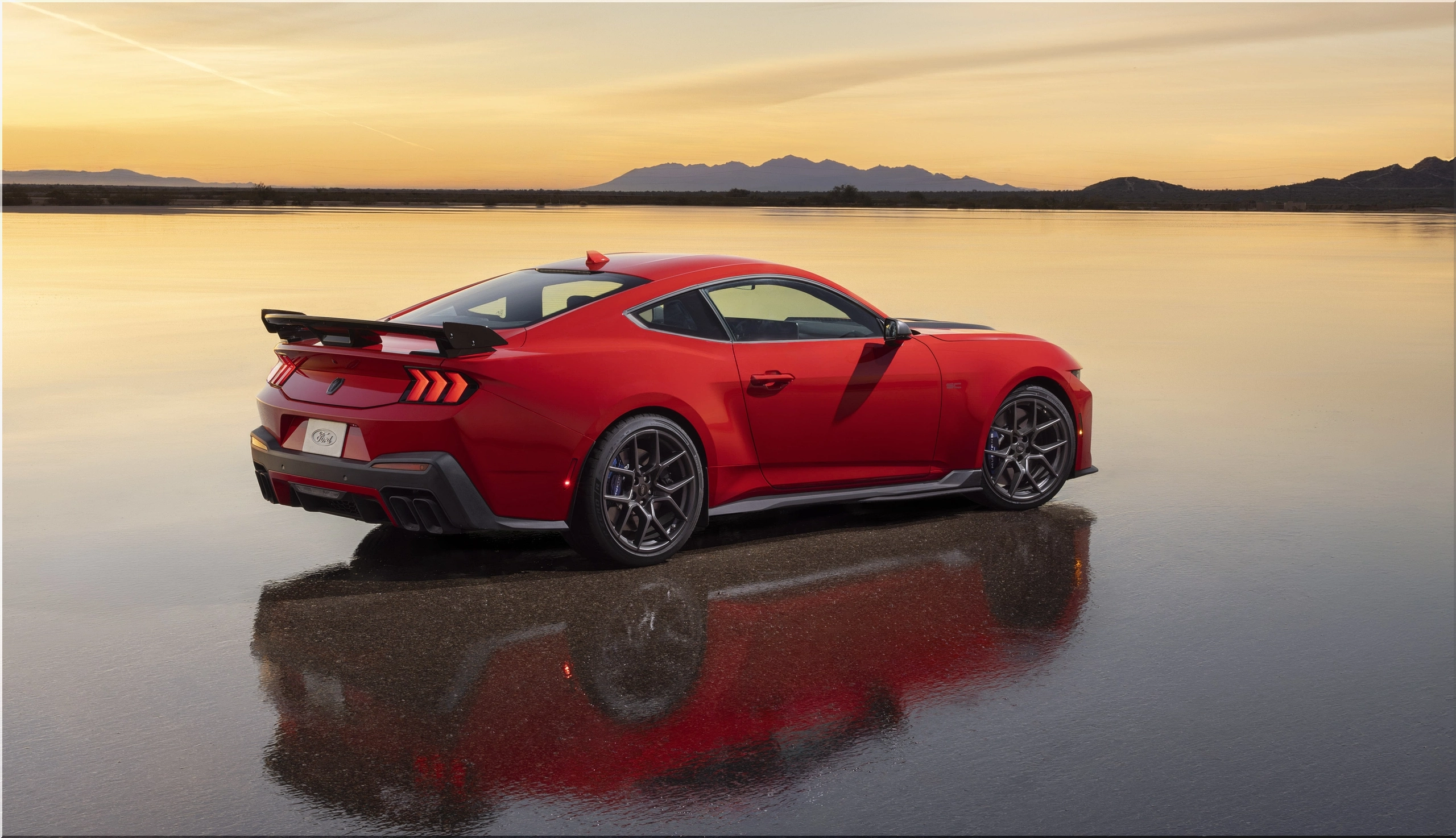
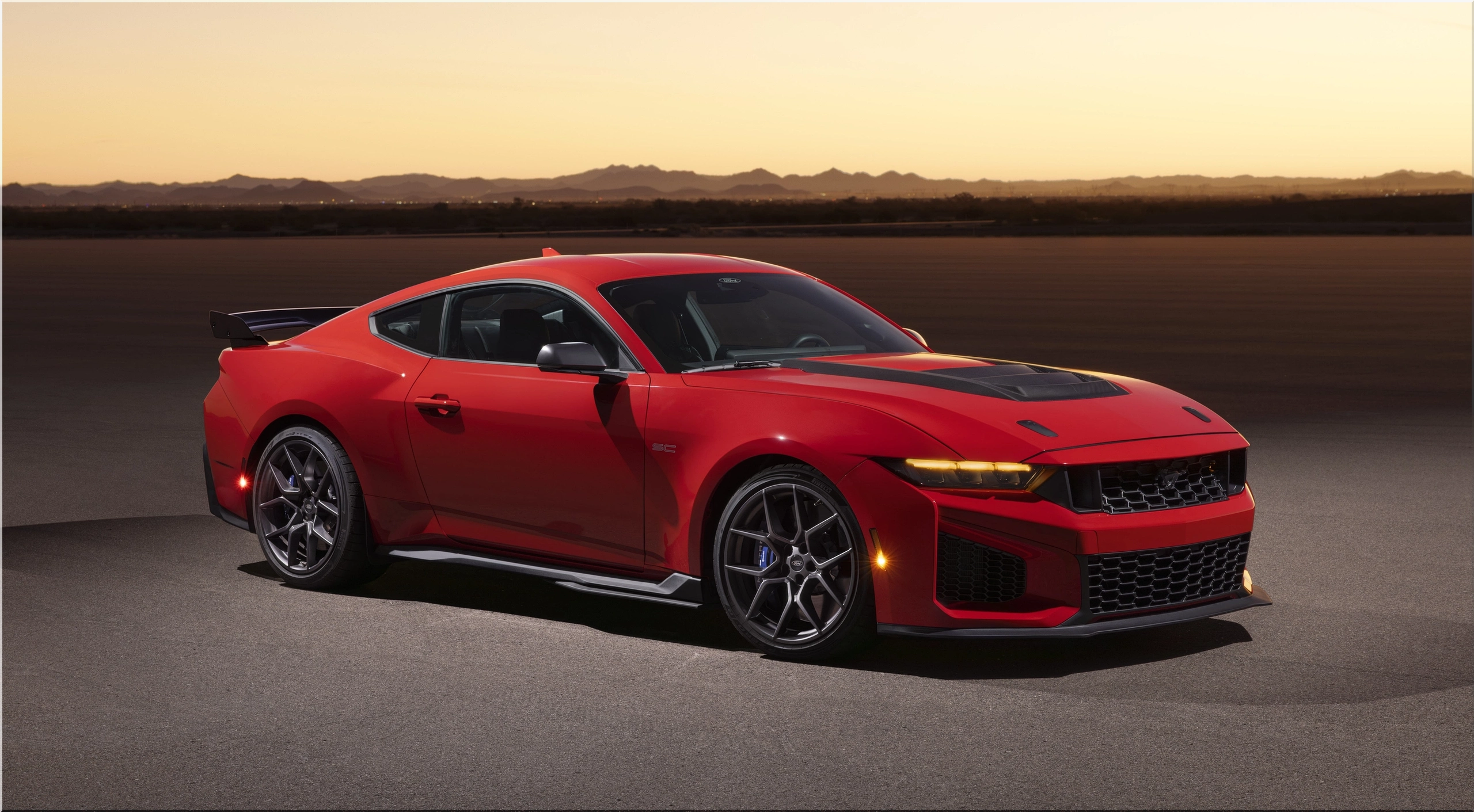
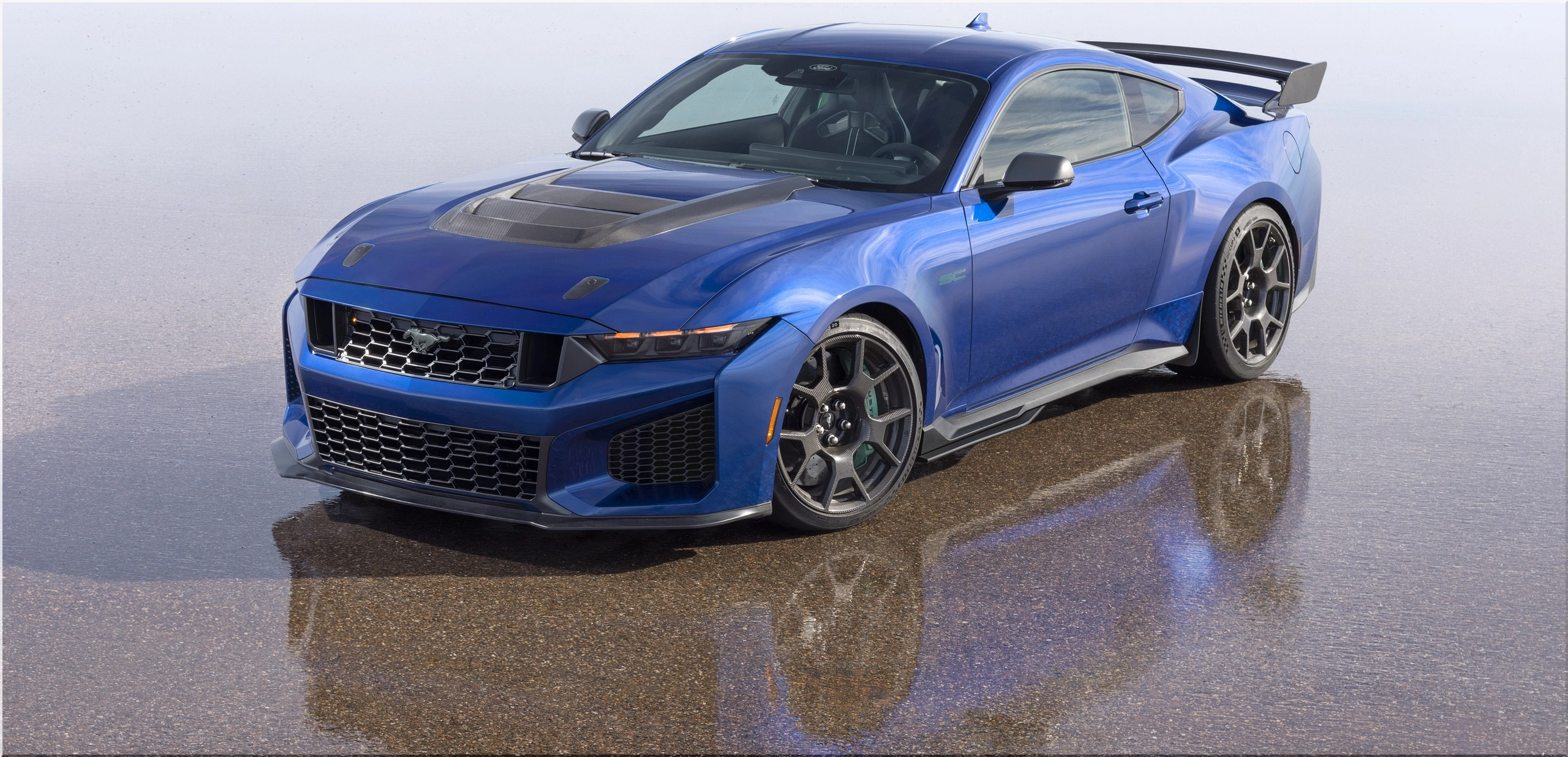
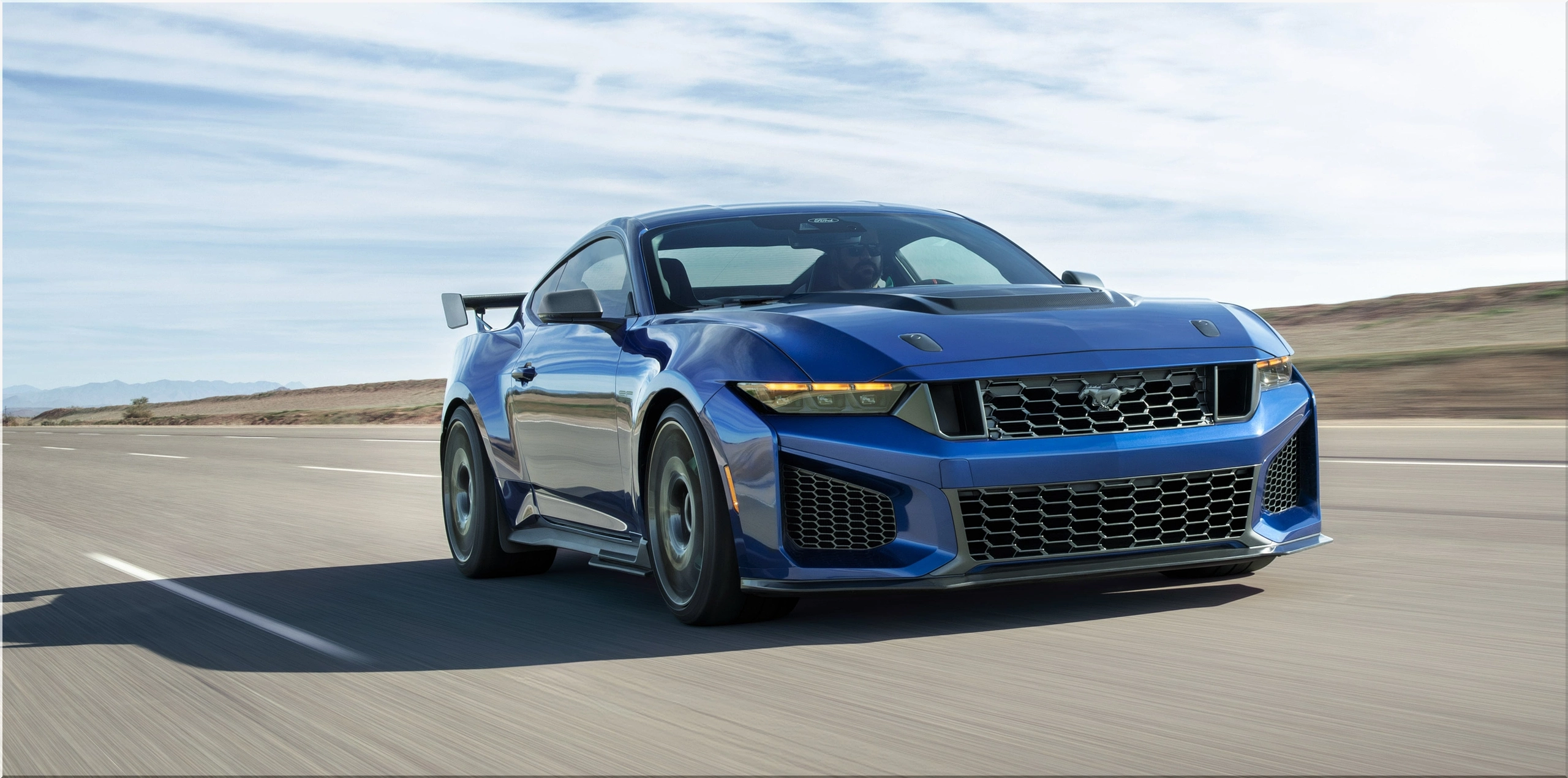
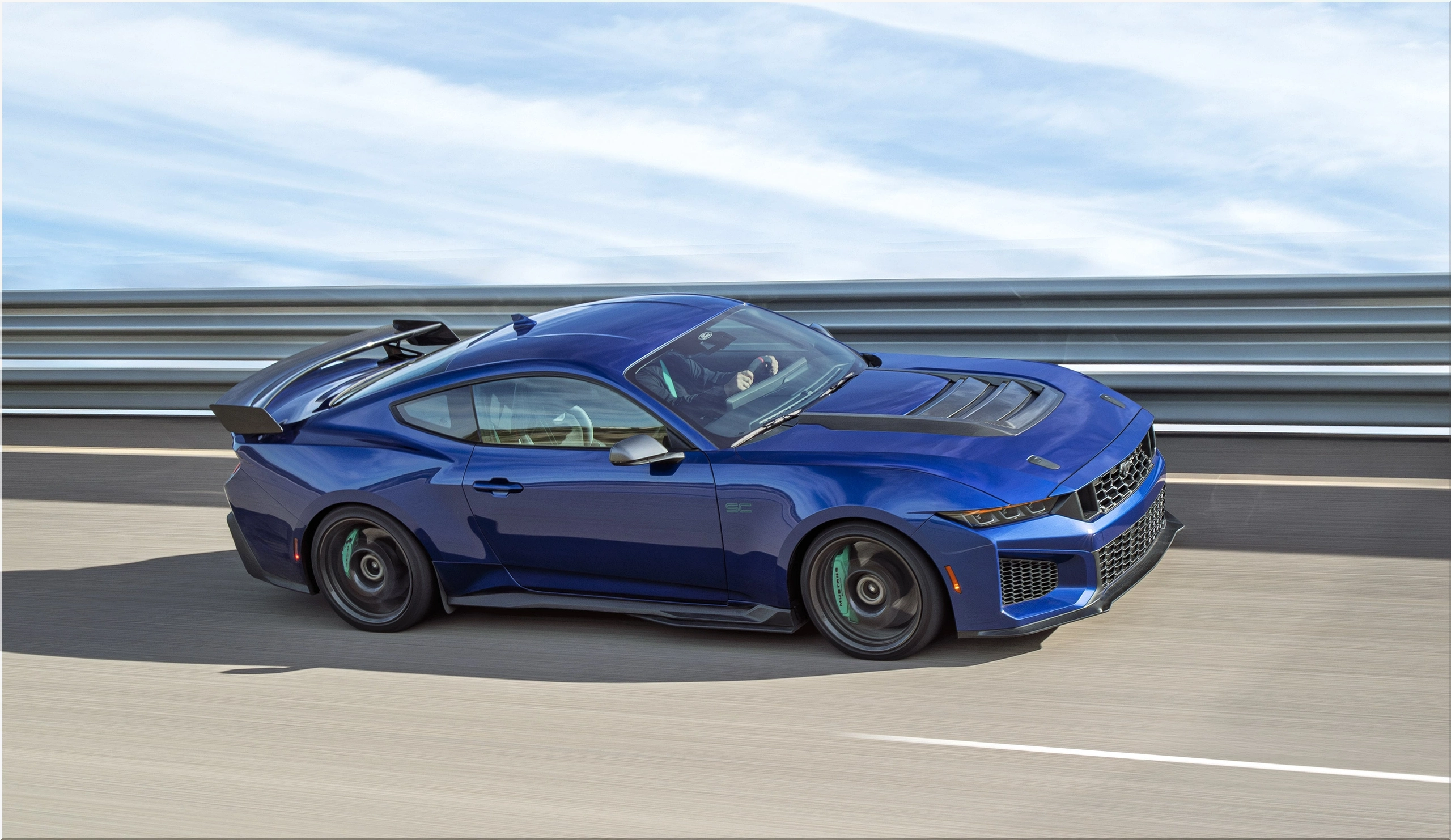
The 2026 Ford Mustang Dark Horse SC takes the already track-focused Dark Horse formula and turns up the mechanical aggression. Engineers developed it with a racing-first mindset, embedding durability, cooling efficiency, and aerodynamic load into every structural decision.
Image
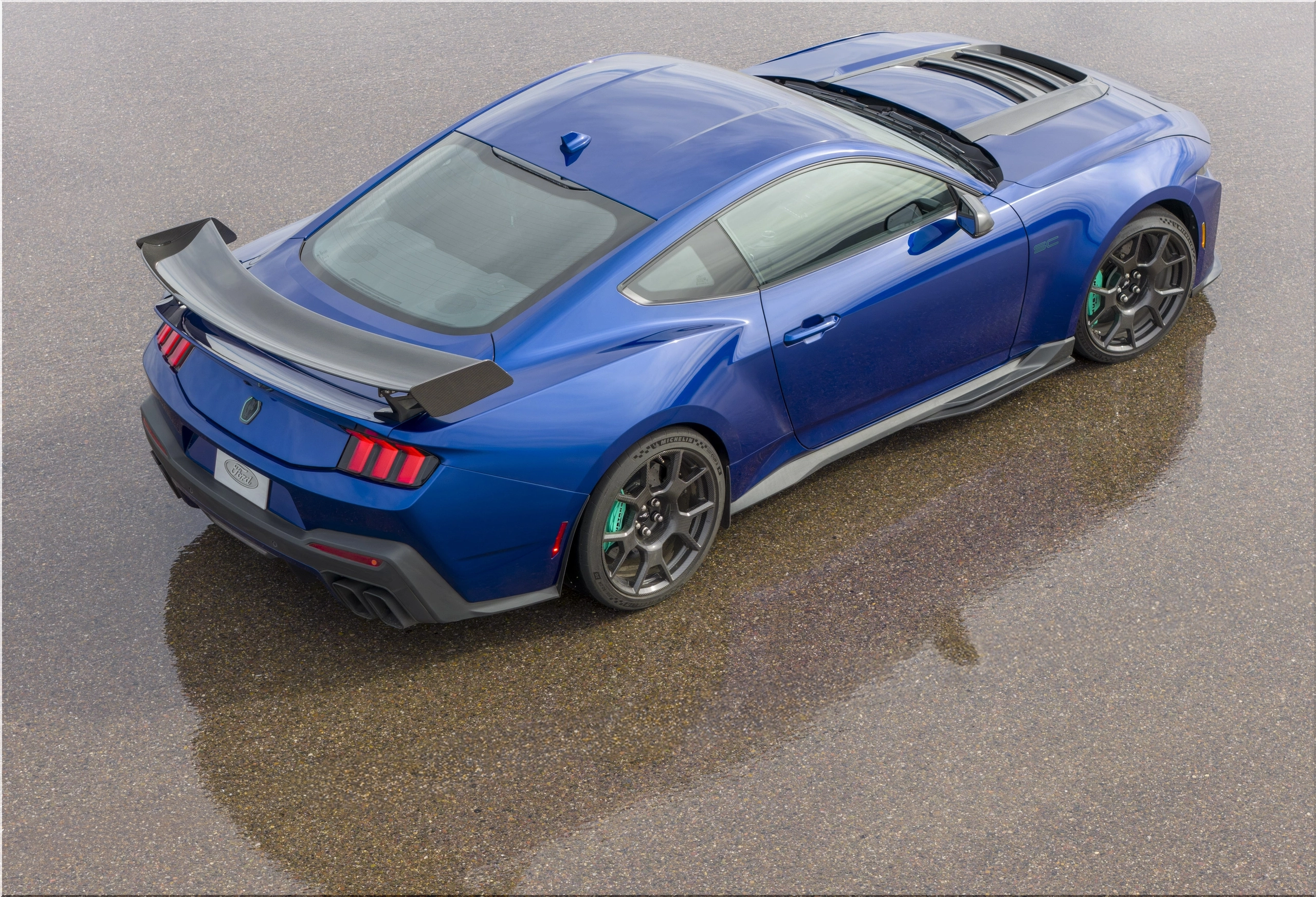
The 2026 Ford Mustang Dark Horse SC sits between the Dark Horse Performance Package and the Mustang GTD in the Mustang hierarchy. That placement matters. It signals intent: serious circuit capability without stepping into full GTD homologation territory.
Looking at the data, the Dark Horse SC focuses on three pillars:
- Forced induction power from a supercharged 5.2-liter V8
- Significant weight reduction using carbon fiber and magnesium
- Measurable aerodynamic gains, including 620 pounds of rear downforce
Here is how the numbers stack up.
Supercharged 5.2-Liter V8: Forced Induction With Track Durability
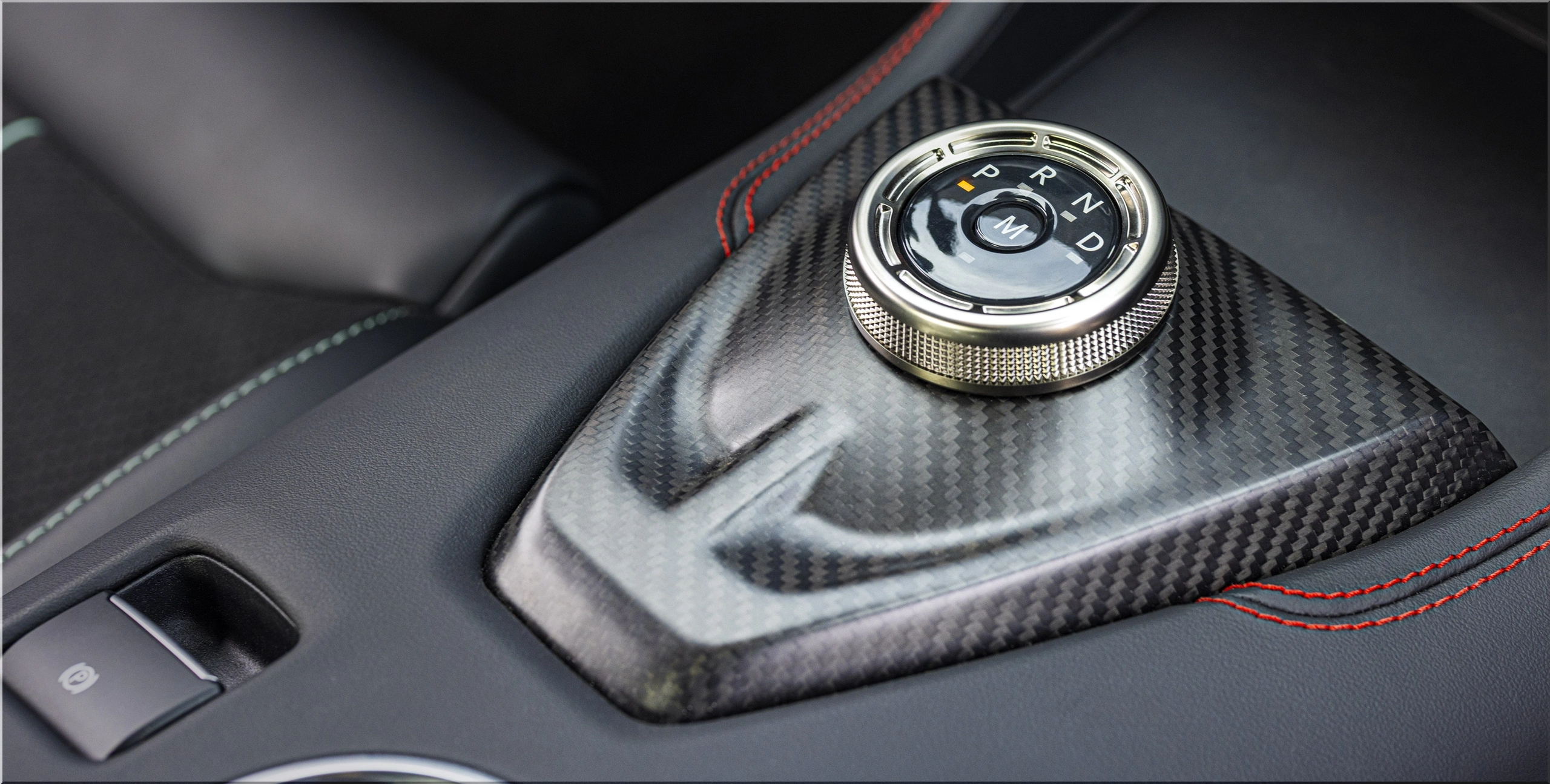
Under the hood, the Dark Horse SC runs a supercharged 5.2-liter V8 paired with a seven-speed dual-clutch transmission. That pairing defines its character. The engine delivers forced induction thrust, while the dual-clutch gearbox maintains torque continuity under load.
Specifically:
- Displacement: 5.2 liters
- Induction: Supercharger
- Transmission: 7-speed DCT
- Drivetrain: Rear-wheel drive
By comparison, the standard Dark Horse relies on a naturally aspirated 5.0-liter Coyote V8. The jump to 5.2 liters and forced induction changes thermal demands, airflow requirements, and torque delivery across the rev band.
Image
Why a Supercharged 5.2L?
From an engineering perspective, supercharging delivers linear torque growth. Unlike turbocharging, which relies on exhaust gas flow and can introduce lag, a belt-driven supercharger builds boost proportionally with engine speed.
That matters on track.
- Throttle input translates immediately into forward thrust.
- Exit speeds from medium-speed corners increase.
- Gear selection strategy simplifies because the torque plateau broadens.
Consequently, the dual-clutch transmission becomes critical. A DCT executes millisecond-level shifts under full throttle, minimizing power interruption and maintaining stability mid-corner.
Carbon-Fiber Wheels and 150 Pounds of Weight Reduction
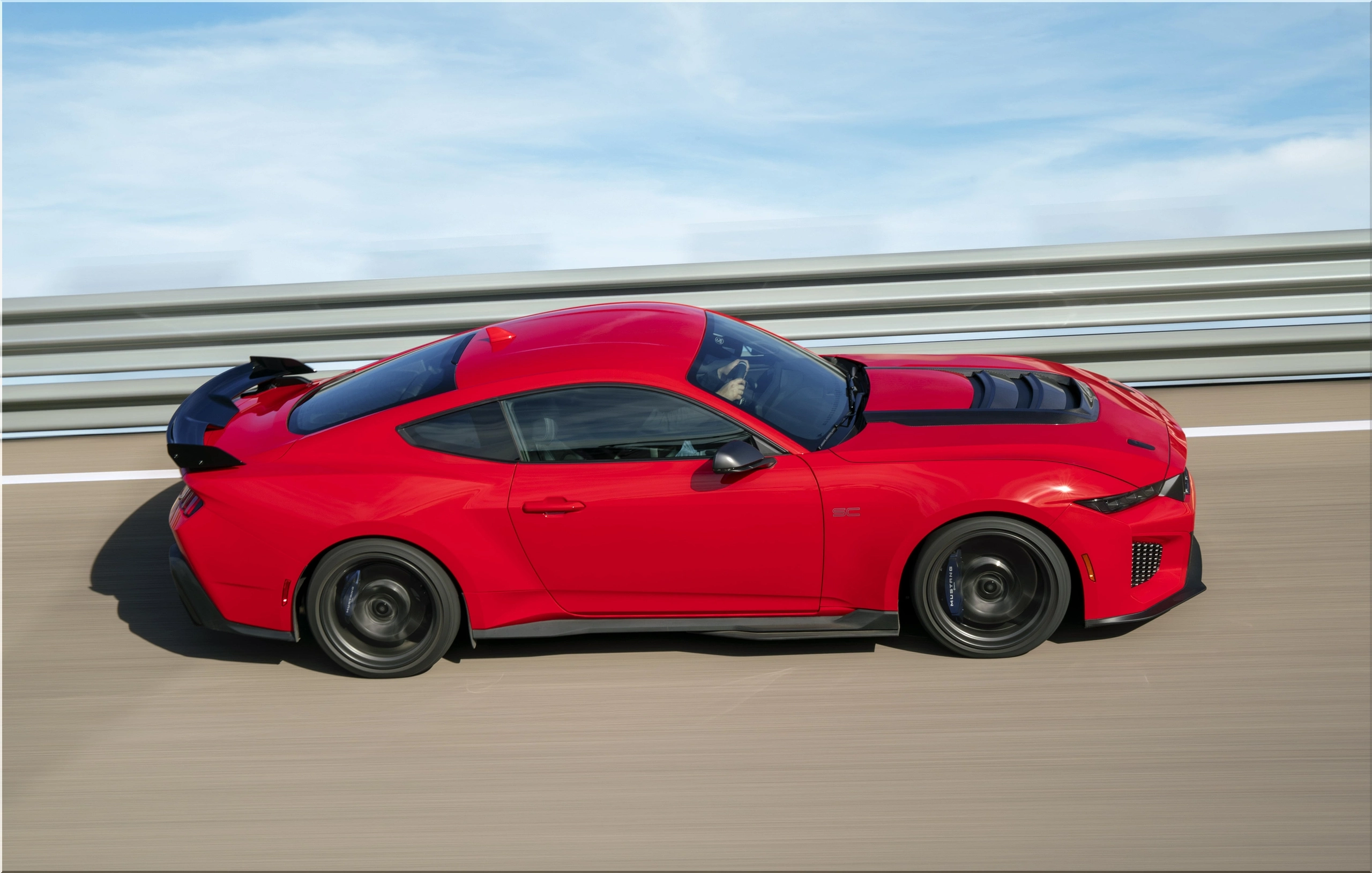
The 2026 Ford Mustang Dark Horse SC sheds approximately 150 pounds compared to the Track Package configuration. That reduction does not come from cosmetic trimming. Engineers targeted unsprung mass and structural components.
Key weight-saving measures include:
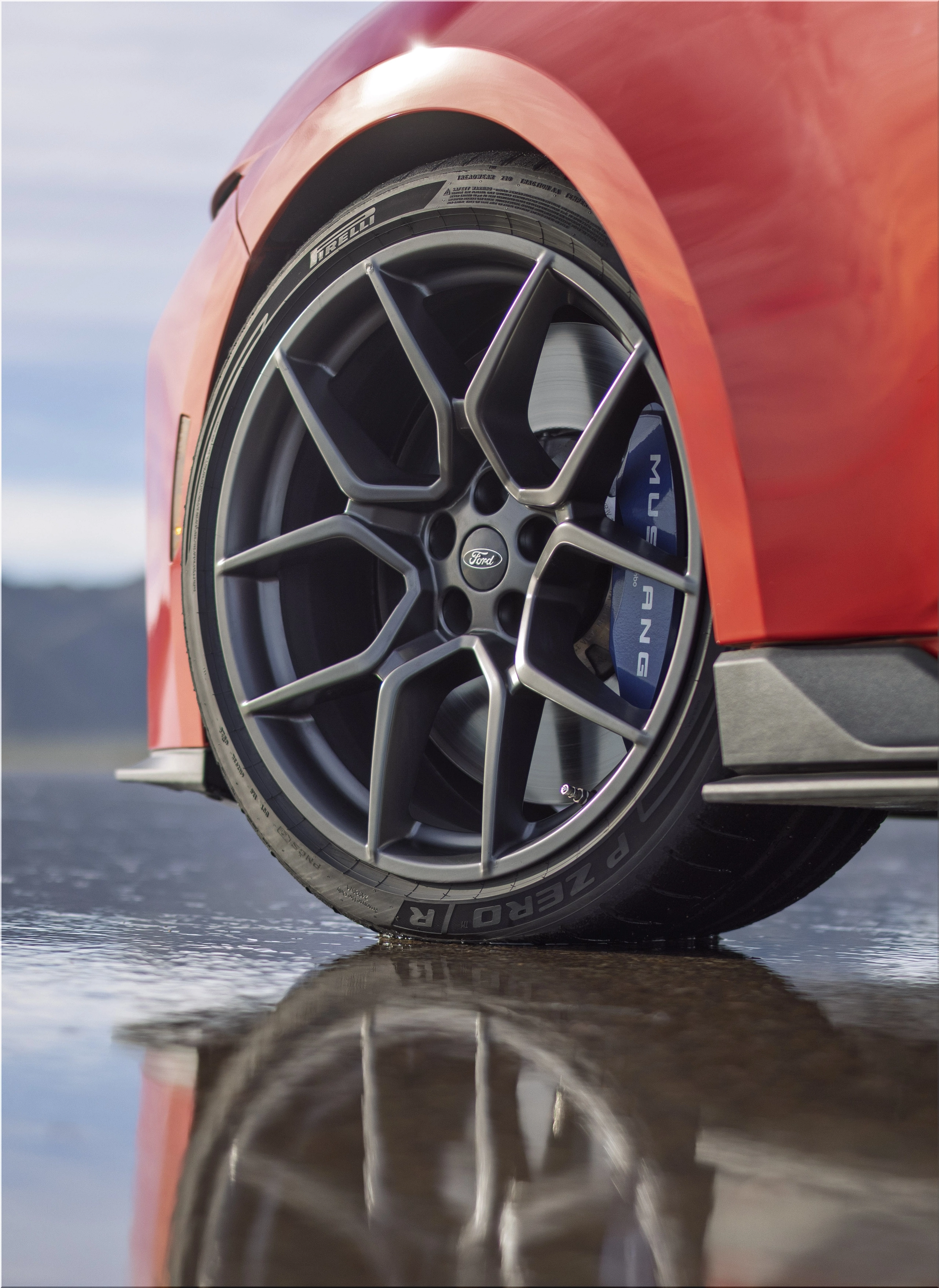
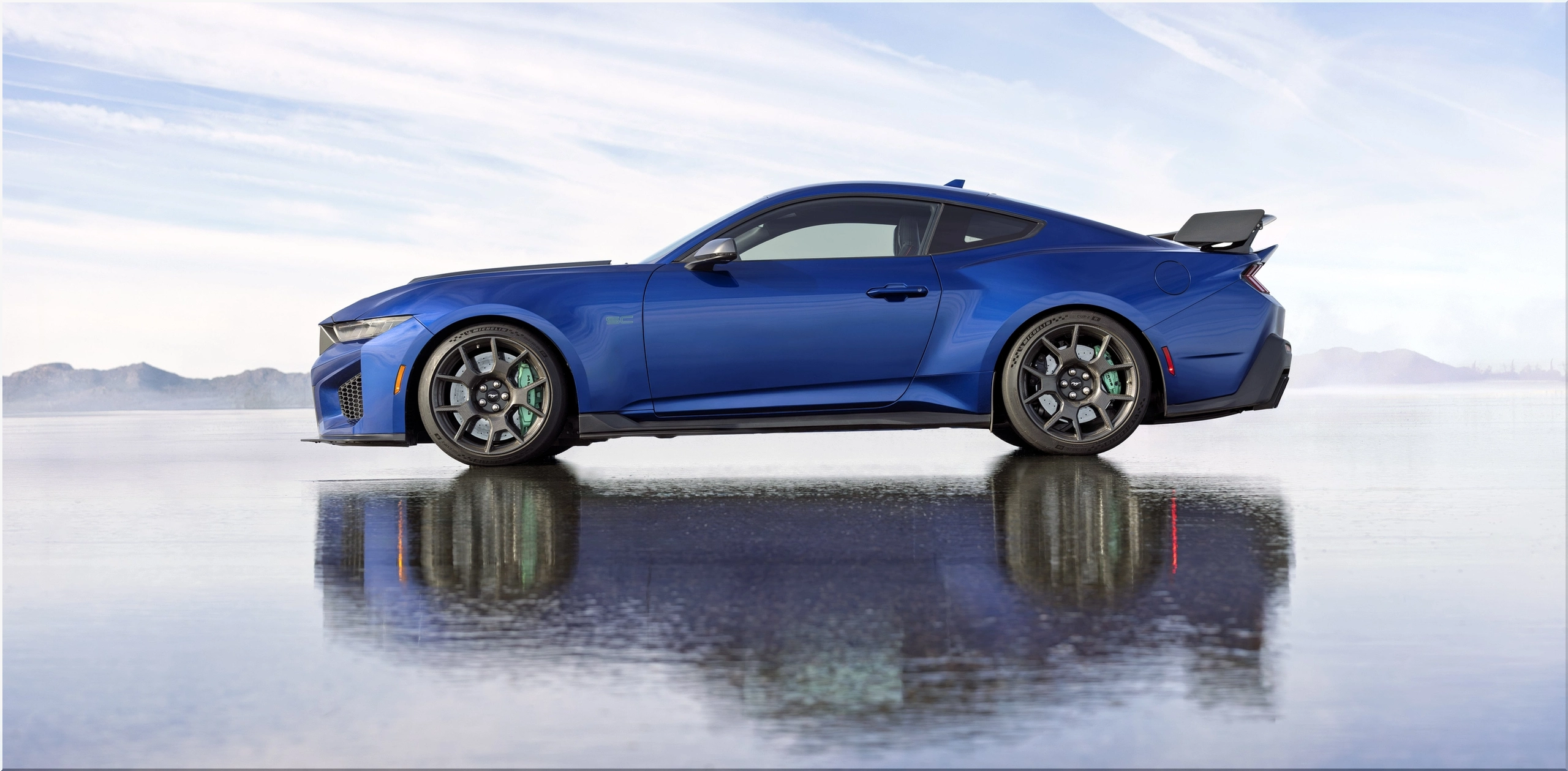
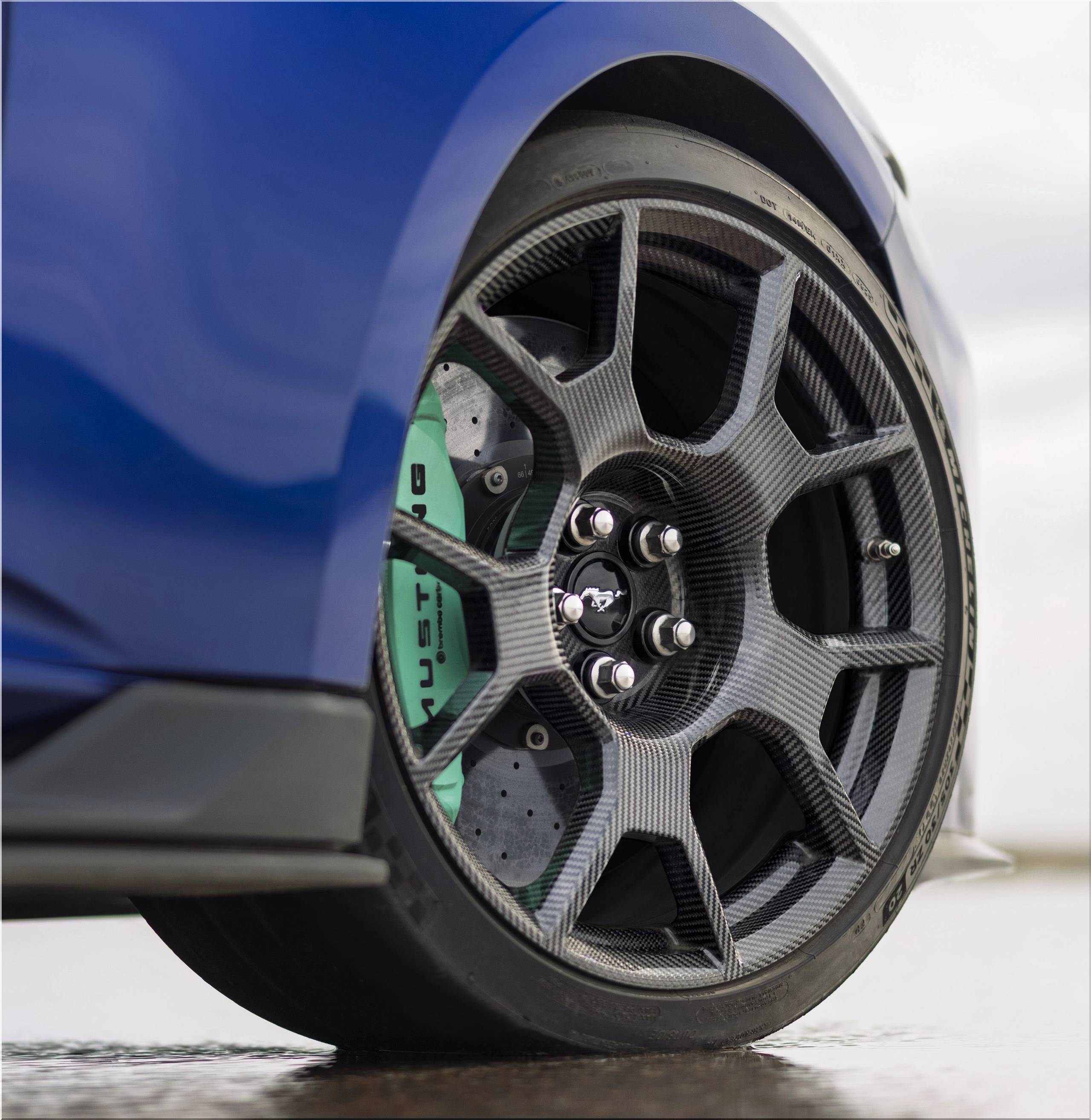
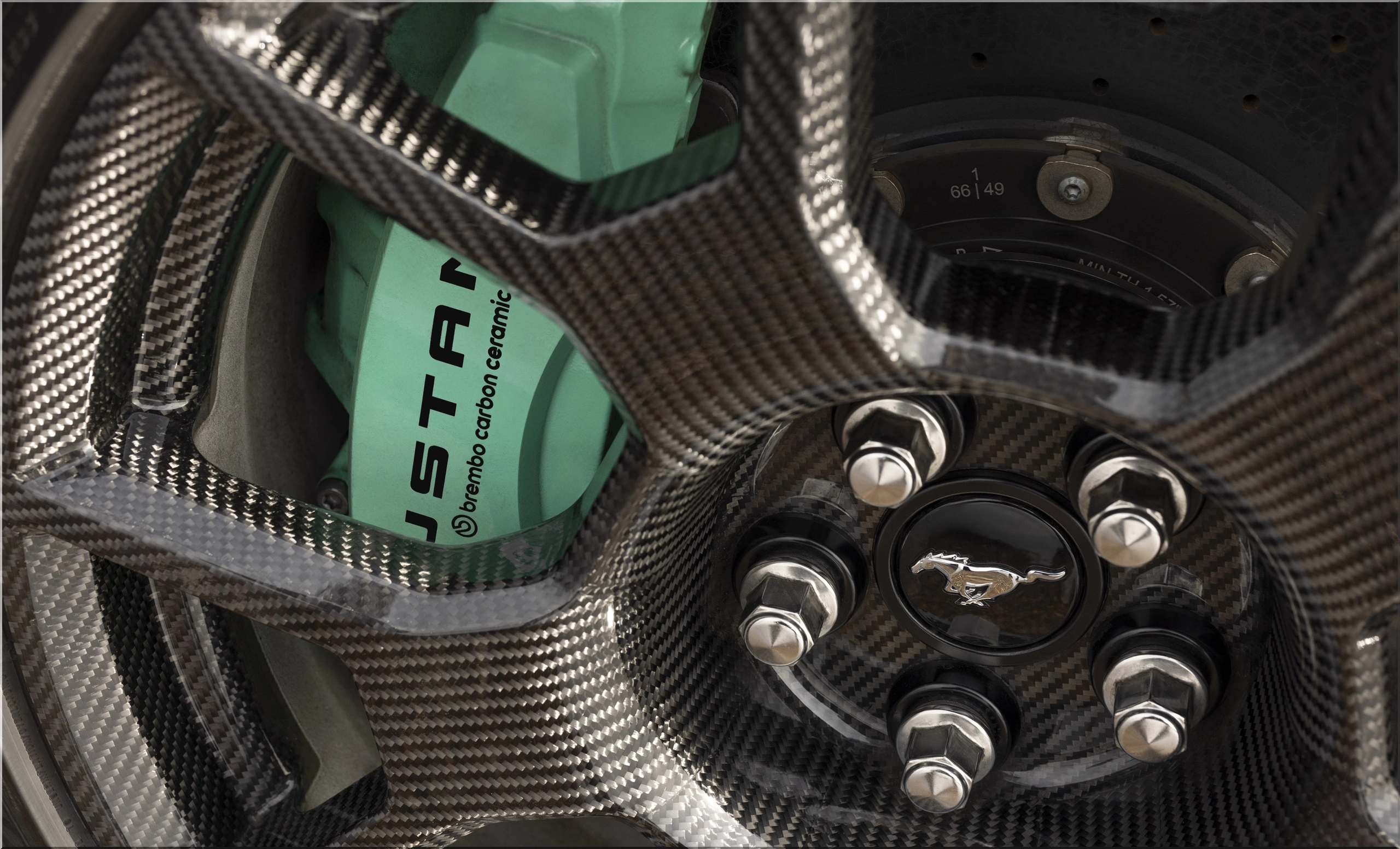
- Carbon-fiber wheels
- Brembo carbon-ceramic brakes
- Replacement of steel suspension links with forged components
- Lightweight magnesium strut tower brace
Each change serves a mechanical function.
Unsprung Mass and Steering Precision
Carbon-fiber wheels reduce rotational inertia. When you cut weight at the wheel hub, you improve:
- Suspension response
- Steering feedback
- Acceleration and deceleration efficiency
Specifically, lower unsprung mass allows dampers to react faster to surface irregularities. Consequently, tire contact patch stability improves under high lateral load.
The magnesium strut tower brace stiffens the front structure without adding bulk. Increased torsional rigidity sharpens steering input translation, reducing delay between driver input and chassis response.
Image
Brake System: Carbon-Ceramic Advantage
The inclusion of Brembo carbon-ceramic brakes serves two purposes:
- Reduce rotational mass.
- Increase fade resistance under repeated high-speed stops.
Carbon-ceramic rotors maintain consistent friction properties at elevated temperatures. On a road course, that translates into predictable braking zones lap after lap.
Aerodynamics: Massive Hood Vent and 620 Pounds of Rear Downforce
Aerodynamics define the Dark Horse SC's track bias.
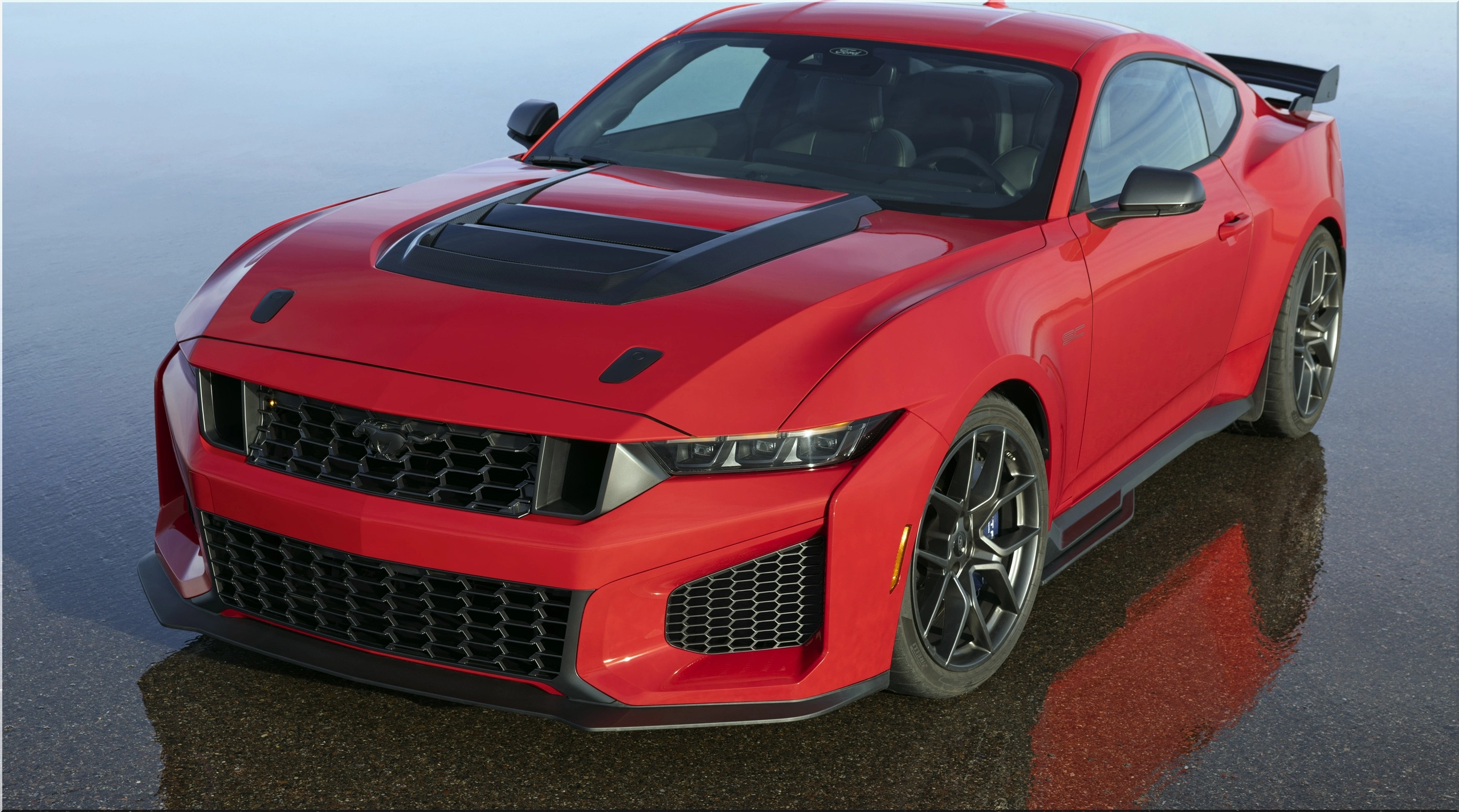
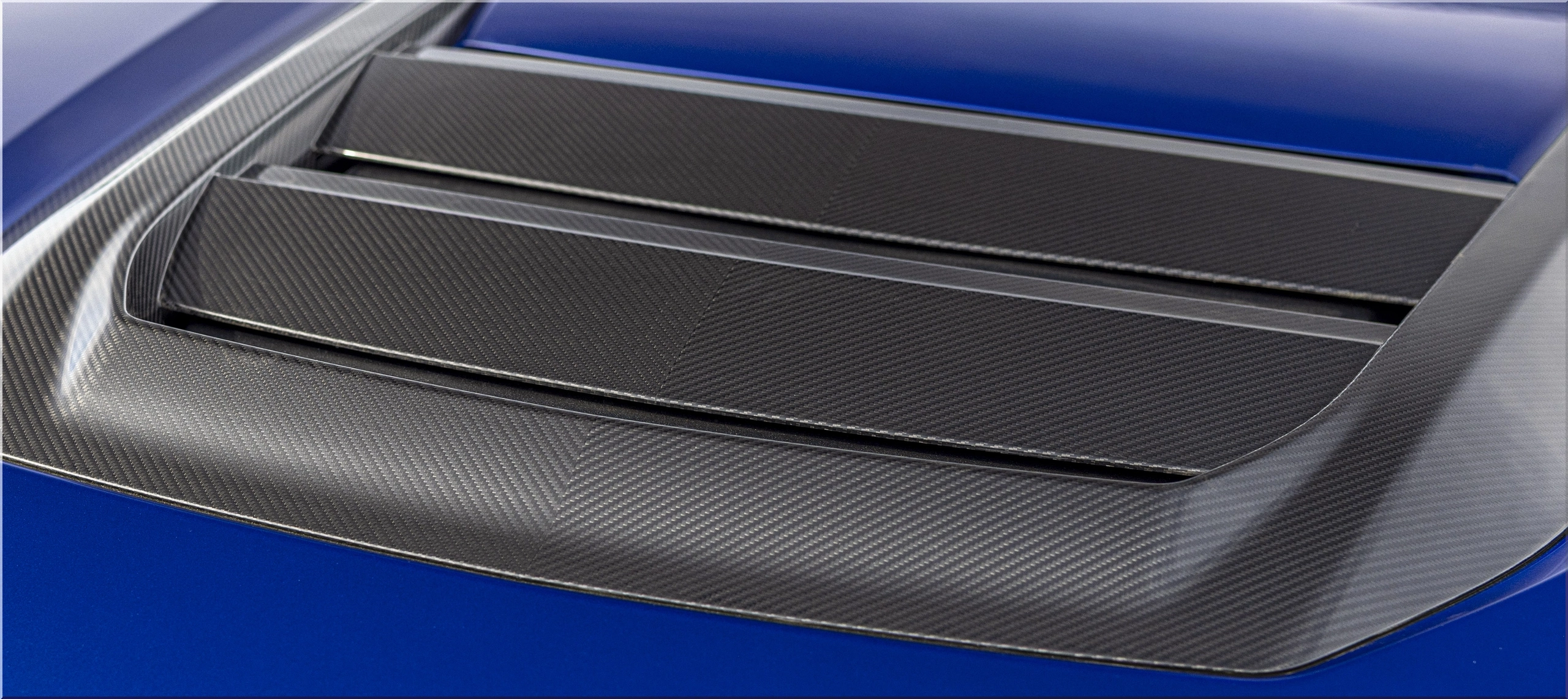
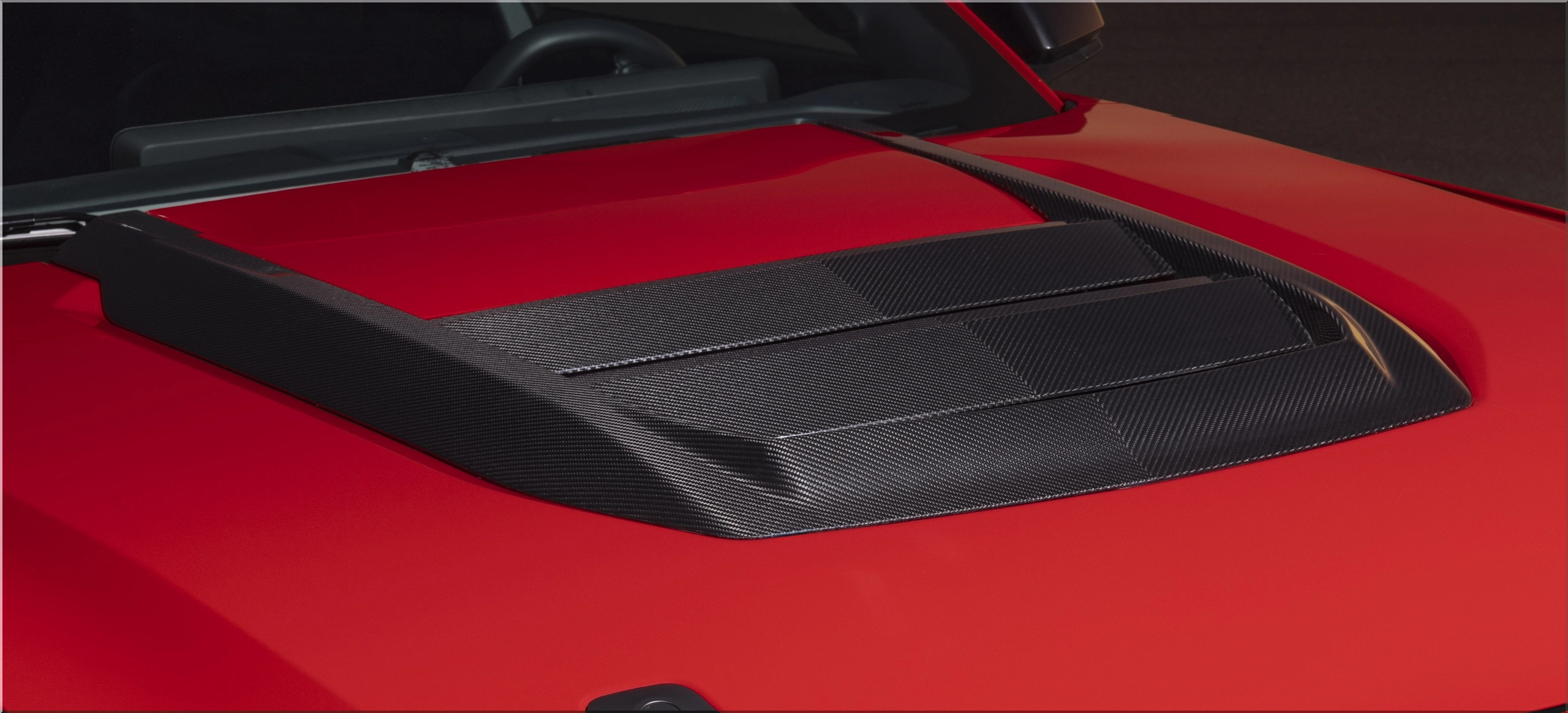
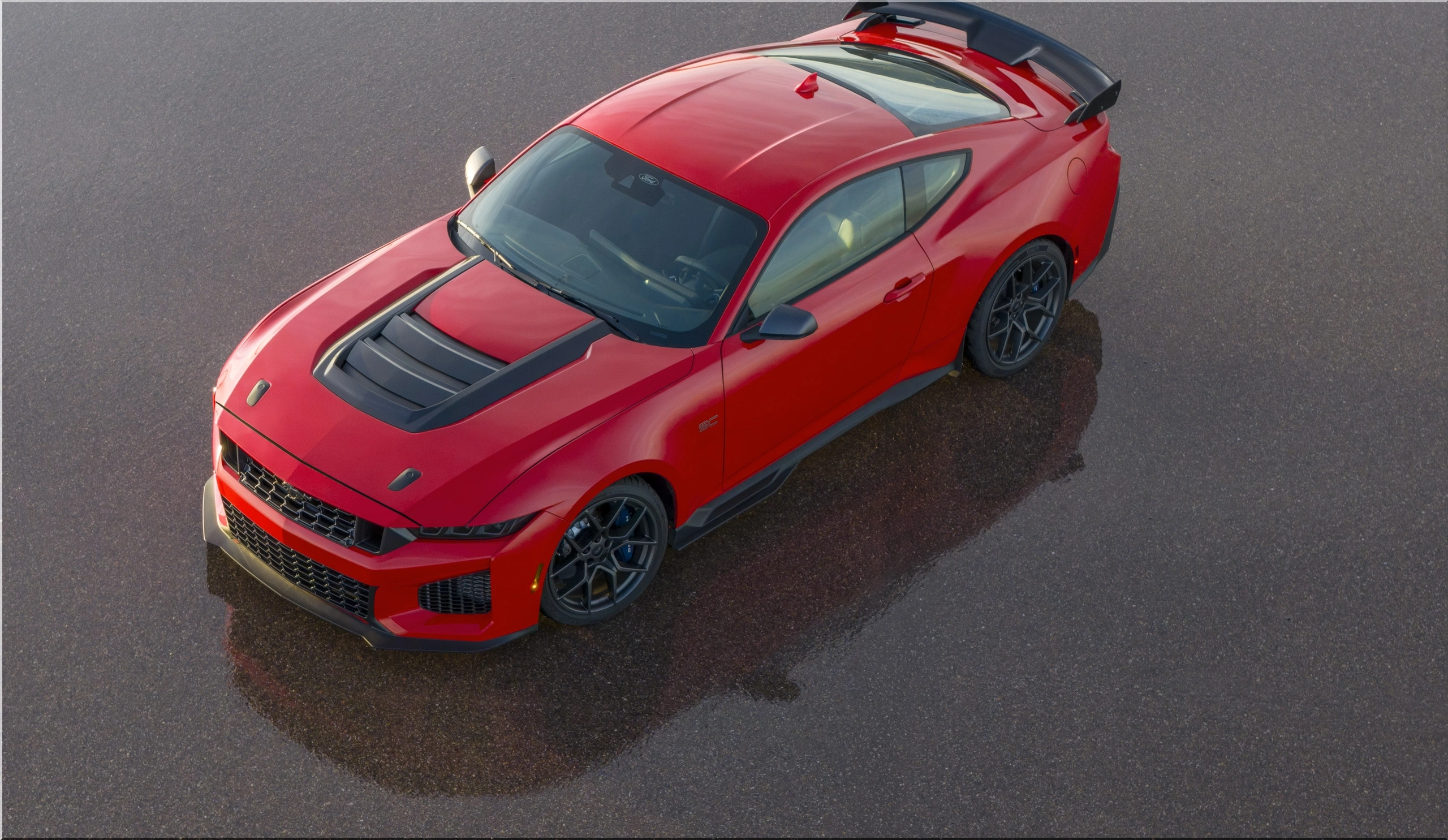
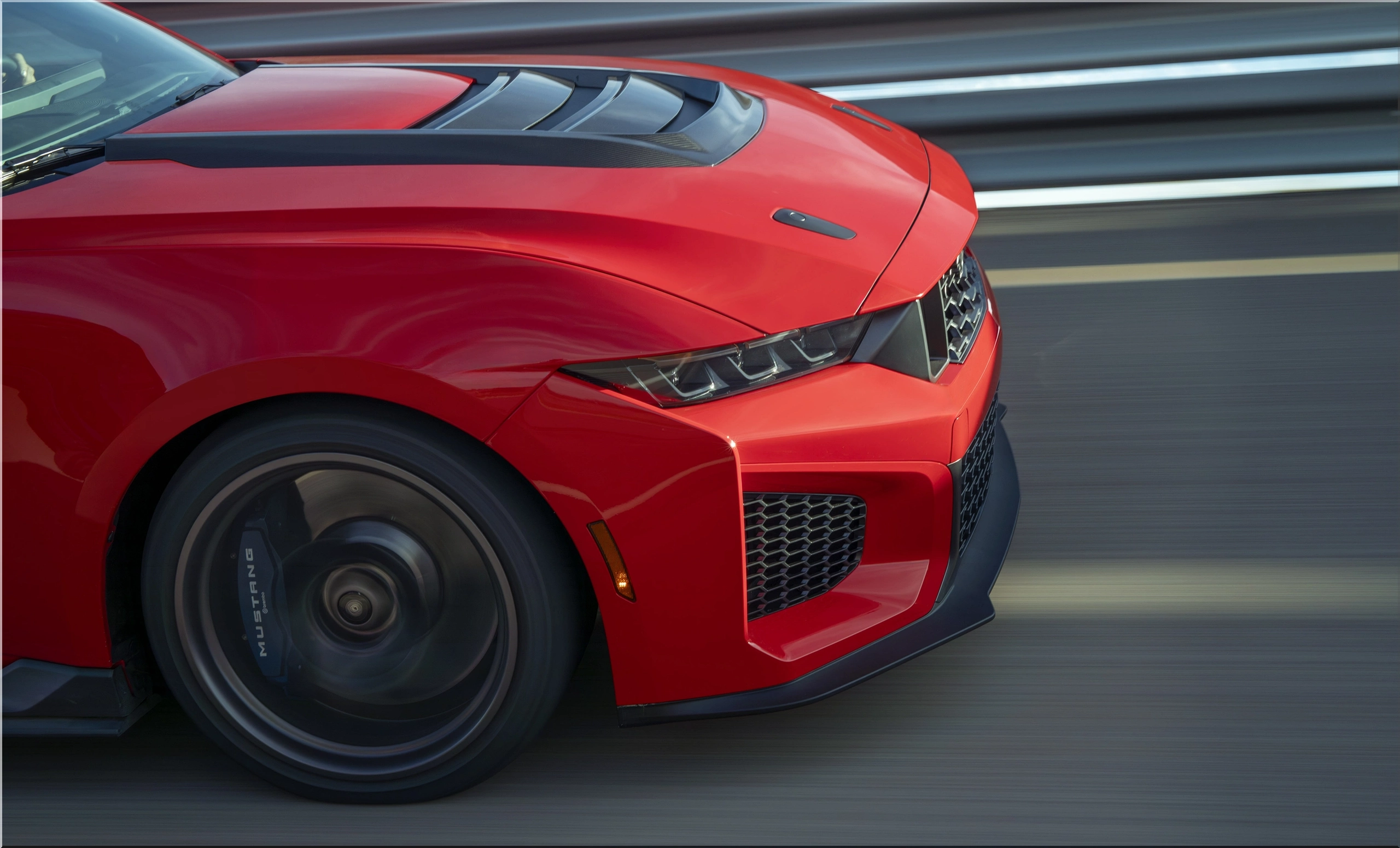
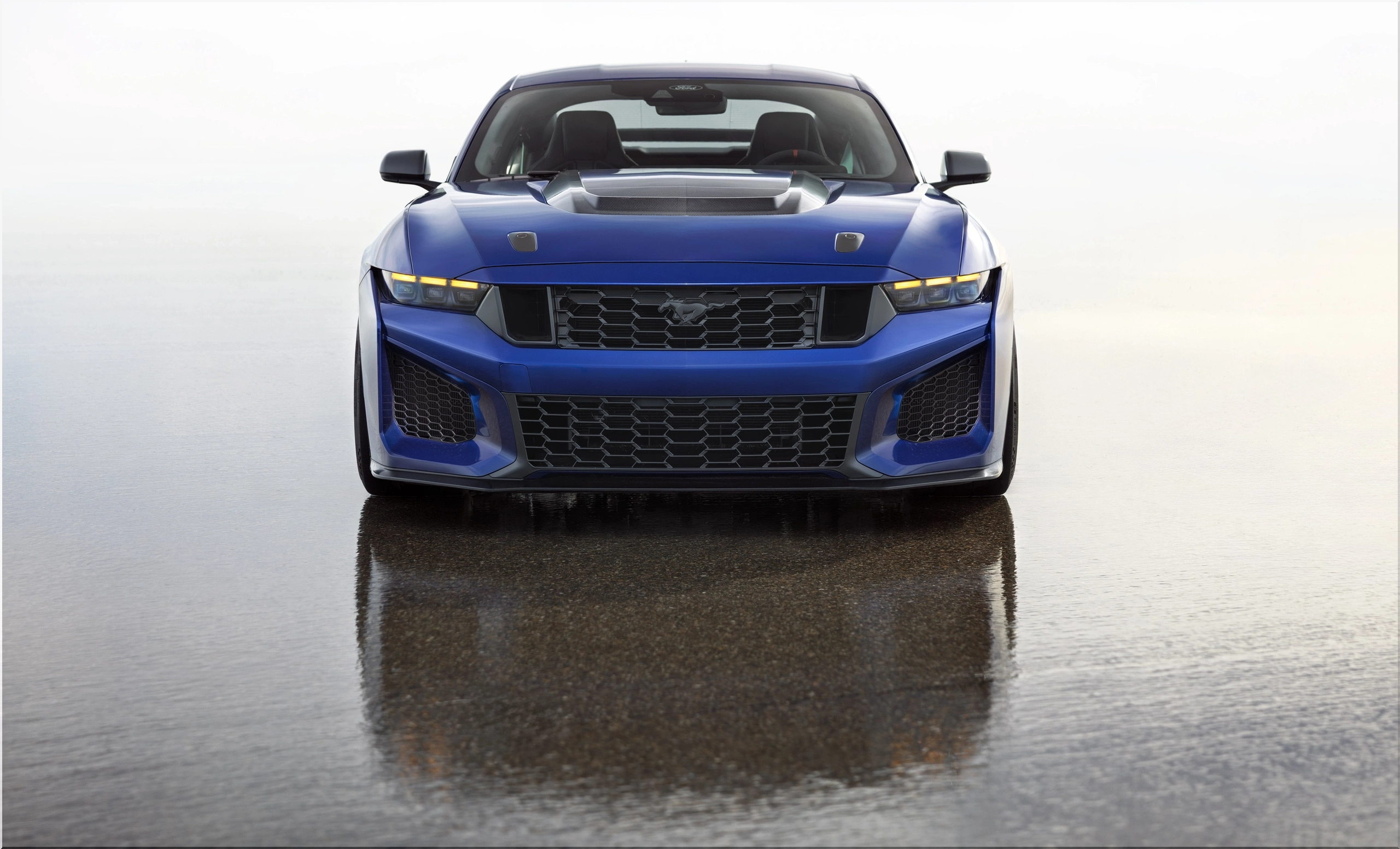
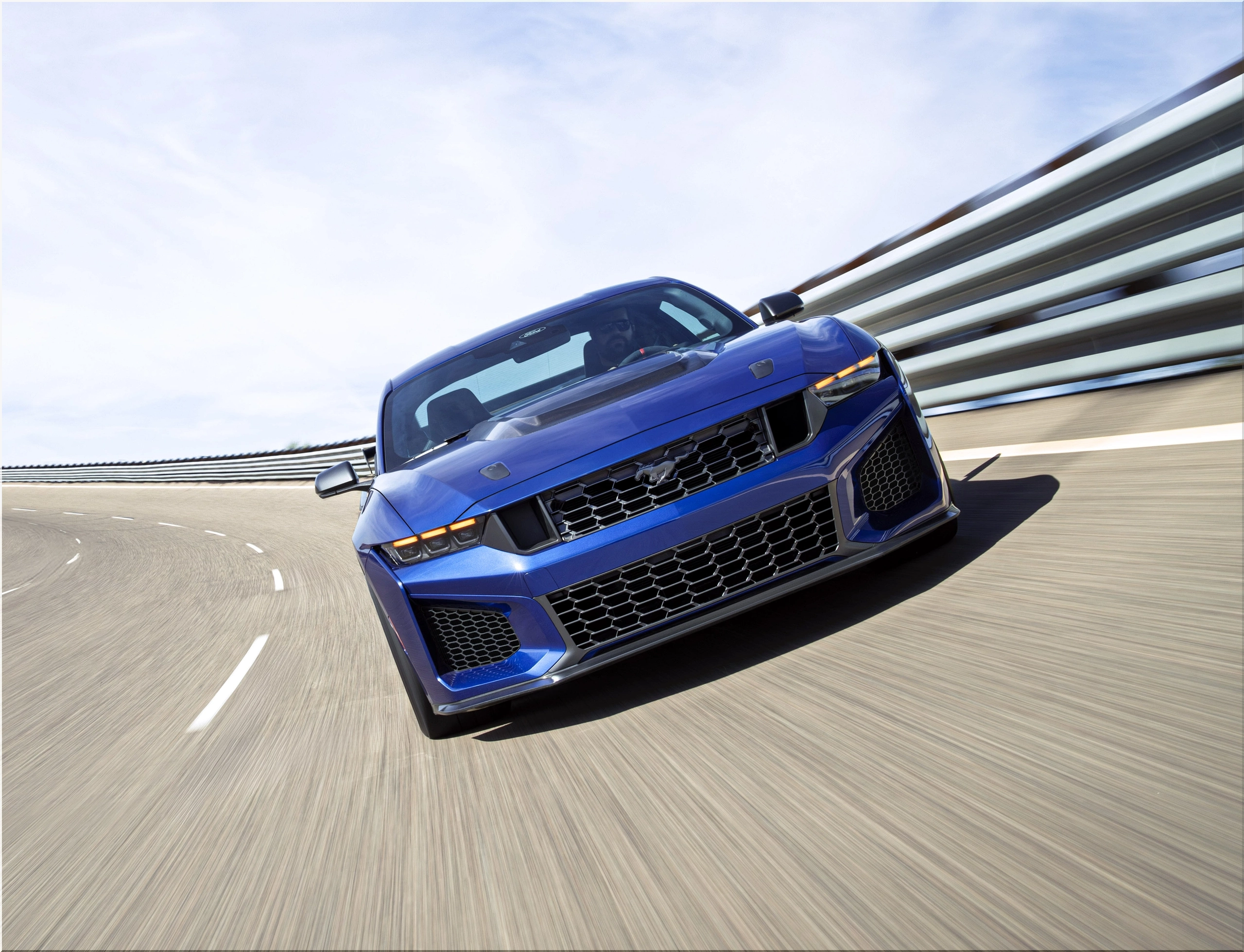
The new aluminum hood integrates a large central vent. That vent improves powertrain cooling and manages front-end pressure.
Specifically:
- When the hood vent tray is removed, it generates 2.5 times the downforce of the standard Dark Horse hood vent.
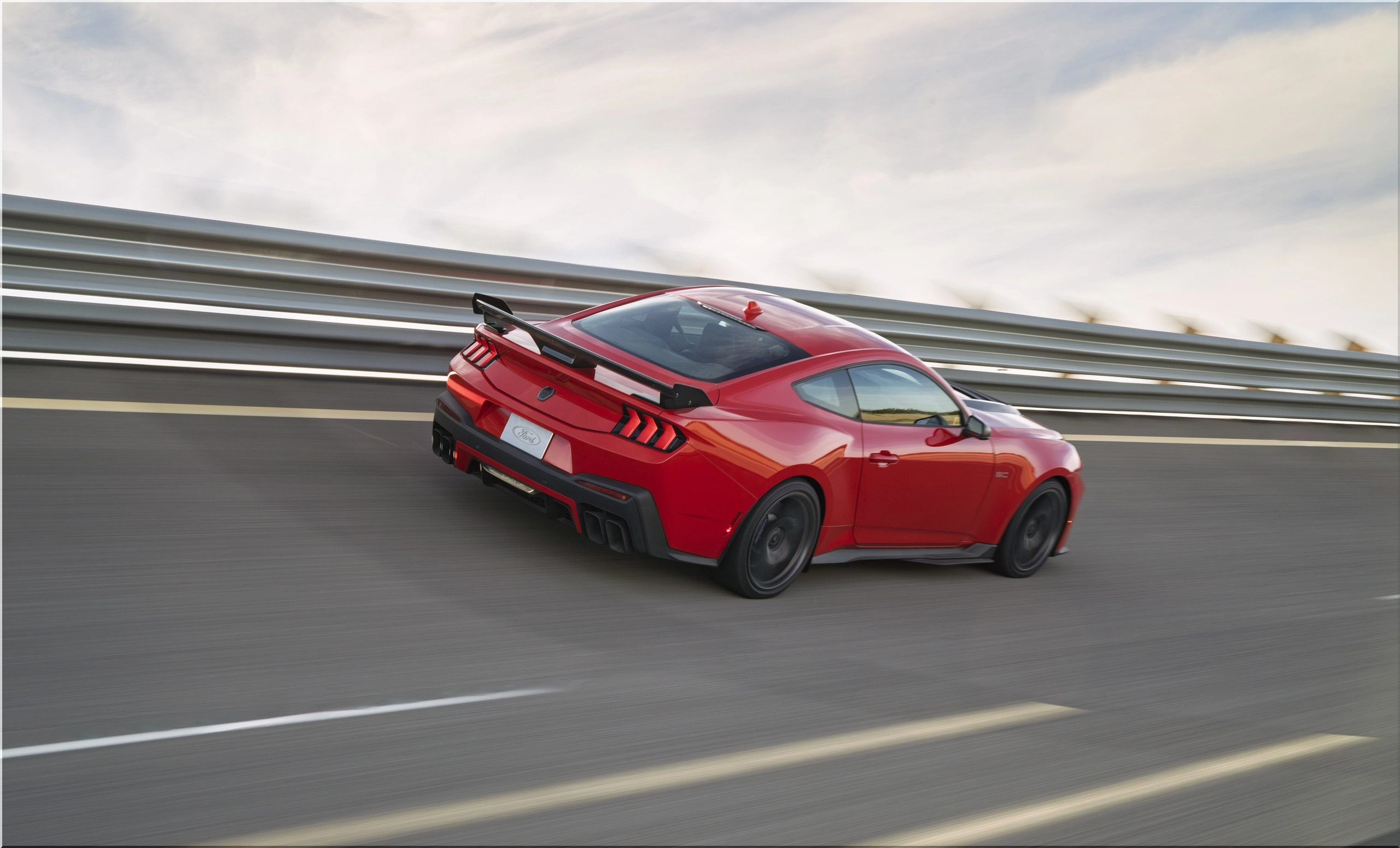
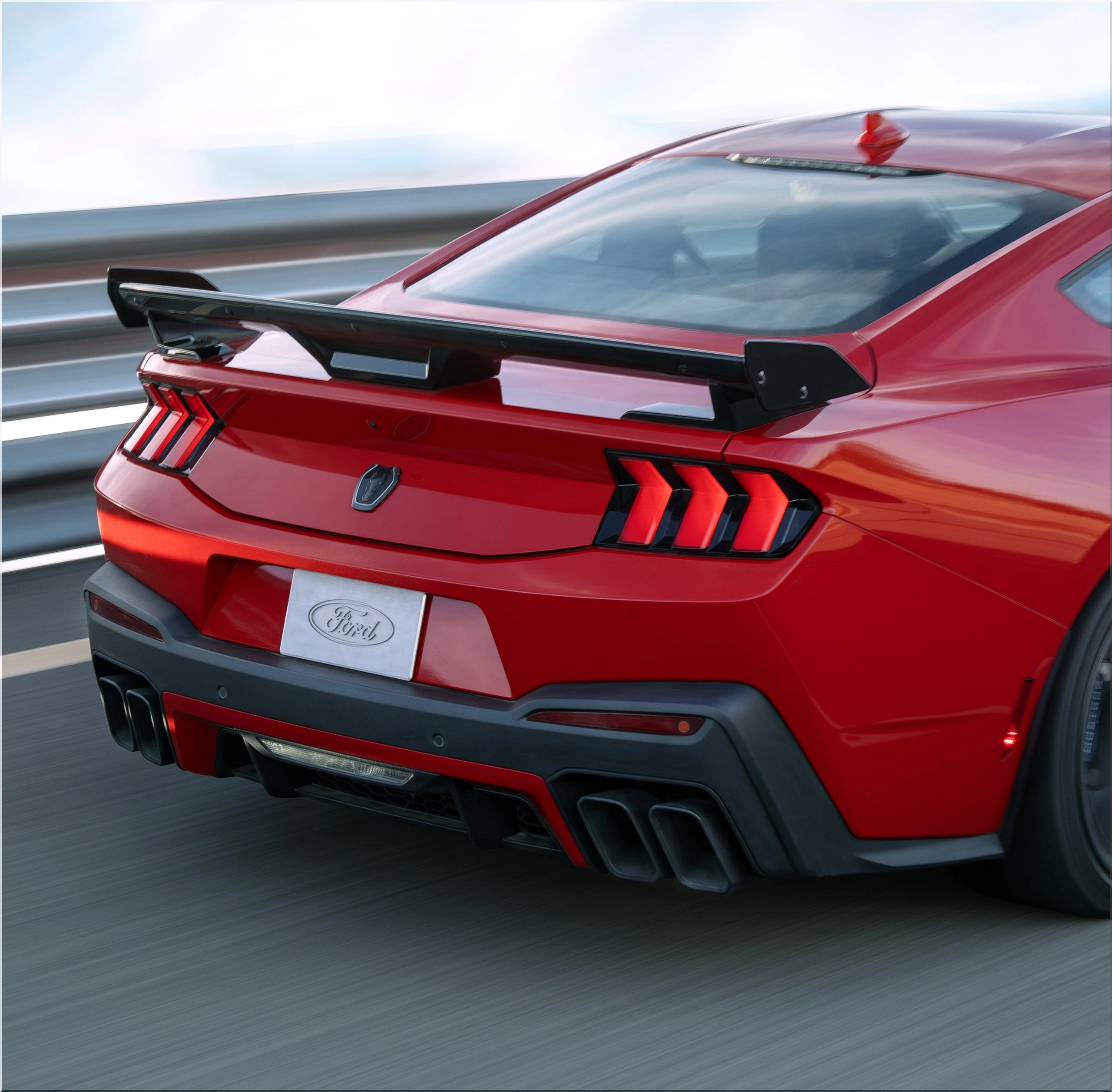
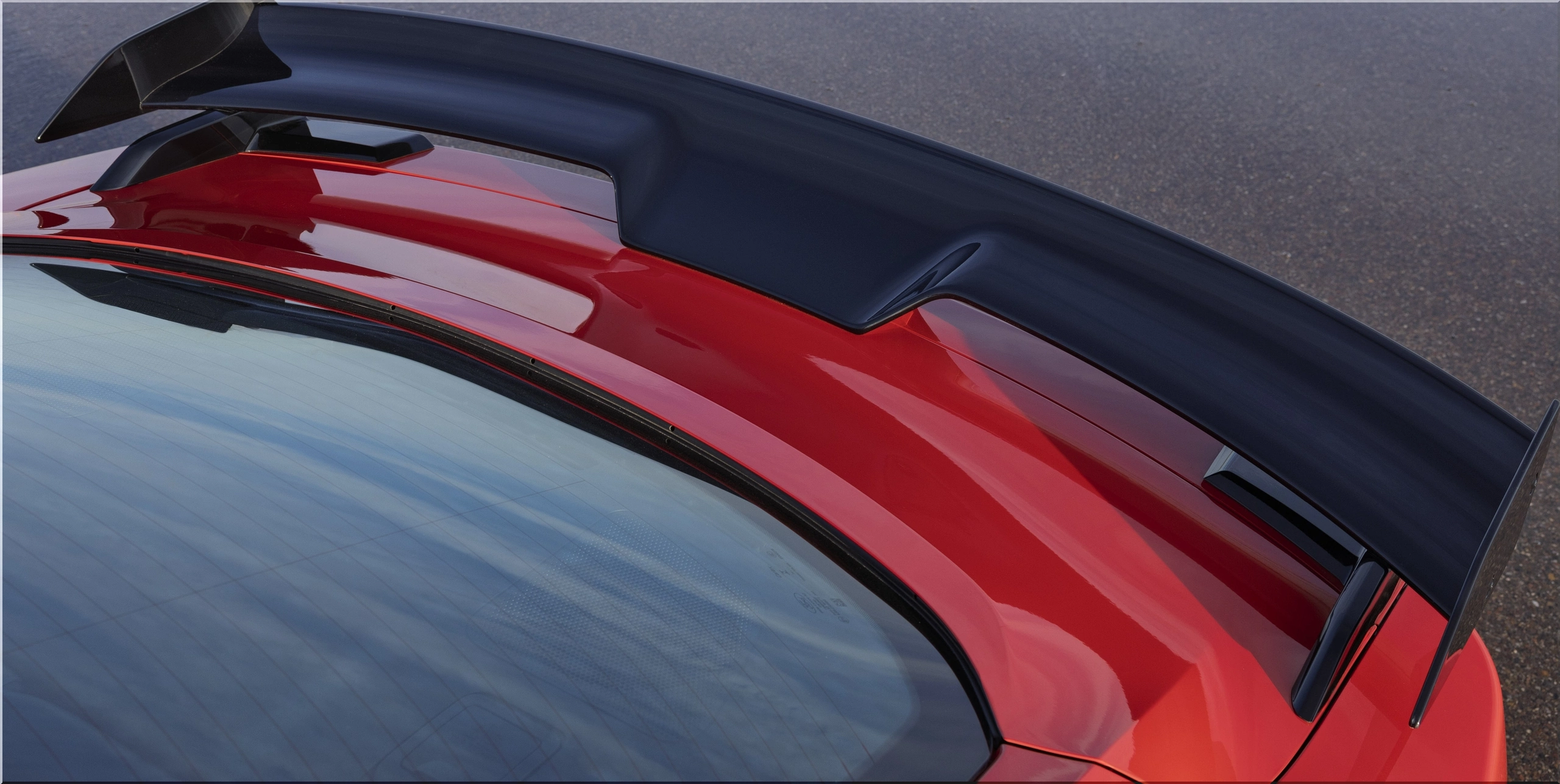
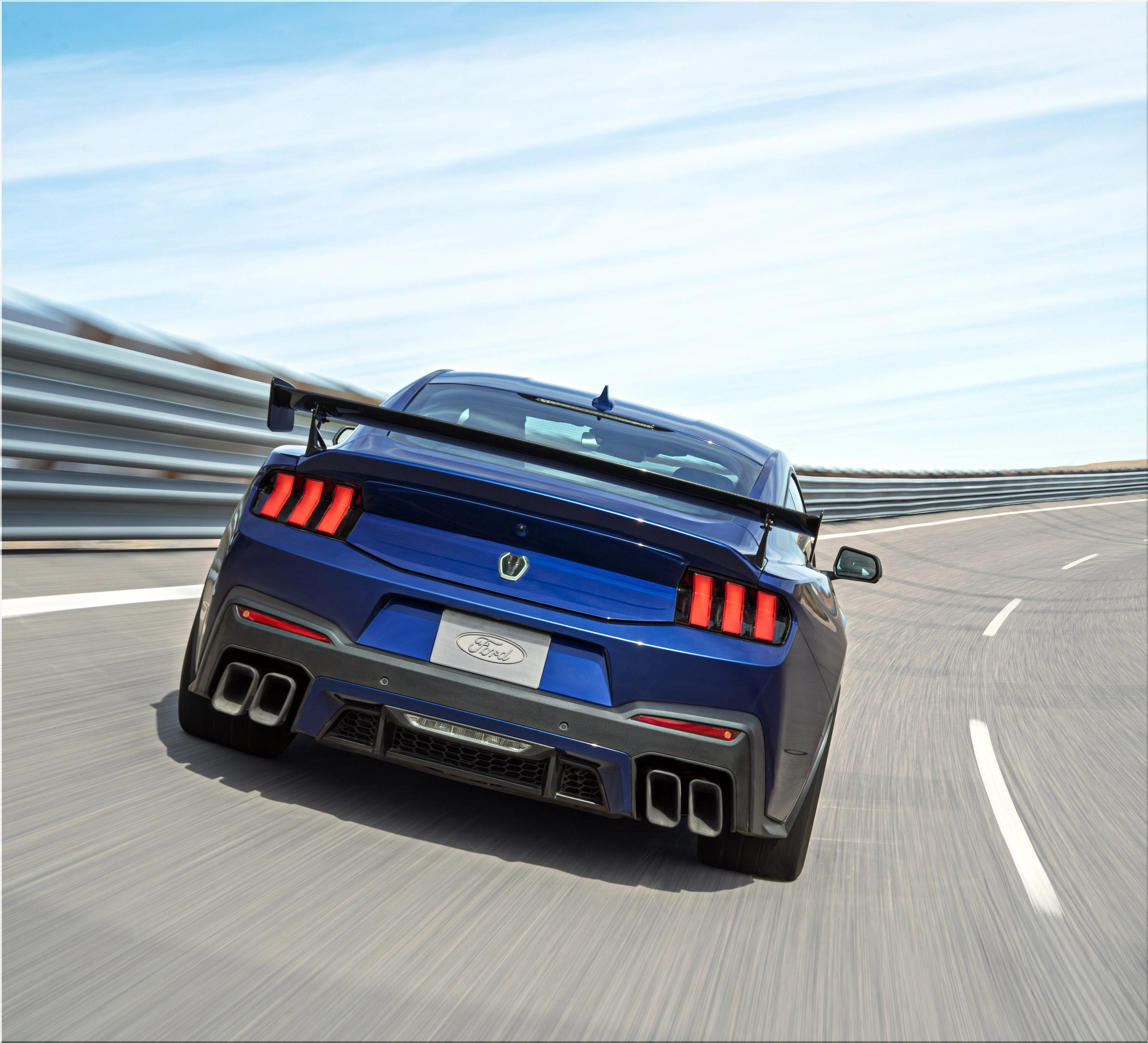
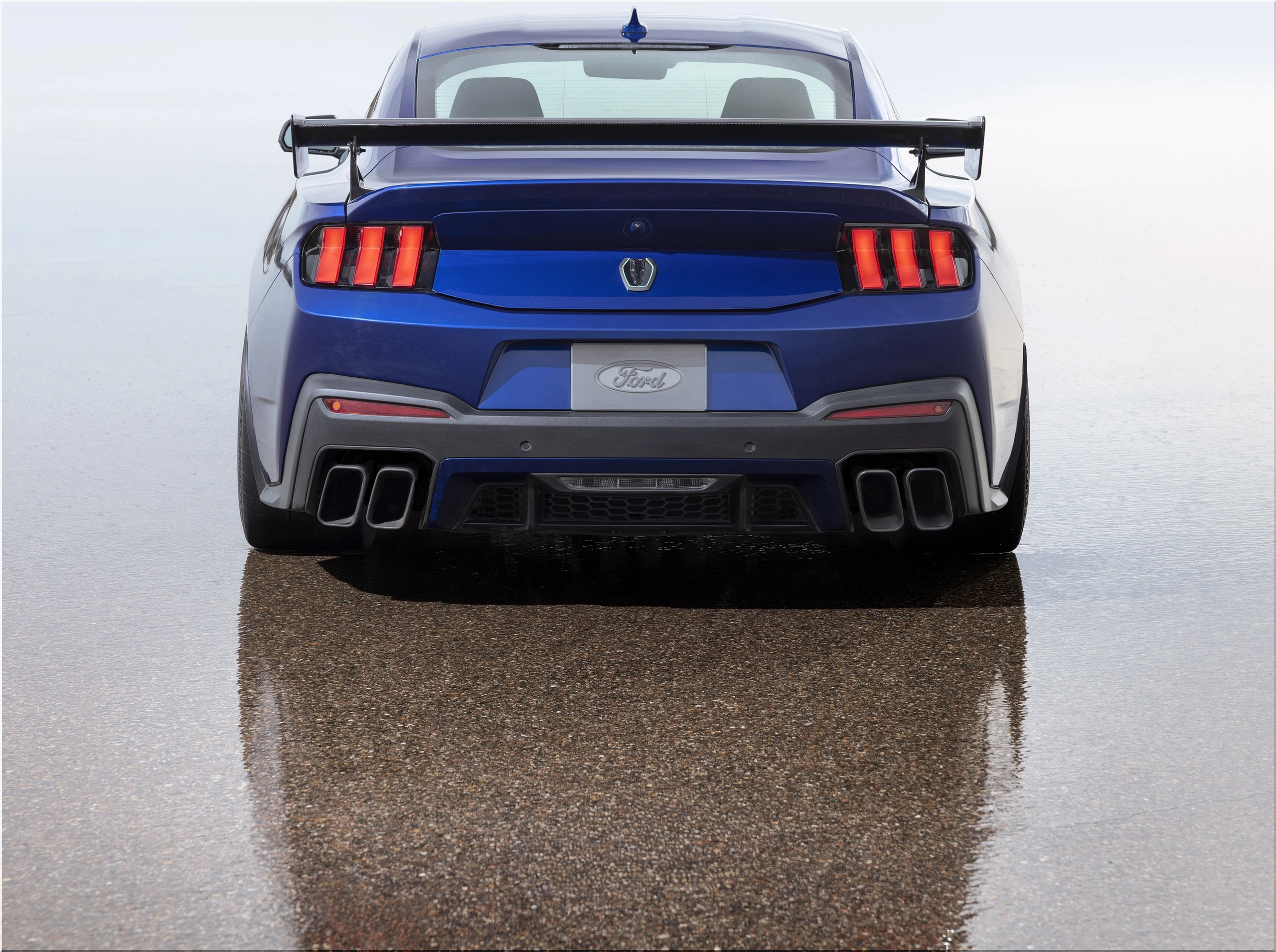
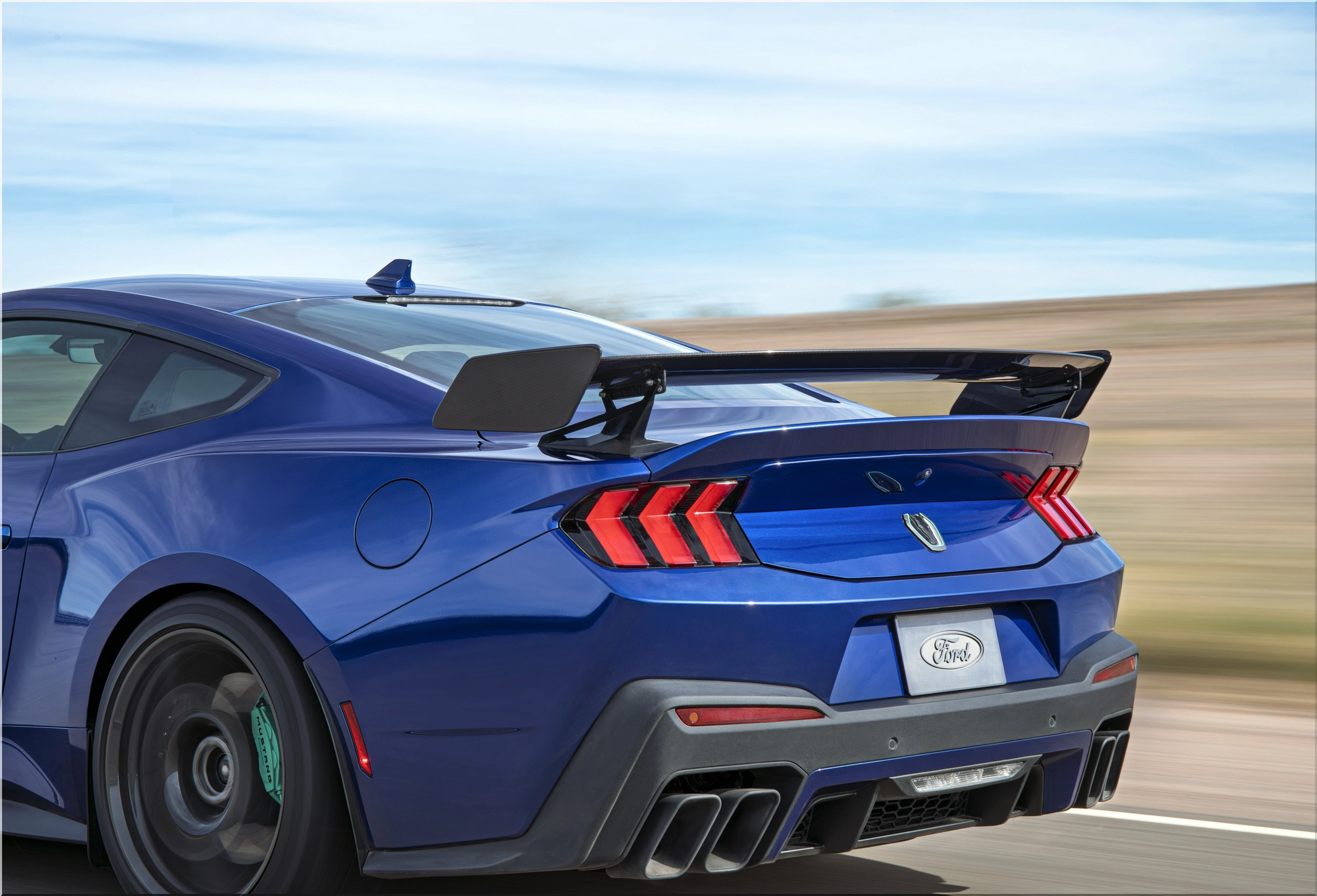
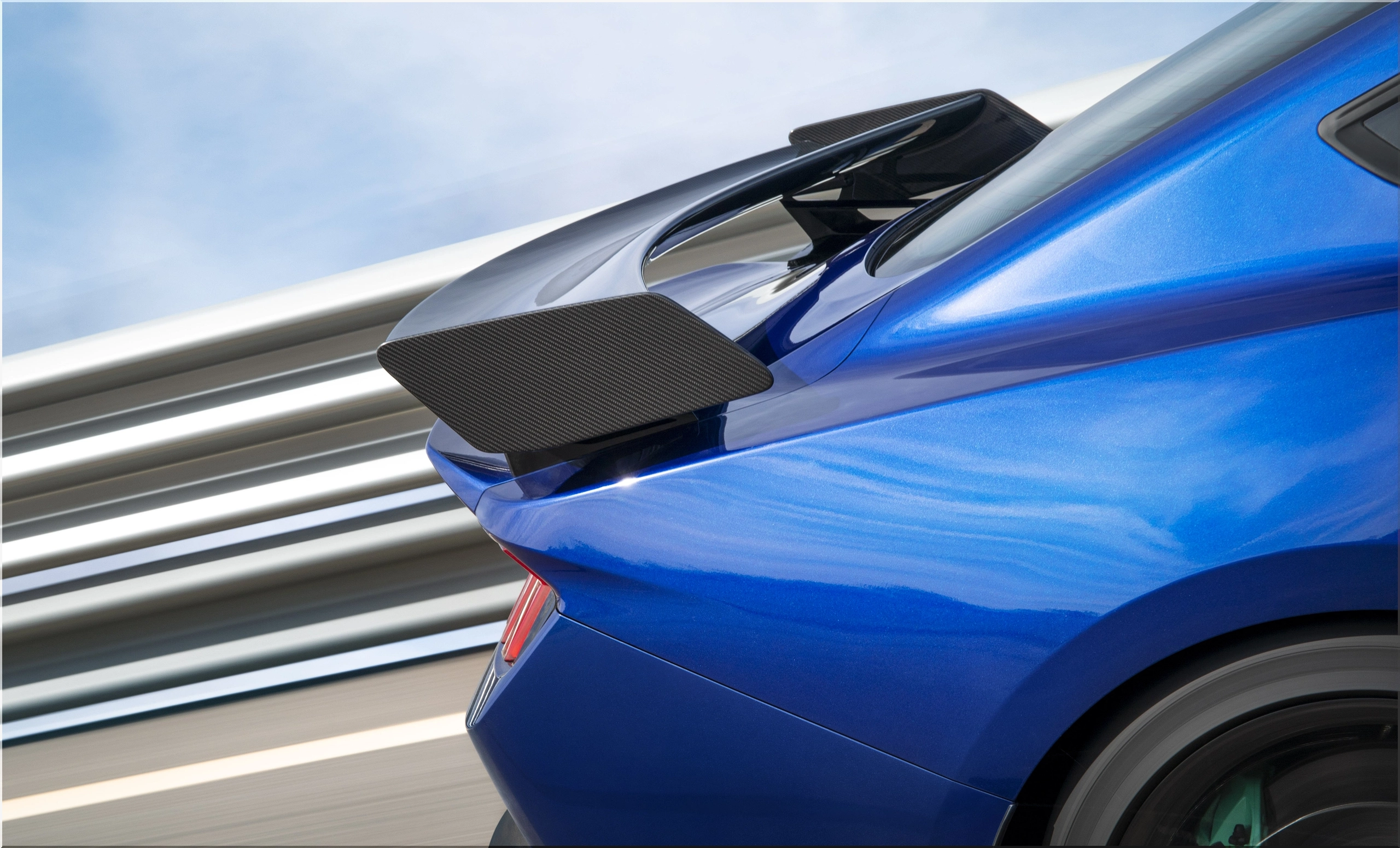
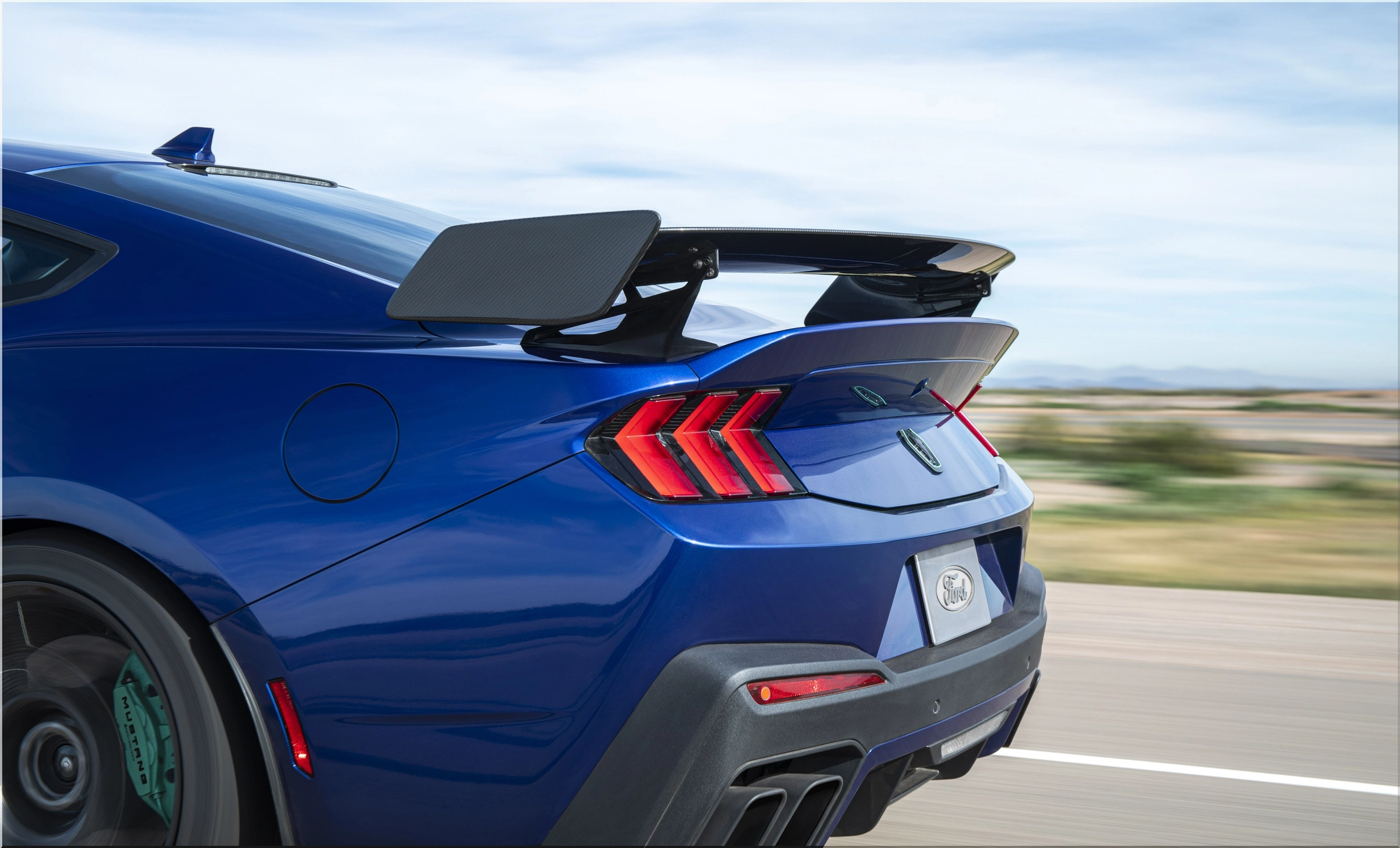
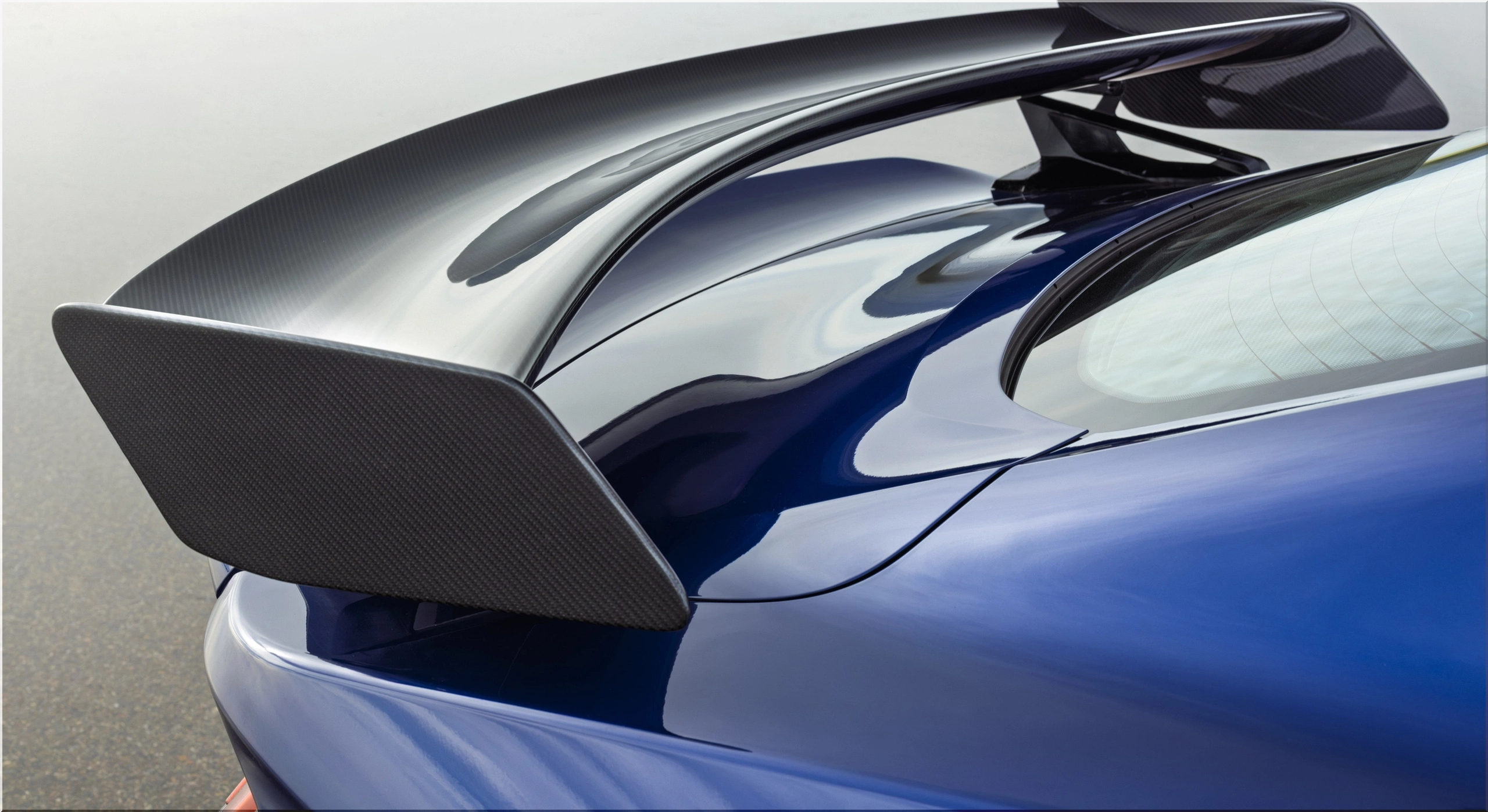
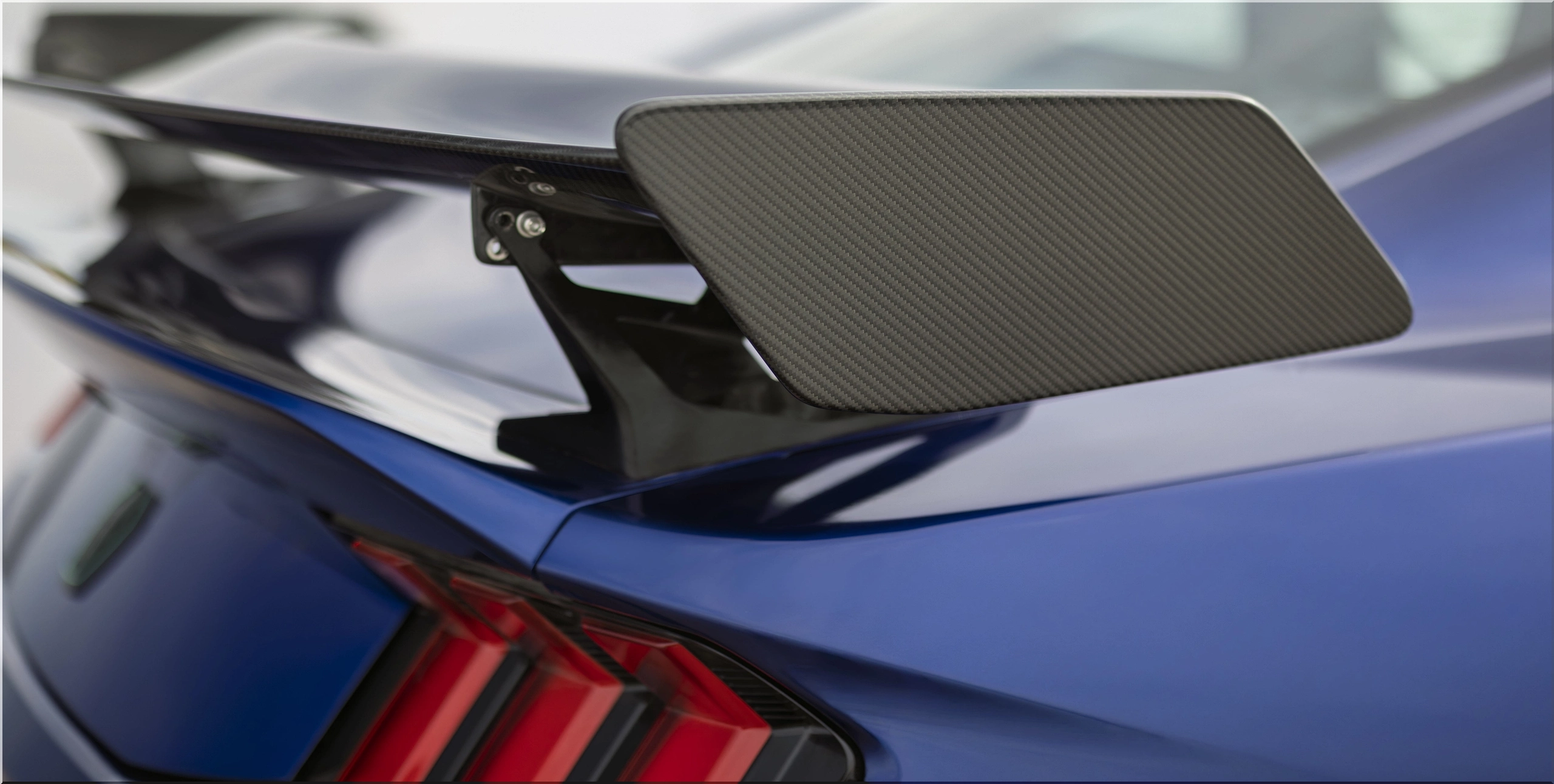
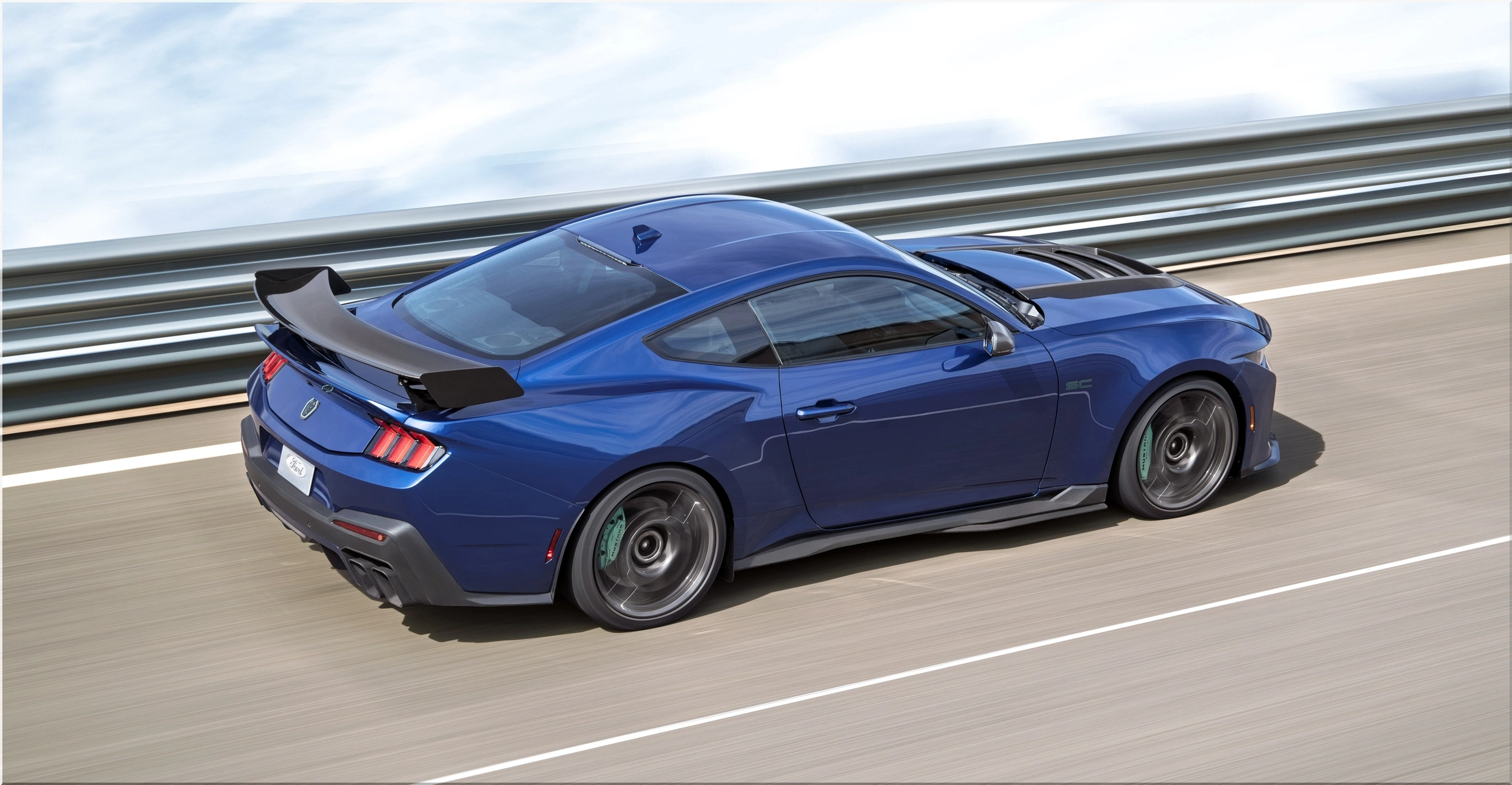
- With the Track Pack's carbon-fiber wing, the car produces 620 pounds of rear downforce.
Looking at the data, 620 pounds is substantial for a front-engine rear-wheel-drive coupe in this segment.
Why Hood Venting Matters
A hood vent does more than release heat.
- It reduces high-pressure air trapped in the engine bay.
- It decreases front-end lift at speed.
- It improves airflow management under the chassis.
Consequently, front-end stability improves during high-speed braking and turn-in.
Rear Wing and Stability
The carbon-fiber rear wing works in tandem with the front aero package. Downforce increases vertical load on the rear axle without increasing vehicle mass. That improves:
- High-speed corner grip
- Stability under throttle
- Rear-end composure during braking transitions
From an expert perspective, 620 pounds of downforce suggests real track capability rather than aesthetic aero.
Positioning Within the Mustang Lineup
The Dark Horse SC sits between two distinct models:
- Mustang Dark Horse Performance Package
- Mustang GTD
Here is how the hierarchy aligns.
Mustang Performance Comparison
| Model | Engine | Induction | Transmission | Aero Focus | Weight Strategy |
|---|---|---|---|---|---|
| Dark Horse | 5.0L V8 | Naturally Aspirated | 6MT / 10AT | Moderate | Standard |
| Dark Horse Performance Package | 5.0L V8 | Naturally Aspirated | 6MT / 10AT | Enhanced | Minor reduction |
| Dark Horse SC | 5.2L V8 | Supercharged | 7-speed DCT | High downforce (620 lbs) | 150 lb reduction |
| GTD | 5.2L V8 | Supercharged | 8-speed DCT | Race-grade | Extensive carbon fiber |
By comparison, the GTD adopts a near-homologation approach with extensive carbon body panels and advanced suspension geometry. The Dark Horse SC offers a bridge solution: serious track performance without fully committing to GTD-level engineering complexity.
Dimensions and Structural Intent
While official full dimension sheets remain limited, the Dark Horse SC retains the S650 Mustang architecture.
Typical Mustang platform dimensions:
- Wheelbase: 107.0 inches (2,718 mm)
- Overall length: Approximately 189.4 inches (4,811 mm)
- Width (without mirrors): 75.4 inches (1,915 mm)
Maintaining the 107-inch wheelbase preserves stability under high-speed braking and reduces pitch sensitivity during aggressive throttle application.
Consequently, Ford builds on a known structural base while enhancing stiffness and cooling performance.
Competitive Comparison: American Track-Ready Coupes
To contextualize the Dark Horse SC, consider three direct competitors in the American high-performance coupe segment.
High-Performance Coupe Comparison
| Model | Engine | Induction | Transmission | Notable Feature |
|---|---|---|---|---|
| Ford Mustang Dark Horse SC | 5.2L V8 | Supercharged | 7-speed DCT | 620 lbs rear downforce |
| Chevrolet Camaro ZL1 | 6.2L V8 | Supercharged | 6MT / 10AT | Magnetic Ride Control |
| Dodge Challenger SRT Hellcat | 6.2L V8 | Supercharged | 8AT | 700+ hp focus |
Looking at the data:
- The Camaro ZL1 emphasizes magnetic dampers and balanced track tuning.
- The Hellcat prioritizes straight-line power and drag-strip dominance.
- The Dark Horse SC integrates weight reduction and aerodynamic load as primary tools.
From a strategic perspective, Ford targets circuit efficiency rather than pure horsepower escalation.
Image
Technical Definitions for Clarity
Definition: Unsprung Mass
Unsprung mass includes wheels, tires, brake assemblies, and suspension components not supported by the springs. Lower unsprung mass improves ride control and handling precision.
Definition: Downforce
Downforce refers to aerodynamic force that pushes a vehicle toward the ground at speed, increasing tire grip without increasing static weight.
Pro-Tips for Track-Oriented Buyers
If you plan to use the Dark Horse SC on track:
- Pair carbon-ceramic brakes with high-temp track pads for endurance events.
- Monitor supercharger heat soak during extended sessions.
- Adjust rear wing angle to match track layout and corner speed profile.
- Invest in performance alignment settings to maximize tire contact patch.
In addition, track drivers should prioritize cooling management. High-output supercharged engines generate significant heat under sustained load.
Ownership ROI: What Now?
If you are evaluating the Ford Mustang Dark Horse SC for track use:
- Compare lap-time potential against the Dark Horse Performance Package.
- Factor long-term brake replacement costs of carbon-ceramic systems.
- Assess resale positioning between Dark Horse and GTD tiers.
From a data-driven standpoint, this model appeals to drivers who:
- Want forced induction torque without GTD-level pricing.
- Value measurable aerodynamic performance.
- Prioritize weight reduction over luxury add-ons.
The Dark Horse SC does not chase excess horsepower numbers alone. It applies mechanical logic: reduce weight, increase airflow efficiency, stiffen structure, and apply aerodynamic load strategically.
That formula works.
The result sits firmly in the upper tier of the Mustang lineup. It pushes harder, grips better, and communicates more clearly through the chassis.
Image
Final Assessment: Where It Fits
The 2026 Ford Mustang Dark Horse SC delivers forced induction power, real downforce figures, and structural improvements that translate into track performance.
It bridges a gap.
- More focused than the Dark Horse Performance Package.
- Less extreme than the GTD.
- Engineered with measurable objectives.
For drivers who track their cars and demand tangible mechanical advantages, the Dark Horse SC presents a clear value proposition within the modern American performance coupe segment.
Image Gallery
- Add new comment
- 554 views